


 English
 中文简体
中文简体
Industry News
How much does a truck scale cost?
Content
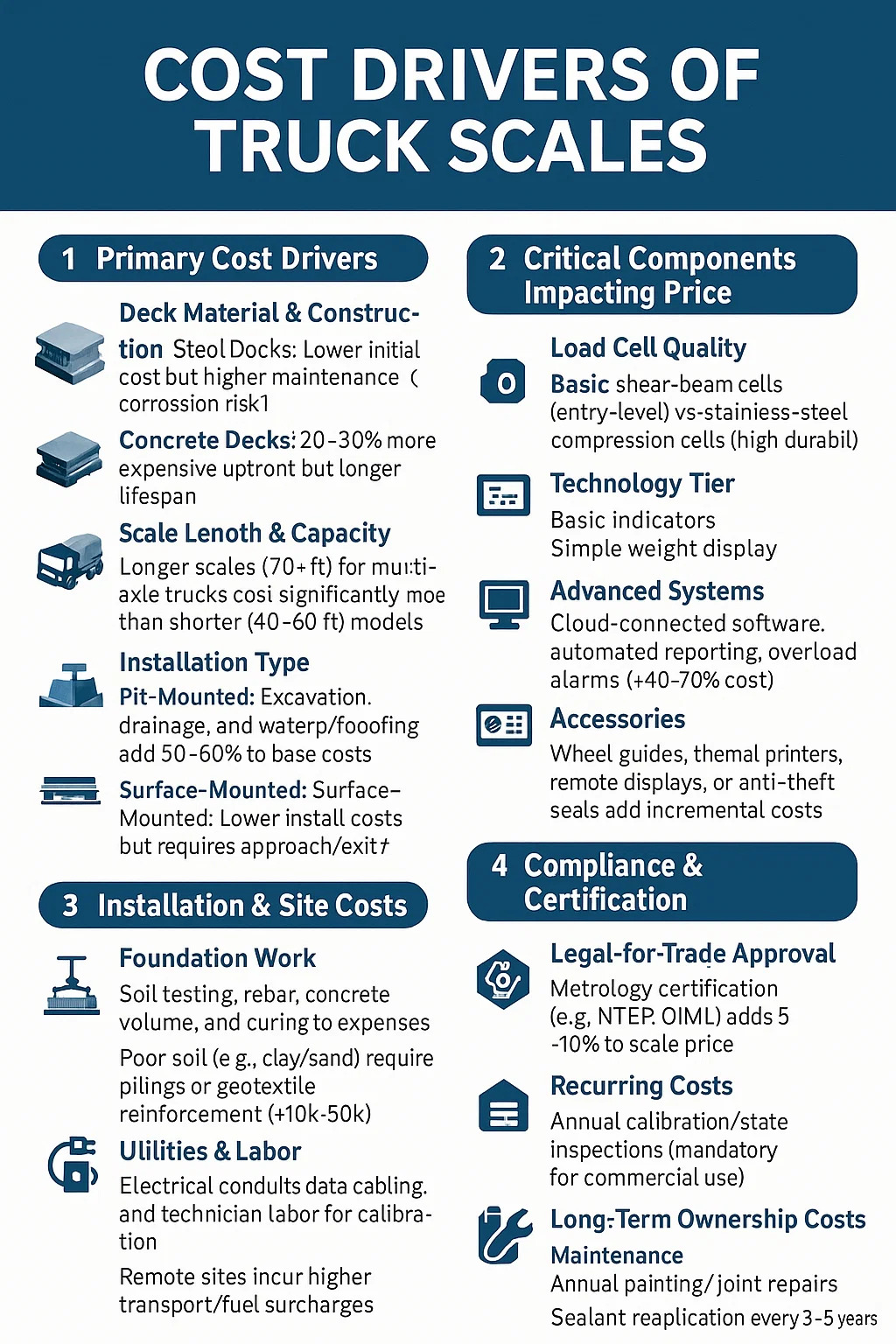
The cost of a truck scale is highly variable and driven by multiple factors. Below is a breakdown of key cost drivers and typical price ranges in industrial contexts:
1. Primary Cost Drivers
Deck Material & Construction:
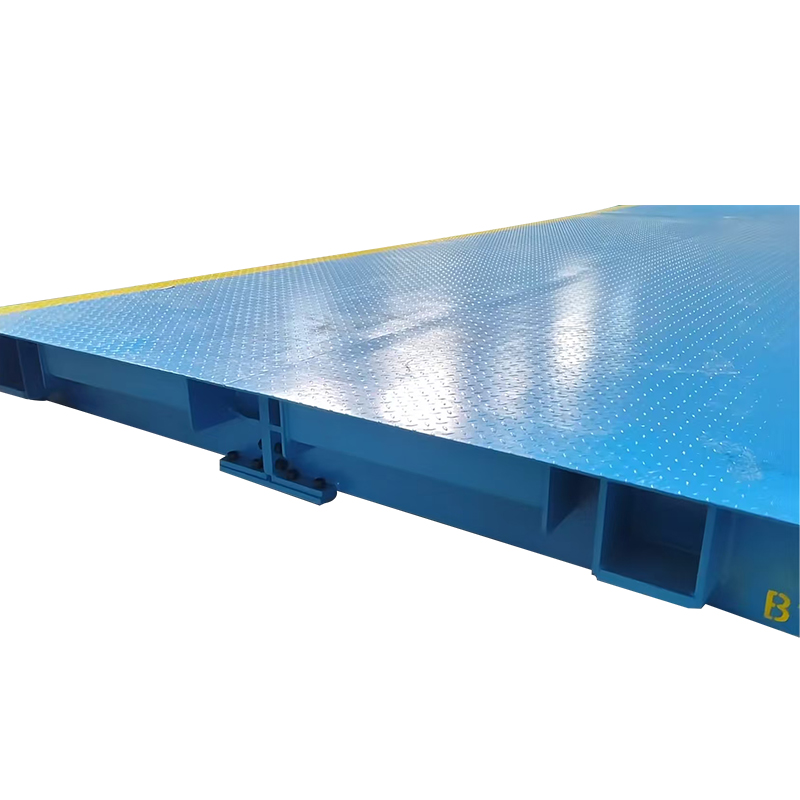
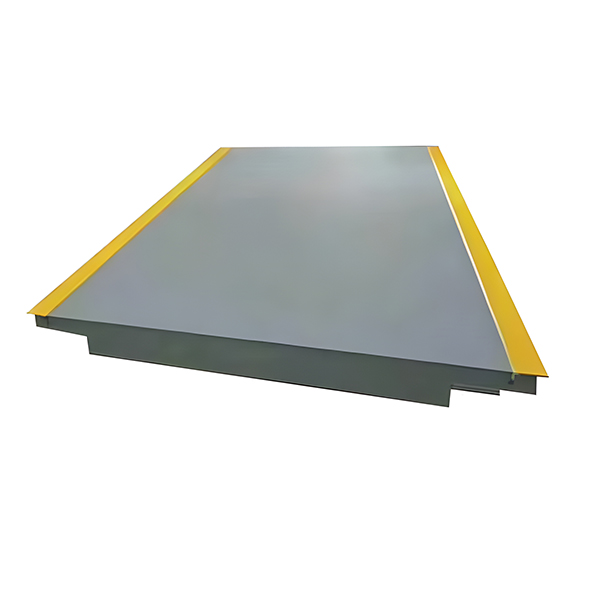
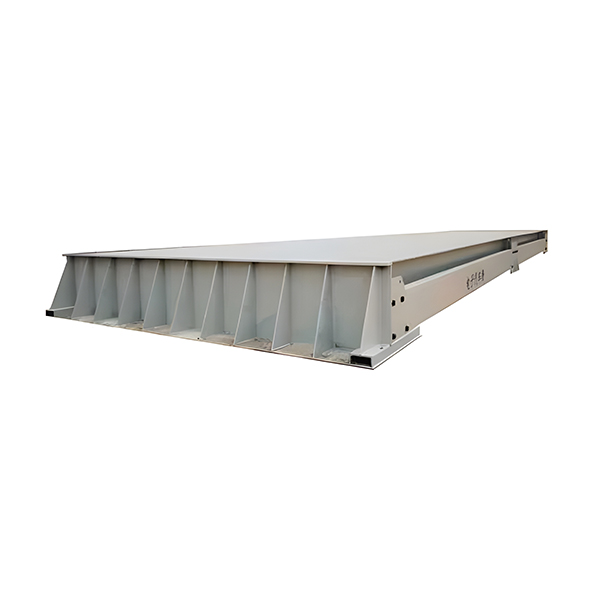
Steel Decks: Lower initial cost but higher maintenance (corrosion risk).
Concrete Decks: 20–30% more expensive upfront but longer lifespan.
Scale Length & Capacity:
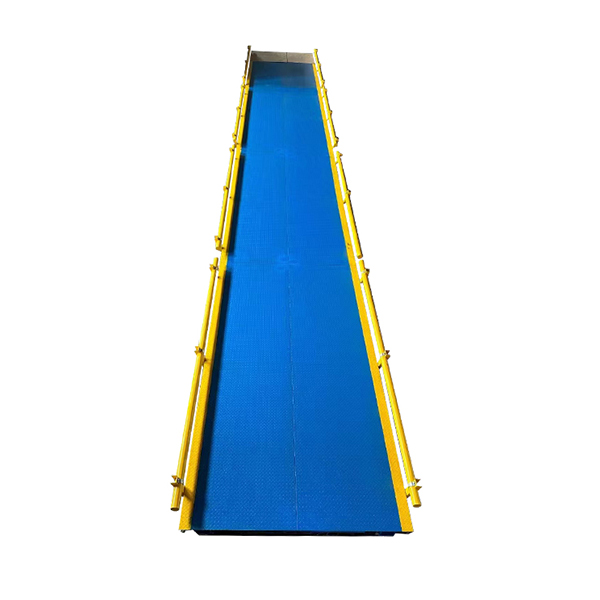
Longer scales (70+ ft) for multi-axle trucks cost significantly more than shorter (40–60 ft) models.
High-capacity scales (100+ tons) require thicker steel/deeper foundations.
Installation Type:
Pit-Mounted: Excavation, drainage, and waterproofing add 30–50% to base costs.
Surface-Mounted: Lower install costs but requires approach/exit ramps.
2. Critical Components Impacting Price
Load Cell Quality:
Basic shear-beam cells (entry-level) vs. stainless-steel compression cells (high durability, +15–25% cost).
Technology Tier:
Basic Indicators: Simple weight display.
Advanced Systems: Cloud-connected software, automated reporting, overload alarms (+40–70% cost).
Accessories:
Wheel guides, thermal printers, remote displays, or anti-theft seals add incremental costs.
3. Installation & Site Costs
Foundation Work:
Soil testing, rebar, concrete volume, and curing time dominate expenses.
Poor soil (e.g., clay/sand) requires pilings or geotextile reinforcement (+10k–50k).
Utilities & Labor:
Electrical conduits, data cabling, and technician labor for calibration.
Remote sites incur higher transport/fuel surcharges.
4. Compliance & Certification
Legal-for-Trade Approval:
Metrology certification (e.g., NTEP, OIML) adds 5–10% to the scale price.
Recurring Costs:
Annual calibration/state inspections (mandatory for commercial use).
5. Long-Term Ownership Costs
Maintenance:
Steel decks: Annual painting/joint repairs.
Concrete decks: Sealant reapplication every 3–5 years.
Repairs:
Load cell replacement (flood/lightning damage).
Foundation crack repairs or deck realignment.
Copyright © Ningbo Jiuding Weighing Equipment Co., Ltd.
