

 English
 中文简体
中文简体
Industry News
Home / News / Industry News / Checkweighing Scales: Accuracy Tolerances, Selection Criteria & Maintenance Tips
Content
An underweight packet that slips through a high-speed packing line can cost far more than the weight difference. It triggers a chargeback, a customer complaint, or an entire pallet rejection at the retailer's inbound check. Checkweighing scales are the automated gatekeeper that prevents this: they weigh every unit in motion and flag any item outside preset limits. The direct answer to most purchasing questions is that the value of a checkweighing scale is decided by its accuracy class, weighing speed, and reject integration, not by the display size or list price. This guide explains how these systems work, what tolerances you can realistically hold, and how to match the technology to your actual line conditions.
A checkweighing scale is an automatic weighing instrument that measures individual items on a production line and compares each result against programmed upper and lower limits. Unlike a bench scale that simply displays weight, a checkweighing scale makes a decision: accept, reject, or alarm, and it does this without stopping the product flow in most cases.
The weighing cycle has three steps:
One point is often underappreciated: the load cell and the indicator work as a single system. A high-resolution indicator will not compensate for a load cell with poor repeatability. For installations where the cable distance between the scale platform and the control cabinet is long, a digital load cell is a practical choice because it converts the analog signal to digital inside the sensor itself, preventing signal loss and electrical interference. In multi-sensor checkweighing frames with long runs to the indicator, digital transmission simplifies installation and improves consistency.
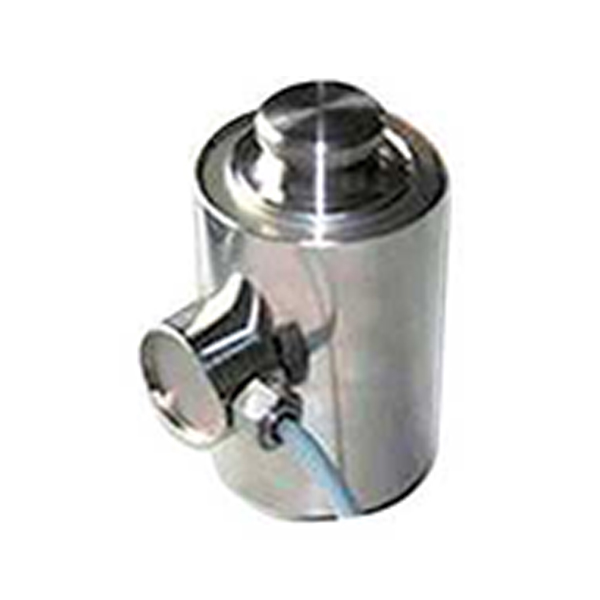 Column Type Digital Load Cell for Long-Distance WeighingThis digital load cell converts analog signals at the sensor, minimizing interference over long cable runs. With 10t to 50t capacity and bus support for up to 16 sensors, it suits multi-sensor checkweighing frames.View Product →
One operational number worth knowing: a typical dynamic checkweighing scale samples the weight signal 200 to 400 times per second. When an item sits on the weigh deck for only 0.3 seconds, the indicator must capture enough clean readings in that window to produce a stable result. This is why sampling speed and filtering, not maximum capacity, are the first specifications you should examine.
Choose the accuracy class that matches the tightest tolerance your product must meet, then design the mechanical surroundings so the scale can achieve it. An instrument that can hold +/-0.5 g will not deliver that result on an unstable conveyor with air drafts from nearby fans.
For automatic checkweighing instruments, industry practice groups equipment into accuracy classes based on the international recommendation OIML R61. The class designations X(0.1), X(0.5), X(1) and X(2) indicate the fraction of the weighed load that can be reliably detected under reference conditions. An X(0.1) instrument is intended for fine controls, while X(2) is common for bulk bags where larger deviations are commercially acceptable.
The table below lists typical tolerance values used in production quality control for different target weights. These are practical industry values for planning purposes. Your own specification should come from your quality control plan, customer agreements, and average fill weight strategy.
| Product type | Target weight | Typical tolerance | Accuracy class |
|---|---|---|---|
| Pharmaceutical sachet | 25 g | +/-0.25 g | X(0.1) |
| Food jar | 400 g | +/-2.0 g | X(0.5) |
| Carton with bottles | 5 kg | +/-25 g | X(1) |
| Bulk feed bag | 25 kg | +/-125 g | X(2) |
Two practical implications follow. First, the tolerance is roughly proportional to target weight; asking a scale to hold +/-1 g on a 25 kg bag is unrealistic and unnecessary. Second, the scale's rated accuracy should be at least three times better than the tolerance you want to enforce. If your limit is +/-3 g, the instrument should repeat within +/-1 g.
Use dynamic weighing when line speed exceeds roughly 20 items per minute. Use static weighing when your tolerance is tighter than +/-0.1 g or when the product is not stable on a moving deck.
In a static checkweighing scale, the product stops completely on the weigh deck before the weight is recorded. Because there is no belt motion or product sway, accuracy is highest, but throughput is limited to typically 10 to 30 items per minute, depending on the operator or an indexing mechanism.
In a dynamic checkweighing scale, the product is weighed while moving on a conveyor. The indicator must extract a stable weight from a short window of readings while belt vibration and product movement add noise. Modern dynamic systems for lightweight products in the 100 g range can run at 150 to 300 items per minute while holding roughly +/-0.5 g in a controlled environment.
| Parameter | Static checkweighing | Dynamic checkweighing |
|---|---|---|
| Product motion | Stops on deck | Weighed in motion |
| Typical throughput | 10-30 items/min | 60-300 items/min |
| Realistic tolerance for 100 g product | +/-0.1 g | +/-0.5 g |
| Best for | Lab samples, fine fills, irregular shapes | High-speed packing, bagging, blisters |
The deciding factor is not only speed but tolerance. If your line runs at 80 items per minute and the tolerance is +/-0.1 g, a dynamic scale will struggle; the right engineering answer is to slow the line or move the check to a separate static station. If the tolerance is +/-1 g, a well-installed dynamic scale comfortably handles 150 items per minute.
The two components that decide whether a checkweighing scale meets its rated accuracy are the load cell and the weight indicator. Everything else, including the conveyor, the frame, and the reject device, supports these two elements.
The most frequent error is oversizing. A checkweighing scale weighing 100 g packages should not use a 50 kg load cell, because resolution at the low end of the capacity range is wasted. Industry practice keeps the operating load between 10% and 70% of rated capacity, where load cell linearity is best. If the typical load is 250 g, a 1 kg load cell gives a far more stable measurement than a 5 kg cell.
For washdown, dust, or wide temperature swings, choose a stainless steel load cell with an IP67 or IP68 ingress protection rating. If the cable from the scale to the indicator runs more than 30 meters, choose a digital load cell: it converts the analog signal internally and transmits a clean digital signal, removing the noise that a long analog cable would pick up. The column-type digital load cell used in many checkweighing frames is sealed against dust and moisture specifically for this duty.
The indicator is where filtering, setpoint comparison, and communication happen. Key features include a fast sampling rate of at least 200 conversions per second, adjustable digital filters, at least two setpoint outputs for accept and reject, and a serial or Ethernet port for data logging. If your plant uses a PLC, confirm the indicator supports the same fieldbus protocol. A stainless steel or panel-mounted indicator protects against moisture in washdown areas.
We cover the indicator requirements in more detail in our guide on what to look for when choosing a weighing indicator.
Start from your line's actual numbers, not from a brochure. The selection process compresses into six decisions:
A useful rule: if the product changes regularly, choose an indicator with at least 50 recipe presets and fast recall to prevent most changeover errors.
A modern checkweighing scale is expected to be a data node, not just a mechanical sorter. Logging every result, confirming each rejection, and analyzing trends has become as important as the weight reading itself.
Indicators with Ethernet communication protocols such as Modbus TCP or EtherNet/IP send every result to a PLC or PC. This enables three capabilities:
An example from practice: a food packing line running at 120 packets per minute records roughly 17,000 weight results per two-hour batch. A dashboard showing the average and standard deviation of those 17,000 values lets the supervisor detect a filling pump that is drifting before underweight packages reach the reject station.
For plants without a full MES system, weighing software can collect data from several scales and indicators and store it in a local database. This is a cost-effective way to gain the same audit trail without replacing existing IT infrastructure.
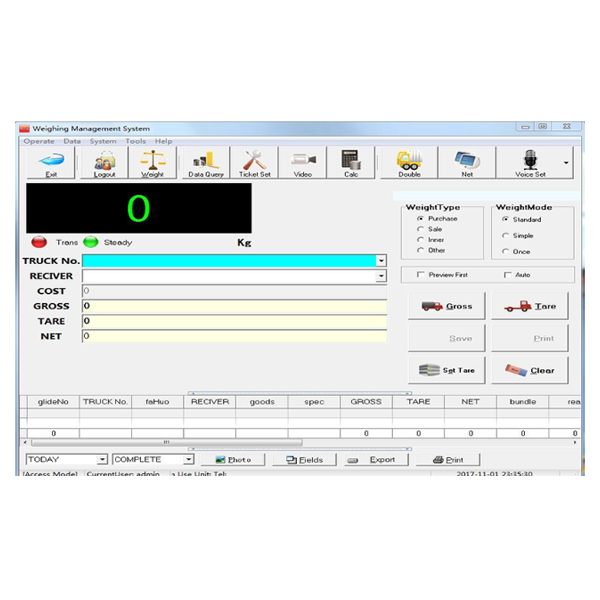 Weighing Software for Data Collection and ManagementThis software receives, processes, and stores weighing data in real time, offering auto recording, reports, and alarms. It provides a cost-effective audit trail without replacing existing IT systems.View Product →
Whatever software you choose, make sure the indicator's communication output is enabled and the data format is documented. Many installations fail at this final step because the cable is connected but the protocol is never configured.
The primary cause of checkweighing accuracy drift is not load cell aging. It is mechanical contamination, zero drift, and neglected conveyor alignment. A scale that is serviced monthly will almost always hold its specified tolerance for years.
A practical maintenance plan has three layers:
Keep a spare load cell and a spare indicator board on site. A checkweighing scale that is down for a week while waiting for a spare part can cost far more than the part itself in lost production. If your team lacks the bandwidth for this schedule, our preventive maintenance service plan is structured around exactly these daily, weekly, and monthly checks.
Here are the answers production and quality teams ask most often when evaluating checkweighing scales.
Q: What is the difference between a checkweighing scale and a regular weighing scale?
A regular scale displays the weight of a static object for an operator to read. A checkweighing scale automatically compares the weight of every item against preset limits and produces an accept or reject decision without operator action. The hardware can look similar, but the software, sampling speed, and outputs are different.
Q: What accuracy can I expect from a dynamic checkweighing scale?
For a 100 g product at 150 items per minute, a well-installed dynamic scale can hold roughly +/-0.5 g. Heavier products allow a larger absolute tolerance but tend to have better relative accuracy. Exact values depend on product stability, conveyor quality, and environmental vibration.
Q: Why does my scale show different weights for the same product?
Check four causes first: product position on the weigh deck, air drafts or fans near the scale, a conveyor belt that is too tight, and debris under the weigh deck. These account for most repeatability complaints. Only after ruling them out should you suspect the load cell.
Q: How often should I verify a checkweighing scale?
Perform a daily zero and reference-weight check. Run a full calibration using reference weights monthly, or immediately after any mechanical modification to the conveyor or weigh deck.
Q: Can a checkweighing scale work with a metal detector on the same line?
Yes. Many packing lines combine both machines on one conveyor and share a reject gate. The indicator can receive the metal detector's signal and send both reject commands to one pusher, maintaining separate counters for weight rejects and metal rejects.
Copyright © Ningbo Jiuding Weighing Equipment Co., Ltd.