

 English
 中文简体
中文简体
Industry News
Home / News / Industry News / Crane Scale Buying Guide: How to Choose, Install & Maintain Your Overhead Weighing System
Content
A crane scale has one job: show the operator how heavy the suspended load really is. It stops doing that job the moment the load cell, signal path, and display fall out of sync with the lifting environment. The practical answer to a successful purchase is to choose a crane scale whose capacity reaches at least 120 to 150 percent of your heaviest planned lift, confirm that the load cell technology matches the accuracy class you need, and verify that the weighing indicator is readable from the exact distance where the operator stands during a lift.
A crane scale converts mechanical tension into a readable weight value through three key stages. First, a strain gauge based load cell senses the tensile force pulling through the hook. Second, the strain gauge deformation creates a change in electrical resistance that is measured with a Wheatstone bridge circuit. Third, a weighing instrument processes the electrical signal and displays the weight in kilograms or tons.
The most useful modern feature is digital signal output from the load cell. In a digital crane scale, the analog-to-digital conversion happens at the sensor itself, so the weight value travels as digital data to the display. This preserves accuracy even when the indicator sits 30 or 50 meters away on the factory floor. Traditional analog load cells, by contrast, lose signal quality along longer cable runs because the small millivolt signal is vulnerable to electromagnetic interference and voltage drop.
If you want a deeper look at the physical mechanism behind strain gauge load cells, the working principle of a weighing sensor offers a full technical walkthrough. That article explains how gauge deformation, bridge circuits, and signal conditioning combine to deliver a reliable weight reading, which is the same core science underpinning every crane scale.
Not all crane scales are built for the same duty. A small assembly workshop with 2-ton loads has very different needs from a steel processing facility that lifts 30-ton coils. The table below shows practical specification differences that matter when you compare models. These values reflect typical industrial crane scale design parameters seen across the weight measurement industry.
| Specification | Entry-Level | Mid-Range | Heavy-Duty |
|---|---|---|---|
| Capacity range | 0.5 to 5 tons | 5 to 20 tons | 20 to 50 tons |
| Typical resolution | 5 kg | 2 kg | 10 kg |
| Accuracy range | ±0.1% of load | ±0.05% of load | ±0.03% of load |
| Load cell type | S-type analog | Column digital | Column digital |
| Signal output | 4-20mA analog | Digital RS485 | Digital + IoT |
| Battery life | 20 hours | 30 hours | 40 hours |
| Typical use | Assembly, warehouse | General manufacturing | Steel, port, heavy logistics |
Reading the table from left to right, you can see that a mid-range crane scale offers a solid balance of resolution and accuracy for most industrial facilities. Heavy-duty models trade granular resolution for greater margin, because a 10 kg increment on a 50-ton scale is only 0.02 percent of full capacity, which is acceptable when the operator is monitoring large steel coils rather than precision components.
The load cell is the most expensive and most scrutinized part of a crane scale. The choice between an S-type analog cell and a column type digital cell is not a matter of preference; it is a matter of how the force enters the sensor and how far the signal must travel.
Column type digital load cells are designed for high-capacity applications where the load path is axial and the sensor needs to withstand significant tension or compression. The column geometry delivers a stable output even when small side forces are present, which is a real concern in crane lifts that sway on the hook. More importantly, the digital output means the signal is digitized immediately at the load cell, making long distance data transmission far more reliable than analog alternatives.
A practical example: a steel workshop lifting 15-ton plate bundles with an overhead crane. The crane scale hangs 40 meters away from the operator's control station. With an analog load cell, the millivolt signal over that distance would be attenuated and noisy. With a digital column type load cell, the display receives clean data at any practical distance, because the transmission is digital from the source.
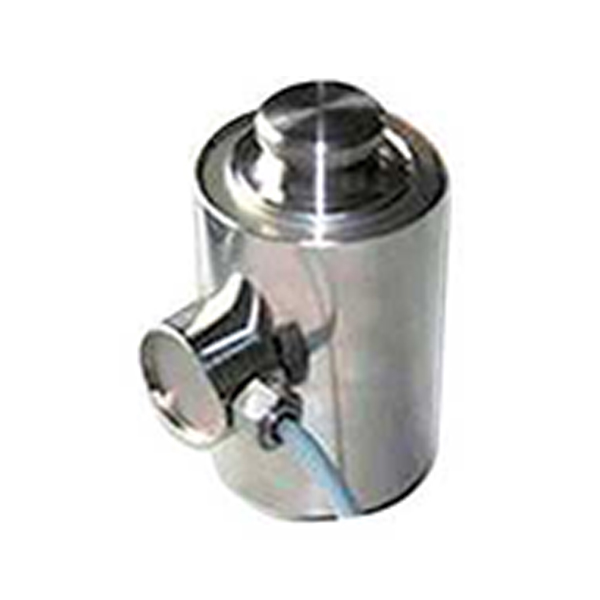 Column-Type Digital Load Cell for Long-Distance Crane WeighingDesigned for overhead crane applications requiring long-distance signal transmission, this digital load cell offers capacities from 10t to 50t with strong anti-interference and self-diagnostic features, ensuring accurate readings even when the display is far from the hook.View Product →
For crane scales below 5 tons, an S-type tension load cell remains a compact, economical, and perfectly acceptable option. The trade-off is cable length. If you only have 5 to 10 meters between the hook and the display, an analog S-type cell is enough. The moment you need to place the display on the other side of a crane runway, start looking at digital solutions instead.
There is also the clamp approach, where a digital clamp gold bridge load cell grips an existing structural member or wire rope. This is useful on retrofits where you cannot modify the existing crane hook. Clamp type cells provide a useful path to add weighing capability to a crane that was never designed for it, without a major structural change.
The weighing indicator is the part of a crane scale that the operator actually reads. No matter how accurate the load cell is, a display that is too small, too dim, or located out of sight makes the whole system useless. The four features that matter most in a crane scale indicator are: digit size, tare capability, hold function, and communication port.
The most significant trend in current weighing indicator development is IoT connectivity. An internet of things weighing instrument can push weight records to a central database in real time, giving the operations team an automatic log of every lift. When a crane scale is used to track inbound scrap, position weights, or manage inventory by weight, the IoT capability removes the need for manual note taking. The operator simply lifts, the weight is recorded, and the system associates it with the right production order or material lot.
The most common mistake in crane scale purchasing is selecting a capacity equal to the heaviest load. This ignores dynamic effects. When a load is lifted, the crane hook may accelerate, swing, or stop abruptly. These dynamics produce temporary forces that can exceed the static weight by 20 to 40 percent. A safety factor of at least 2:1 between your heaviest planned load and the crane scale rated capacity is a sound engineering practice for overhead lifting.
Here is a concrete example. If the heaviest material you expect to lift is 5 tons, select a crane scale with a 10-ton capacity. This gives you a comfortable margin for shock loads, rigging hardware, and accidental overload. If you try to save money by choosing a 5-ton scale, you will be operating at the rated limit on every heavy lift, which is exactly how load cells get permanently damaged and how displays start producing false readings.
The environment is just as important a consideration as the capacity. In locations with combustible dust, flammable solvents, or explosive gas atmospheres, a standard crane scale is unsafe. An explosion-proof sensor paired with an intrinsically safe weighing instrument is the correct specification. The additional cost is justified because the alternative is simply not acceptable in a hazardous installation.
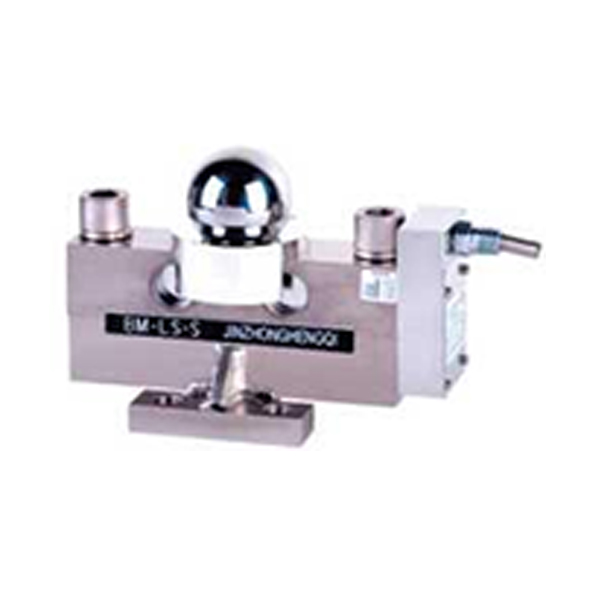 Explosion-Proof Load Cell for Hazardous Environment Crane ScalesEngineered for use in explosive atmospheres such as petrochemical or mining sites, this alloy steel sensor provides safe weighing with digital transmission, automatic centering, and fault self-diagnosis, making it essential for compliance in high-risk installations.View Product →
A crane scale is a precision instrument operating in a rough service environment. It gets scratched, rained on, dropped, and shaken constantly. Left unchecked, these conditions will degrade accuracy. The maintenance schedule that works best in practice is built around three time horizons: daily, monthly, and annual.
Professional service support can make a measurable difference in the lifespan of a crane scale. A structured calibration-verification program catches drift early, before it becomes a production quality problem. Facilities that use a crane scale for internal inventory often extend the interval to 12 months; those that use it for customer billing should calibrate more frequently. The calibration verification and certification service page from Jiuding outlines the exact steps that should be followed in a proper verification routine.
Select a crane scale with at least 120 to 150 percent of your heaviest expected load. If your heaviest load is 5 tons, choose a 10-ton capacity scale for a proper safety margin. This covers dynamic factors such as shock loads, swinging, and rigging hardware weight.
Most industrial crane scales offer an accuracy of ±0.05 to ±0.1 percent of the applied load. On a 2-ton load, a ±0.1 percent tolerance translates to a deviation of up to 2 kilograms. Higher-grade digital systems can reach ±0.03 percent, which is roughly 600 grams on the same 2-ton load.
Yes. Crane scales equipped with digital RS485 output or IoT weighing instruments can connect to a factory PC, PLC, or cloud database. Ethernet, WiFi, and cellular options allow automated lift logging without manual recording.
Annual calibration with certified test weights is the standard interval. If the crane scale is used for customer billing or trade transactions, consider a 6-month interval. Also calibrate immediately after any overload event, impact, or extended downtime.
An analog crane scale sends a small millivolt signal from the load cell to the indicator through a cable. The signal weakens with distance and picks up electrical noise. A digital crane scale converts the weight to a digital signal inside the load cell itself, so the distance between hook and display has essentially no effect on accuracy.
Standard crane scales are not safe in hazardous atmospheres with flammable vapor or combustible dust. You need an explosion-proof load cell and an intrinsically safe weighing indicator for those locations. The design prevents sparks from igniting the surrounding gases.
Weighing a load under a crane is never just a readout. It is a continuous decision about safety, accuracy, and process control. A crane scale that is correctly specified, properly installed, and regularly calibrated will serve a facility for years. The key takeaways from this guide are: buy a capacity margin of at least 2:1, choose digital load cell technology when the display is more than 10 meters from the hook, select an indicator with tare and hold functions for practical operation, and treat annual calibration as a fixed budget item rather than an optional extra. If you match these choices to your lift profile, the crane scale will behave exactly as the operator expects, every single lift.
Copyright © Ningbo Jiuding Weighing Equipment Co., Ltd.