

 English
 中文简体
中文简体
Industry News
Home / News / Industry News / A Practical Guide to axle scale: Uses, Selection, and Key Considerations
Content
An axle scale is the fastest way to verify individual axle weights on a truck without blocking traffic or surrounding the vehicle with a full weighbridge. It measures axle-by-axle load as the vehicle slowly rolls over the weighing platform, then reports each axle group weight on a connected digital indicator. For operations that need to check overloads at loading docks, enforce fleet weight limits, or protect roads and bridges from excess axle pressure, an axle scale delivers a clear answer within seconds per vehicle.
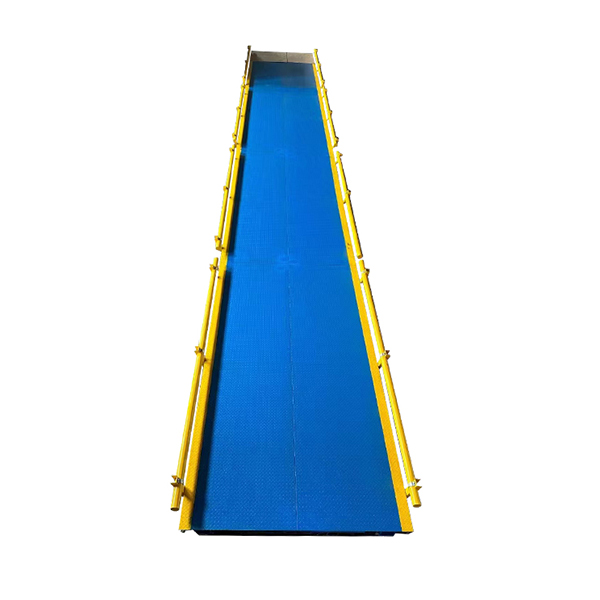
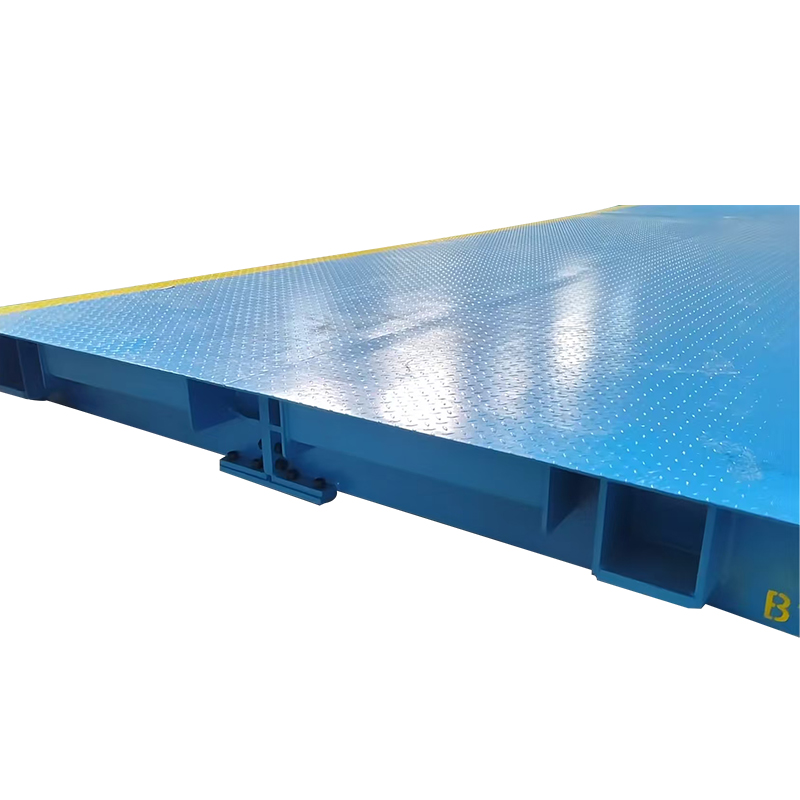
An axle scale, also referred to as an axle load scale, is a weighing instrument that measures the portion of a vehicle's total weight carried by one axle or axle group. It is built with a low-profile deck, load cells underneath, a junction box, and a digital weighing indicator. When a truck drives onto the platform, load cells generate an electrical signal proportional to the applied force. The junction box combines the signals, and the indicator converts them into a stable weight reading.
The measurement principle is simple but effective. The vehicle must approach at a steady slower speed, commonly 3 to 5 km/h, and stop completely with the target axle centered on the platform. The indicator then captures a stable reading. For tandem or tridem axle groups, the scale measures the group as a whole. This allows the operator to compare each axle group's weight against the vehicle's rated limits.
According to common industry specifications, modern axle scales reach an accuracy of roughly ±0.1% to ±0.5% of the applied load in static weighing, depending on the number of load cells and the calibration procedure. By comparison, full truck scales usually operate at ±0.1% to ±0.3% but require a much larger foundation and a longer platform. The tradeoff is that an axle scale is easier to install, easier to move, and more affordable for operations that mainly need to control axle loads rather than conduct trade transactions.
Axle scales can be built as fixed pit-type systems, surface-mounted platforms, or fully portable units. The right option depends on whether you need permanent fleet control at one location or periodic mobile checks across several sites.
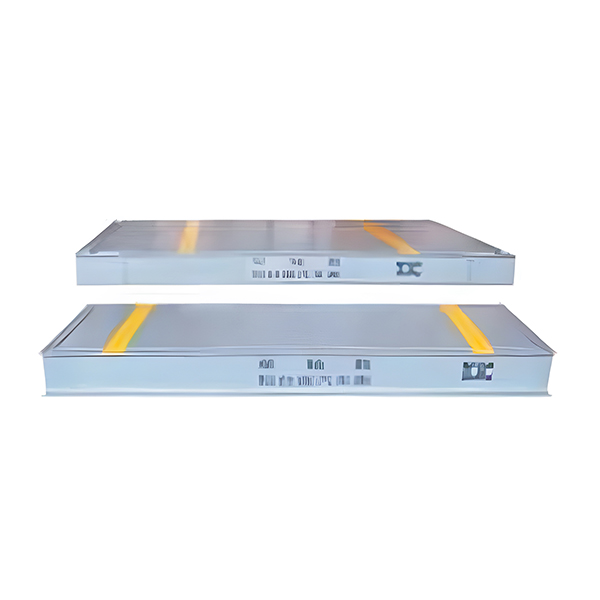 Axle Load Scale for Dynamic and Static Vehicle WeighingThis axle load scale performs dynamic and static measurements for various vehicles without type or tonnage limits. It helps prevent single-axle overloads and fits permanent or mobile installations.View Product →
Many buyers ask whether a full truck scale can replace an axle scale. The answer is yes if your only goal is total gross weight. But if you need to prevent single-axle overloads, an axle scale is the tool that gives you that specific detail.
| Aspect | Axle Scale | Full Truck Scale |
|---|---|---|
| Measurement | Individual axle or axle group | Gross vehicle weight |
| Install cost | Lower | Higher |
| Footprint | 3-4 meters per platform | 12-18 meters |
| Weigh time | 15-30 seconds | 30-60 seconds |
| Typical accuracy | ±0.1% to ±0.5% | ±0.1% to ±0.3% |
| Best use | Load monitoring, mobile checks | Commercial trade, legal weighbridge |
The main advantage of an axle scale is the ability to identify which axle is overloaded, not just how much the vehicle weighs in total. This matters because road wear is strongly related to per-axle load, and many site operators use axle scales for compliance checks and safety control. Full truck scales, on the other hand, are better suited to commercial transactions where the gross weight sets the payment, the bill of lading, or the toll charge.
In practice, both pieces of equipment can coexist. A site may have a full weighbridge for trade records and a portable axle scale for random spot checks. Understanding how weighing requirements vary across different industries helps you decide which system fits your process.
It might seem that only law enforcement needs axle scales, but in practice they are used across many commercial settings. Typical locations include:
Another important aspect is data collection. Many modern axle scales integrate with IoT platforms, allowing fleet managers to see axle loads for each vehicle in a central dashboard. This helps with preventive maintenance, fuel efficiency, and route planning. Based on fleet management field data from 2025, operations using connected axle scales report an average 12% reduction in overweight incidents within the first year of implementation, because alerts are generated before a truck reaches the highway.
Choosing the right axle scale is a procurement decision that affects daily workflow, accuracy, and maintenance costs. Here are seven criteria you should evaluate before buying:
The scale's capacity must match your heaviest expected axle load. A single-axle capacity of 20,000 kg is common for heavy trucks, while smaller vehicles may only need 10,000 kg. Avoid sizing too close to the limit; double-axle groups can momentarily apply more force than a static single axle.
Check the rated accuracy class. OIML Class III is widely used for commercial weighing, but for internal load monitoring, a lower accuracy class may be adequate and more affordable. If you only need to flag overloads, a cheaper scale with ±0.5% accuracy is often sufficient.
The deck width must fit the widest axle in your fleet. For truck axles, a 3-meter wide platform is standard. The platform length should accommodate at least one full axle or an axle group, so pick a length that fits your common vehicle configurations.
The load cells are the heart of the scale. Digital load cells with stainless steel welds offer better long-term stability and resistance to corrosion, especially in outdoor or humid environments. Analog load cells are cheaper but less immune to signal noise and temperature drift.
The indicator determines the user experience. Look for a display with large, readable characters, a backlight for outdoor use, and setpoint outputs for alarm triggers. If you plan to use the scale with a control system, choose an indicator with RS232/RS485 or Ethernet connectivity. For drivers in the cab, a large screen display mounted at a visible distance makes reading weights much easier.
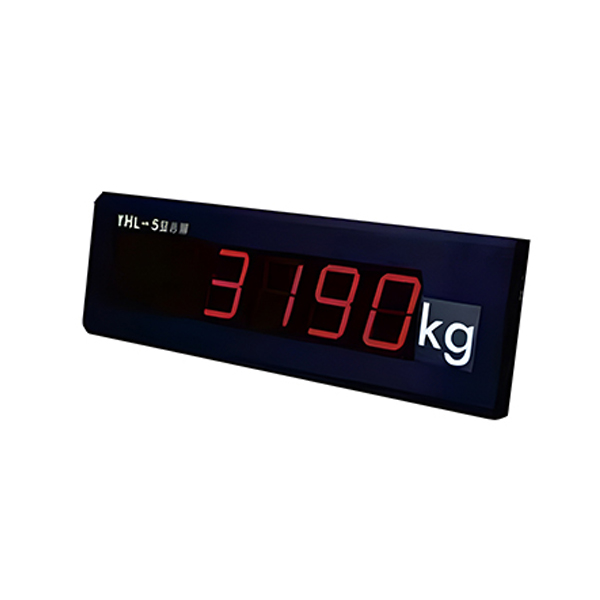 Large Screen Display for Weighing Systems with LED ReadoutThis large screen display uses ultra-bright LED tubes for clear visibility in bright environments. It shows gross and net weights and works standalone or with weighing systems.View Product →
Consider the operating environment. If the scale is outside, the load cells and junction box should have an IP67 rating at minimum. If the area is hazardous or dusty, an explosion-proof version may be necessary. In coastal or chemical environments, stainless steel load cells are strongly recommended.
Check what calibration services are available and whether the supplier can provide remote troubleshooting or on-site technician visits. A scale that cannot be recalibrated locally will cost more in downtime and transport expenses.
Proper installation is critical. The foundation must be level and rigid; otherwise, the load cells will produce uneven readings. A concrete pad with a minimum depth of 20 cm is usually required, though the exact depth depends on the soil bearing capacity and the scale's design.
After installation, the scale should be calibrated by applying known test weights. The calibration should cover zero point, span, and any eccentric loads. Regular recalibration ensures that the scale remains accurate over time. For a typical axle scale, a calibration check every 6 to 12 months is recommended, depending on frequency of use and exposure to environmental factors such as salt spray, dust, or heavy rain. A trusted calibration partner can help you plan this cycle. Our calibration and certification services cover the full process, from on-site adjustment to final verification.
Daily maintenance activities are simple but important for long-term reliability.
| Task | Frequency | Why It Matters |
|---|---|---|
| Sweep platform debris | Daily | Prevents false readings |
| Visual check for cracks | Weekly | Catches structural damage |
| Check junction box seals | Monthly | Keeps moisture out |
| Test zero drift | Monthly | Confirms calibration stability |
| Confirm indicator display | Daily | Avoids misreading weights |
Following a maintenance routine extends the scale's service life and reduces unexpected downtime. Most axle scales in this product category are designed to last 10-15 years with proper care.
An IoT-enabled axle scale connects to a network and sends axle weight data to a cloud platform or local server in real time. This allows fleet managers to:
The upfront cost of an IoT-capable system is higher, but the operational benefits can be significant. A fleet that weighs 50 trucks per day can save roughly 30-60 minutes of manual record-keeping each day, which translates to 10-15 working hours per month. In addition, real-time alerts prevent overload incidents that cause expensive fines or equipment damage.
Since 2024, the trend in industrial weighing has moved toward cloud-based data collection and predictive maintenance. The digital indicators used on axle scales now come with Ethernet or Wi-Fi modules as standard options, so retrofitting existing equipment is often straightforward. Choosing a weighing indicator with built-in IoT capability, such as a model with TCP/IP connectivity, gives you the flexibility to start with basic logging and expand to full remote management later.
 Weighbridge Scale Manufacturer with Global Export ExperienceThis manufacturer supplies weighbridge scales exported to dozens of countries. They offer quality control, technical support, and pre-sales and after-sales services for industrial weighing needs.View Product →
An axle scale measures one axle or axle group at a time, while a weighbridge measures the total vehicle weight in a single pass. Axle scales are less expensive but cannot replace a weighbridge for trade, customs, or toll collection applications where total gross weight is the legal basis for payment.
Typical static accuracy is ±0.1% to ±0.5% of the applied load. This is sufficient for internal load monitoring and overload detection. For legal trade use, ensure the scale meets the applicable accuracy class and is verified by the appropriate authority.
Surface-mounted portable axle scales can operate on compacted subgrades, but fixed pit-type installations require a concrete foundation. For portable use, a stable, level pad is essential to maintain accuracy.
About 15-30 seconds per vehicle, depending on how quickly the driver positions the axle and stops. This is two to three times faster than driving onto a full weighbridge, because the vehicle does not need to be fully enclosed.
Yes. The load cells alone do not produce a useful readout. The indicator converts the electrical signal into a weight display and can optionally record, print, or transmit data. Choose an indicator with an appropriate response time for static axle weighing.
An axle scale is not a one-size-fits-all product. The right choice depends on the types of vehicles you handle, the precision you require, and the environment where it will operate. By considering the capacity, accuracy, platform dimensions, load cell construction, indicator features, and maintenance needs upfront, you can select a system that delivers reliable readings for years. If the scale is properly calibrated and maintained, it becomes a quiet but powerful tool for keeping your fleet compliant and your operations efficient.
Copyright © Ningbo Jiuding Weighing Equipment Co., Ltd.