

 English
 中文简体
Industry News
Home / News / Industry News / Digi Scales Explained: How to Choose Industrial Digital Weighing Systems
Content
Three weighings, one pallet, one shift: 1,004.2 kg before the morning break, 1,002.8 kg at noon, and 1,000.6 kg right after a forklift crossed the dock plate. The product never changed, the operator never changed, and the pallet never changed. The environment, the power supply and the way the pallet sat on the platform did.
Digi scales are not one product you buy once and forget. A digital weighing system is a chain: a mechanical structure, one or more load cells, a summing point, an indicator, and the power and data wiring that ties them together. The number on the screen is only as dependable as the weakest block in that chain, and the cheapest block is usually the one that decides how often you call a service technician.
If you only remember one thing from this guide, remember this: specify capacity from the peak dynamic load, not the average load, and specify the enclosure rating before you specify the brand. Everything below explains why those two decisions drive almost every other choice, from load cell class to indicator model to how often the scale needs attention.
A digital scale turns a physical force into a voltage, then turns that voltage into a number a human or a machine can act on. In a bench scale this happens inside one small housing. In an industrial system the parts are separated, which is exactly what makes the system flexible and also what makes it vulnerable to bad specification.
Four blocks do the work:
When a scale behaves strangely, the fault is usually in the interface between these blocks, not inside them. A cell that is perfectly healthy will still drift if the junction box is wet, if the platform is binding on a guide, or if the instrument is fed by a supply that dips every time a welding set starts.
The first real decision on a multi-cell scale is whether the cells talk in millivolts or in data. Both work. They fail differently, and they cost differently across the whole life of the scale.
| Aspect | Analog cell | Digital cell |
|---|---|---|
| Output | About 2 mV/V, summed in the junction box | Serial data per cell, each with its own address |
| Corner correction | Trimming potentiometers, done by hand | Software adjustment, repeatable and documented |
| Cable length effect | Resistance shifts with length and temperature | Largely immune, the value is digitised at the cell |
| Diagnostics | Limited, a fault looks like a weight drift | Each cell reports status, useful on large platforms |
| Upfront cost | Lower per cell | Higher per cell, often recovered in service time |
On a small platform scale with four cells and a short cable run, analog is often the sensible choice. On a 60 tonne truck scale with ten cells and a 40 metre cable run across a yard full of variable-frequency drives, digital cells earn their price within a couple of service visits, because a technician can identify the failing cell from the indicator instead of unbolting the deck.
Rated capacity covers everything sitting on the platform: the product, the pallet, the tote, the fixture, and the deck itself. A scale rated at 1,200 kg is not a scale that weighs 1,200 kg of product safely, and this is the single most common specification error we see in enquiries.
A workable rule for a four-cell platform looks like this:
With a 180 kg deck and a 1,000 kg peak live load, the total becomes 180 plus (1,000 times 1.25), which is 1,430 kg. Per cell that is 1,430 divided by 4, which is 358 kg, and after the utilisation factor it becomes about 511 kg. A 500 kg cell sits exactly on the line, so a 750 kg cell is the safer order. That extra 250 kg of headroom usually costs a small fraction of the platform price and removes overload as a failure mode.
Typical datasheet figures for industrial cells describe a safe overload of around 150 percent of rated capacity and an ultimate overload near 300 percent. Those numbers protect the cell from a single accident, not from a habit. Repeated shock loading from a 200 kg bag dropped from 800 mm will destroy a correctly sized cell long before it destroys an undersized one, which is why impact applications use a buffer scale with springs or elastomer mounts rather than a plain platform.
"Accurate" means nothing until you attach it to a division size and a load range. A floor scale with a 50 kg capacity and a 5 g division resolves 10,000 steps. A 60 tonne truck scale with a 20 kg division resolves 3,000 steps. Both are normal. Neither is more accurate than the other in any absolute sense, because accuracy is always relative to the load being weighed.
| Load range | Tolerance at verification | Tolerance in service |
|---|---|---|
| 0 to 500e | +/- 0.5e | +/- 1.0e |
| Above 500e to 2,000e | +/- 1.0e | +/- 2.0e |
| Above 2,000e to 10,000e | +/- 1.5e | +/- 3.0e |
Temperature is the quiet variable. A load cell specified at plus or minus 0.002 percent of full scale per degree Celsius on a 30,000 kg capacity shifts roughly 0.6 kg for every 1 degree C change. Park that scale in direct sun and let the steel warm by 20 degrees between morning and afternoon, and a 12 kg swing is entirely consistent with a healthy cell. That is why outdoor platforms need shade, ventilation or temperature-compensated digital cells, and why a reading taken at 7 am should not be used to judge a scale at 2 pm.
Drift has three usual sources: thermal, electrical and mechanical. Thermal drift follows the sun. Electrical drift follows the supply and the shielding. Mechanical drift follows loose anchors, worn guides, debris under the deck and a foundation that moves with the seasons. Only the first is a load cell specification problem.
The indicator is where operators live, so it deserves more attention than a line in a quotation. Four features separate a display that helps from a display that annoys:
Before comparing models on price, it is worth walking through the selection criteria that actually affect reliability, including the practical checks our engineers summarise in this guide to key features to look for when choosing a weighing indicator. The short version: decide the output protocol and the environment rating first, then the display size, then the brand.
For general industrial use, a panel such as the 3190DS10 series digital display covers the standard needs of a platform or hopper scale: stable filtering, simple setpoints and a clear readout that operators trust after the first shift.
Where the site runs hazardous dust or vapour, the indicator has to move to an intrinsically safe design with a full stainless enclosure. In dusty food or chemical plants, the deciding factor is usually the sealing and the ability to clean the front panel without opening the housing.
In an analog system, four to ten cells are wired into one junction box, where their outputs are summed and trimmed. This box is small, inexpensive and responsible for a surprising number of service calls. It sits under a truck scale in a pit that collects rainwater, or on a platform frame where it takes every impact and every washdown.
A digital junction box changes the job it does. Instead of summing millivolts, it collects serial data from addressed cells and forwards one clean stream to the indicator, which means corner adjustment happens in software, cable resistance stops mattering and the box can be mounted where it is easy to reach rather than where it is convenient for the wiring. On multi-cell platforms, this single change shortens troubleshooting from hours to minutes.
The word "scale" covers equipment that behaves very differently once installed. The table below is a starting map of capacity, resolution and where each type usually belongs.
| Scale type | Typical capacity | Typical division | Common setting |
|---|---|---|---|
| Platform or floor scale | 300 kg to 5 t | 50 g to 500 g | Production, warehouse, shipping |
| Pallet scale | 1 t to 2.5 t | 200 g to 500 g | Forklift or pallet truck weighing |
| Truck scale | 30 t to 80 t | 10 kg to 20 kg | Trade settlement, logistics, mines |
| Axle load scale | 10 t to 30 t per axle | 20 kg to 50 kg | Roadside or yard axle checks |
| Belt scale | 10 t/h to 1,000 t/h | Flow, not static weight | Continuous conveying and blending |
| Buffer scale | 500 kg to 3 t | 200 g to 1 kg | Bagging lines, impact loading |
| Silo or hopper scale | 2 t to 100 t | 1 kg to 20 kg | Inventory and batching |
Notice how the division grows with capacity. A 60 tonne truck scale cannot resolve 50 g, because the vibration of a passing forklift alone would exceed that band. Buyers who ask for "the most accurate scale" without naming a load range usually end up paying for electronics that cannot deliver what the physics of the platform allows.
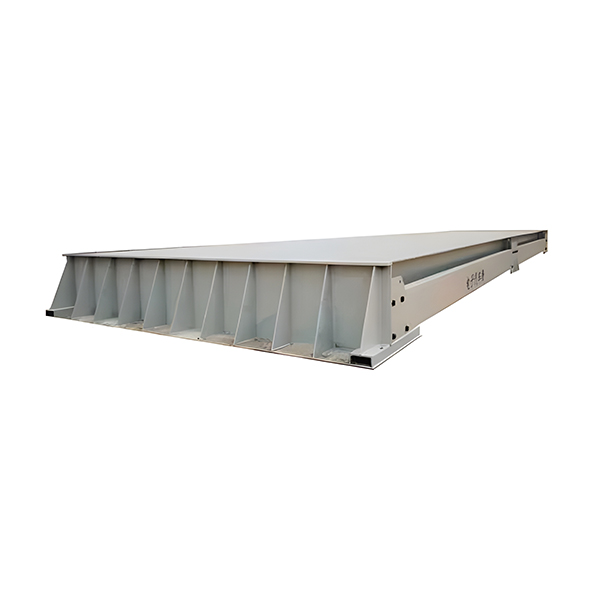
A truck scale is the largest purchase most sites make in weighing, and the decision that matters most is not the brand of the indicator. It is how the platform sits in the ground.
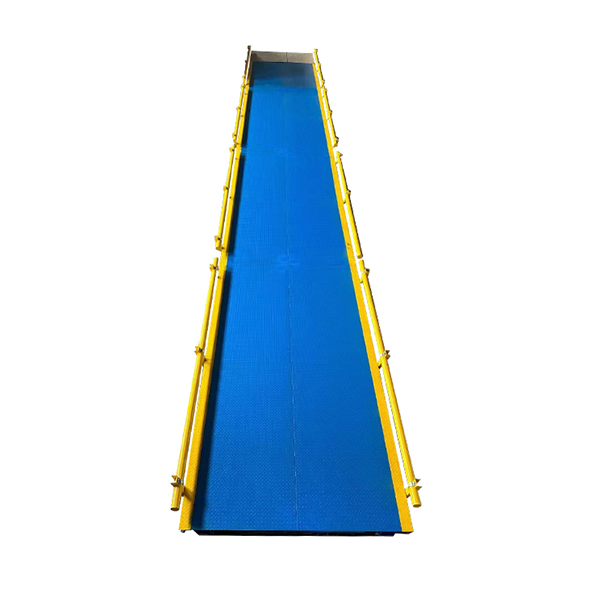
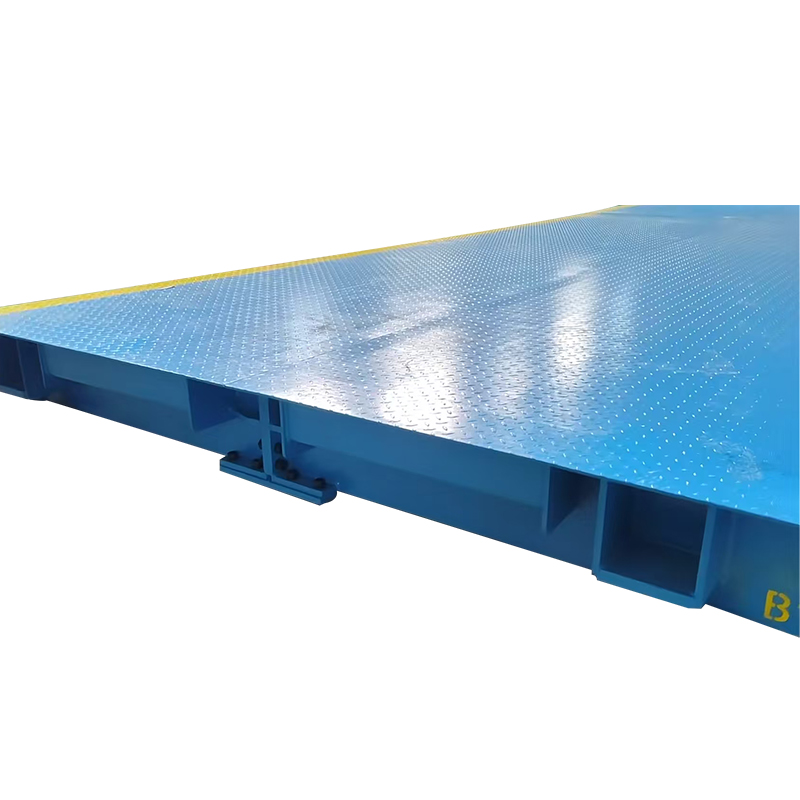
A standard 3 by 18 metre platform in 60 or 80 tonne capacity typically uses eight to ten digital cells, each sealed to IP68, wired in modular sections so one damaged bay can be replaced without scrapping the whole deck. On export orders the practical questions change: container-friendly section lengths, corrosion protection for humid sea air, and a supply voltage the destination country actually uses.
For general logistics, mining and processing yards, a digital electronic truck scale with sealed stainless cells and a shock-resistant foundation is the configuration that survives the first five years without drama.
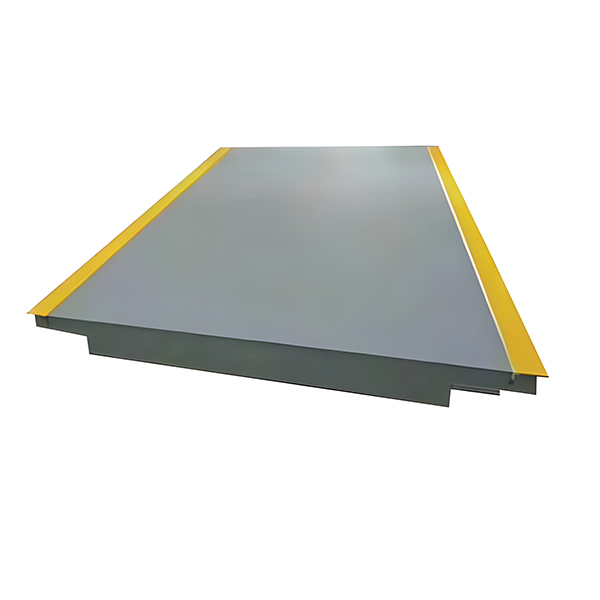 Digital Electronic Truck Scale for Logistics, Mining and Processing YardsA digital truck scale with intelligent load cells and weighing software for logistics, mining and processing yards; measure vehicle length, approach and drainage before ordering.View Product →
Before ordering, measure three things on site: the longest vehicle that will ever be weighed, the available straight approach length, and the drainage path. Those three numbers eliminate more rework than any technical specification.
An increasing share of industrial scales no longer end at the display. They end at a database. Connected indicators push weight values over Modbus TCP, Modbus RTU, Ethernet/IP or an MQTT-style gateway, so a batching log, a shipping record or a silo level can live in the same system as the rest of production data.
The practical gain is not the technology. It is the removal of transcription. When weight lands directly in a record, three things disappear: the writing error, the missing ticket and the argument about which number was correct. For a plant running 40 trucks a day, eliminating one reweigh per day pays back the cost of the connected electronics well inside a year.
Two cautions. First, network scales belong on an isolated segment with fixed addressing, not on the office Wi-Fi. Second, agree the data format before installation. A scale that sends beautiful data in a format your ERP cannot read is an expensive display with extra steps.
Weight data is only as stable as the voltage feeding the instrument. A regulated power supply smooths the small variations that show up as a flickering last digit. An uninterruptible power supply covers the larger ones: a 2 second outage during a batching cycle does not just lose a reading, it can leave a valve open and a hopper overfilled.
A ticket printer still has a place on any site where a driver leaves with paper. Weighing software takes the next step, holding tare memories by vehicle, product codes, batch totals and shift reports. The accessory layer is unglamorous, and it is where most "the scale is unreliable" complaints are actually solved.
Build the accessory list at the same time as the scale. Adding a printer, a large remote display for a forklift driver, or a UPS six months after commissioning costs more in labour than including them in the original order.
Most scale faults are installation faults that appear later as electrical faults. A platform that is not level loads one cell harder than the others. A deck that touches a guide rail produces a reading that changes when a truck drives past without even getting on the scale. A cable run laid beside a motor cable picks up noise that looks exactly like a failing cell.
A sensible commissioning sequence includes level and shim checks, a corner load test at roughly one third of capacity at each corner, three repeatability runs with the same test weight, an eccentricity check, and zero and span adjustment against traceable test weights. Documentation of those results matters more than the calibration itself, because next year's technician needs a baseline.
Twelve months is the common interval between checks for a clean, moderate-traffic scale. Six months suits sites with heavy traffic, dust, corrosive atmosphere or frequent washdown. Between checks, four habits extend life noticeably: keep the pit and the deck edge clear, inspect cable entries after every storm, look for rust bloom at anchor points, and record the zero reading each morning. A zero that creeps by 5 kg over a month is a warning, not a nuisance.
Where a site runs several scales across different buildings, planned service visits and periodic verification are cheaper and far less disruptive than emergency call-outs, which is the logic behind structured calibration and verification support arranged on a schedule rather than on a breakdown.
Two quotations for the same nominal scale can differ by 40 percent and both can be honest, because they are not selling the same system. Compare line by line instead of comparing totals.
| Line item | What a complete offer states | Warning sign |
|---|---|---|
| Load cells | Capacity, sealing class, output tolerance, matched set | Capacity only, no sealing class given |
| Junction box | Sealed housing, surge protection, mounting position | Not listed at all |
| Indicator | Ports, relay count, enclosure rating, power supply type | Model number without a datasheet |
| Installation | Levelling, shimming, drainage, cable routing | Delivery only, no commissioning scope |
| Support | Spare parts availability, operator training, response time | Contact details only |
It is shorthand for digital scales, meaning any weighing system where the load is converted electronically and shown as a digital value rather than on a dial or beam. In industrial use it usually refers to a system built from load cells, a summing point and an electronic indicator rather than a single sealed consumer product.
Twelve months is typical for a clean, moderate-traffic installation. Sites with heavy traffic, dust, corrosion or frequent washdown usually move to six months. High-value trade weighing often justifies quarterly checks plus a daily zero reading logged by the operator.
Rank the causes in this order: something is touching the platform or deck edge, the foundation or feet have moved, the power supply is unstable, the cable shielding is compromised, or the cells are genuinely damaged. Vibration and air movement on a large platform also move the last digit, which is normal and not a fault.
You can, but not with the resolution you expect. A 60 tonne platform with a 20 kg division cannot report 2 kg reliably, because the platform dead load and ambient movement sit far above that band. For small batches, add a bench or platform scale rather than pushing the large instrument beyond its practical range.
Dry indoor areas are fine with an IP54 or better indicator. Washdown zones need IP65 minimum, and areas with direct hose contact or chemical splash need IP66 to IP68 cells with a stainless housing. On truck scales, IP68 cells are the practical default because pits and yards hold water.
Yes, but for a different reason. Analog cells need a box to sum millivolt signals and trim corners. Digital cells need one to distribute power and data and to provide a clean, sealed connection point for the daisy chain. Corner adjustment moves into software instead of potentiometers.
Yes, provided the indicator supports the protocol your control system speaks. RS485 with Modbus RTU, Ethernet with Modbus TCP, analog 4 to 20 mA and relay contacts cover most cases. Confirm the data format with your integrator before the order, not after.
A 3 by 18 metre platform in 60 to 80 tonne capacity usually carries eight to ten cells, giving redundancy if one fails and spreading the load across the deck. Larger or longer decks scale up from there, which is another reason digital cells with individual addresses are useful on long platforms.
Digi scales reward buyers who think in systems rather than in products. Size the cells for the peak dynamic load with headroom, choose the enclosure rating to match the actual environment, decide the output protocol before the brand, and document the installation. Do those four things and the scale stops being a source of daily questions and becomes what it should be: a quiet piece of equipment that tells the truth about weight, every time.
Everything else, from junction box placement to the spare cell on the shelf, is easier once those four decisions are fixed.
Copyright © Ningbo Jiuding Weighing Equipment Co., Ltd.