

 English
 中文简体
Industry News
Home / News / Industry News / Forklift Scales: Types, Accuracy Limits, and On-Board Weighing Choices
Content
Inbound receiving is where most warehouses first feel the cost of a missing forklift scale. A twenty-two pallet delivery backs into the dock, the driver waits, and every pallet makes a detour to the floor scale at the far end of the building. Two operators, one truck, and roughly twenty minutes of pure travel and queuing. Put a scale on the forklift and that twenty minutes can disappear, but only if the scale matches how the loads are actually handled.
The short answer for most operations: fit a load cell based forklift scale if the weight feeds inventory, production or shipping records, and fit a hydraulic pressure sensing unit only if you need an indicative figure at the lowest possible cost. Everything else in this article explains why that split exists, where accuracy leaks away, and what to check before money changes hands.
No forklift scale weighs anything directly. It measures a proxy and converts that proxy into kilograms, and the conversion step is where accuracy is either protected or lost.
Two proxies dominate the market. The first is hydraulic pressure in the lift circuit, read by a transducer tapped into the lift cylinder line. The second is mechanical strain, measured by load cells built into the fork bodies or into a plate mounted between the carriage and the forks. Both work, and both are affected by conditions that have nothing to do with the freight on the pallet:
Treat an on-board scale as a process instrument. It is excellent for confirming a count, catching a short shipment at the dock, planning axle loads and building a per-pallet data trail. It is not a replacement for a static floor scale when the weight on the ticket is the product being sold.
Almost every forklift weighing project lands on one of five hardware configurations. The working tolerances differ enough that the configuration decision effectively sets your accuracy ceiling before you choose a single component.
| Configuration | Sensing Method | Typical Working Tolerance | Where It Fits | Main Risk |
|---|---|---|---|---|
| Scale forks (slip-on) | Load cells sealed inside replacement fork bodies | 0.1 to 0.5 percent of capacity | Freight handling, recycling yards, fleets that move trucks often | Added fork mass reduces net capacity; fork class must match the truck |
| Carriage-mounted scale | Load cell plate between carriage and fork frame | 0.1 to 0.5 percent of capacity | High-use fleets that keep their existing forks | Mounting plate must be matched; service access behind the carriage |
| Hydraulic pressure sensing | Pressure transducer on the lift cylinder circuit | 0.5 to 2 percent of capacity | Cost-sensitive fleets that need an indicative number only | Very sensitive to oil temperature, friction and lift height |
| Pallet truck scale | Load cells under the fork rails of a hand or powered pallet truck | 0.1 to 0.5 percent of capacity | Trailer loading, back rooms, low lift heights | Low lift height limits ground clearance on rough yards |
| Weigh-on-the-move | Load cells with motion compensation software | 0.5 to 2 percent while travelling | Waste collection, yard transfers, continuous data capture | Needs steady speed, smooth floors and good suspension data |
The table answers the first question any buyer should ask: is the number going to be recorded, or is it going to be glanced at? Recorded numbers point toward load cell hardware. Glanced-at numbers can live with hydraulic sensing, provided the operator lifts to the same height every time.
A pressure transducer reads the force needed to hold the mast up. On a cold morning, the first few lifts typically read low because the oil is thick and the circuit is stiff. An hour later, with warm oil and a warmed-up hydraulic system, the same pallet can read several kilograms heavier. Add chain stretch, roller flat spots and a slightly worn pump, and the drift becomes a daily variable rather than a single offset.
Hydraulic systems can still be genuinely useful. They install quickly, they survive rough treatment, and they cost a fraction of load cell hardware. The trade is discipline: lift to a marked height, hold the mast vertical, pause, and read. Operators who follow that routine get repeatable results within a percent or two of true mass on loads above roughly one third of rated capacity.
Load cell systems measure the load path directly, so oil temperature, pump condition and lift height matter far less. The residual errors come from mechanical geometry instead: where the pallet sits on the fork, how much the fork tips deflect, and whether an attachment is adding unmeasured mass. Compensation for those effects is a matter of calibration and of consistent handling practice, not of waiting for the machine to warm up.
If your operation weighs fewer than about fifteen loads per shift, hydraulic sensing is usually adequate. Above that, the labour cost of repeating lifts and chasing discrepancies quickly outgrows the price difference.
Product literature is easy to misread here, so it is worth working through the arithmetic before committing to a capacity rating.
Ask for the tolerance statement in kilograms at a stated load, not only as a percentage of capacity. That single clarification removes most of the ambiguity between competing quotations.
The financial case rarely comes from the weighbridge. It comes from the handling steps you delete. A worked example makes it concrete: if a floor scale detour is a 150 metre round trip at an average of 8 kilometres per hour, plus 60 to 90 seconds of queuing and ticket handling, each pallet costs roughly three and a half minutes of truck and operator time. Forty pallets in a shift is about 140 minutes, or more than two working hours, spent moving loads that could have been weighed during the lift that placed them.
Beyond dock time, on-board weighing changes how several routine jobs are done:
Two conditions have to hold for the payback to appear. The forklift must already be doing the lifting anyway, and the weights must be recorded somewhere useful. A scale that prints nothing and logs nothing is a convenience, not a saving.
Sensors get the specification attention, but the indicator decides whether the scale gets used. On a forklift, that means a display readable in daylight, keys that work through gloves, and a mounting position that does not block the operator's view of the forks.
For operations that want weight data leaving the truck automatically, an internet of things weighing instrument is the practical route. It combines the local display and keypad an operator needs with a network connection that pushes weighments to a server, so totals appear in the office without anyone writing them down.
| Capability | What It Does For The Operator | What To Check |
|---|---|---|
| Peak hold | Locks the highest stable reading during a lift | Adjustable hold delay; too short a delay locks onto a jolt |
| Accumulation | Totals several pallets into one load figure | Clearing the total should be deliberate, not a single stray key |
| Tare handling | Removes pallet, attachment and fork mass | Confirm both free and preset tare are available |
| Data output | Sends weight to a printer, computer or warehouse system | Match the protocol your software already speaks |
| Power | Runs from truck battery or its own supply | Voltage spikes on older trucks destroy displays |
A forklift is an electrically noisy place. The mast is a long steel structure, the drive motor draws heavy current, and the cable run from carriage to cab passes close to both. Under those conditions the difference between an analog and a digital sensing chain shows up quickly.
Digital load cells convert the reading inside the cell and transmit it as a data stream, which is far more resistant to induced noise over long runs than a millivolt signal. That is also why a digital junction box earns its place on multi-cell assemblies: it combines several cells, keeps the wiring orderly, and lets the system diagnose a single failed cell instead of losing the whole scale.
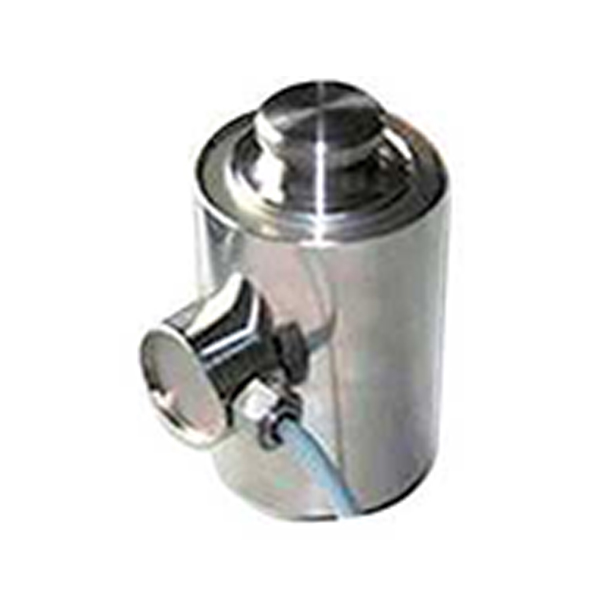 Column Type Digital Load Cell for Truck ScalesColumn-type digital load cell for truck and platform scales, offering 10t–50t capacities, digital output for long cable runs, surge protection, bus support for up to 16 cells, and self-diagnosis that helps locate faults.View Product →
If you want the underlying physics before choosing hardware, our note on how a weighing sensor converts deflection into a usable signal covers the strain gauge side in plain language. The practical takeaway is simpler: specify sealed, temperature compensated cells, protect the cable with a proper strain relief loop, and keep connectors out of the wash-down path.
Cold stores deserve a specific mention. Condensation inside a connector produces erratic readings that look like a failing load cell and disappear when the truck returns to room temperature. Sealed connectors and a short daily warm-up at the start of a frozen shift prevent most of those service calls.
An unrecorded weight is a conversation. A recorded weight is a data point. Getting from one to the other is a matter of deciding what the printed or transmitted record must contain.
 Weighing Printer for Truck Scale RecordsWeighing printer for logistics and truck-scale records, producing clear gross, net, vehicle, and time printouts; connects to weighing instruments via RS232C or current loop to reduce manual transcription errors.View Product →
A receipt or label printed at the truck should carry the date and time, the weighment number, the net and gross figures, and an operator or shift identifier. Sequence numbers matter more than they seem: they expose duplicated weighments in a way that timestamps alone do not. For operations still transferring figures by hand, a compact printer mounted in the cab removes the transcription error that quietly corrupts month-end inventory.
A forklift scale rarely stands alone, and it should not. Most sites end up with several weighing points, each covering a different granularity of the same material flow.
A truck scale or an electronic floor scale handles the bulk inbound vehicle. An axle load scale checks how the finished load sits on the axles before the truck leaves. A buffer scale absorbs the impact of loads that are dropped rather than set down, which protects sensing elements in transfer areas. The forklift scale then fills in the pallet-level detail that the big scales can never see. When all four report into one record structure, a discrepancy in a delivery can be traced to a specific pallet instead of being averaged away across a truckload.
On the electrical side, three details prevent most integration headaches: confirm the output protocol before ordering the indicator, allow for a regulated supply or an uninterruptible supply where mains power is unstable, and keep the weighing system on its own circuit where practical. Voltage sag on a shared circuit shows up as mysterious zero drift.
An on-board scale that nobody checks will eventually be ignored. Trust is built with a short routine, not with paperwork.
For fleets that would rather not own the schedule, scheduled preventive maintenance keeps the checking discipline on a calendar rather than on a supervisor's memory. Whatever the arrangement, the goal is the same: when a weight looks wrong, someone notices within a shift rather than at the end of a quarter.
A well-installed load cell system generally holds within 0.1 to 0.5 percent of rated capacity when the load is lifted steadily with the mast vertical. Hydraulic pressure sensing typically lands between 0.5 and 2 percent under the same conditions. Both ranges widen noticeably if the truck is moving, the mast is tilted, or the load sits far from the fork heel.
Yes, in most cases. Scale forks replace the existing forks, and carriage-mounted units bolt between the carriage and the fork frame. The information you need before ordering is the truck model, the carriage class, the fork dimensions, the rated capacity and whether a side shifter or other attachment is fitted.
It can. An attachment adds mass and mechanical play between the sensing element and the load. If the attachment is left on the truck, its weight should be tared out and the load should be centred as consistently as possible. Units that mount behind the attachment tend to behave better than units that mount in front of it.
A zero check each shift, a known-load check monthly, and a fuller review every six to twelve months suits most operations. Sites handling hazardous or high-value material often shorten those intervals. The important part is the log, because trend data catches problems that a single passing check misses.
Inconsistent lifting practice. The same truck and the same scale will produce different numbers when one operator lifts to 200 millimetres and holds still, and another lifts to 800 millimetres while rolling forward. Standardising the lift height and holding the mast vertical fixes more accuracy complaints than any hardware change.
Yes, provided the indicator supports the right output. Serial, Ethernet, wireless and internet of things instruments all exist, and the deciding question is what your software already accepts. Confirm the protocol and the data format with your information technology team before the indicator is specified, not after it is installed.
Scale forks move between trucks easily and are straightforward to service, but they reduce net lifting capacity by their own mass and must match the truck class. Carriage-mounted units keep your existing forks and suit high-use fleets, but installation is more involved and access behind the carriage is tighter. Neither is universally better; the deciding factor is how often the truck changes and how much spare capacity you have.
Plan on 90 to 130 kilograms for a typical scale fork pair, plus the weight of any attachment, plus the mass of the indicator and mounting hardware. On a 2,500 kilogram truck that is a meaningful fraction of the rating on marginal loads, so check the heaviest pallet you genuinely handle before choosing a capacity.
They do, with the right sealing and temperature compensation. Rain and wash-down demand sealed connectors and a protected display. Cold stores mainly test the connectors, since condensation forms when a truck moves between frozen and ambient air. A short warm-up at the start of a frozen shift, plus sealed plugs, prevents most cold-room faults.
Static weighing means lifting the load, holding it still and reading the display, which gives the best accuracy and suits dock and receiving work. Weigh-on-the-move captures the weight while the truck travels, which is faster and better suited to waste routes and long yard transfers, but the tolerance is wider and the result depends on speed and floor conditions.
Three questions settle most of the specification. Will the weight be recorded or merely observed? Load cell hardware answers the first case, hydraulic sensing the second. How heavy is the heaviest pallet you actually lift, including attachments and pallet mass? That figure sets the capacity with a safe margin, not the truck's headline rating. And where does the number have to arrive, on paper in the cab, on a screen in the office, or straight into a warehouse system? That answer defines the indicator and the data path.
Get those three right and the rest is installation detail. Get them wrong, and you end up with a scale that nobody trusts, which is worse than having no scale at all, because it turns a measured process back into a judgement call.
Copyright © Ningbo Jiuding Weighing Equipment Co., Ltd.