

 English
 中文简体
Industry News
Home / News / Industry News / Industrial Scales Buying Guide: Load Cells, Indicators and Truck Scales
Content
At 06:40 a 60-tonne tipper rolls onto a weighbridge. The ticket prints 58,940 kg, the driver signs, and the load leaves the yard. Nobody in that transaction opens a datasheet. What protects the ticket is invisible: a load cell that is still inside its verified error band, an indicator that recorded a zero check at shift start, and a foundation that has not settled since commissioning. Industrial scales live or die on those details.
Here is the short answer before the long one: capacity is the least interesting number on a scale quotation. The figures that decide your real cost per weighing are the metrological class of the instrument, the accuracy class and temperature compensation of the load cells, the communication path between the indicator and your records, and the concrete underneath the platform. Get those four right and a mid-priced scale will outperform a premium one for a decade. Get them wrong and every ticket becomes a negotiation.
The sections below walk through how industrial weighing systems are actually specified, where accuracy leaks away, which scale type fits which duty, and the questions that separate a supplier from a seller.
If the weight you print becomes money, an invoice, a customs declaration or a road-fine defence, your scale is a legal instrument. A 100-tonne platform that cannot hold its verified error band through a working day is a liability, not a bargain, because the loss does not appear as a repair bill. It appears as a slow, invisible leak in every transaction.
Trade-approved industrial scales are normally certified to OIML R76-1 Class III, the class covering road weighbridges, platform scales, silo scales and most factory weighing. The certificate fixes the verification scale interval, written as e, and every error limit is expressed as a multiple of that interval. Under OIML R76-1, an in-service Class III instrument above 2000 e may deviate by up to plus or minus 2.5 e.
Run the arithmetic on a 60-tonne weighbridge with e equal to 20 kg. The instrument carries 3000 divisions, so the permitted in-service deviation is plus or minus 50 kg. One unbonded strain gauge, one corner that was never trimmed, or a morning of direct sun on a black steel deck can consume that entire budget before the second shift starts.
Verification is not a single measurement. It is a set of documented checks, and each one guards against a different failure mode:
Re-verification cycles vary by jurisdiction, but 12 months is the common baseline and many logistics yards run an internal check monthly with a loaded test truck. A scale that drifts 30 kg between annual visits is not out of tolerance on paper, yet it can still shift tens of thousands of tonnes of accounting in the wrong direction.
Every industrial scale, from a 300 kg platform unit to an 80-tonne weighbridge, is assembled from the same four blocks. They fail in different ways, and each one needs a different line in your specification.
| Building block | What it does | Most common failure | What to specify |
|---|---|---|---|
| Load cells | Convert mechanical load into an electrical signal | Moisture ingress, cable damage, thermal drift | Accuracy class, IP rating, compensated temperature range |
| Junction box | Sums and trims several load cell signals | Water in the enclosure, corroded terminals, drift on one channel | Sealed housing, digital summing, surge protection |
| Weighing indicator | Displays, logs and transmits the weight value | Voltage spikes, failed communication, corrupt records | Protocol support, memory size, enclosure rating |
| Platform and foundation | Carries the load and transfers it to the cells | Settlement, poor drainage, side impact damage | Deck thickness, modular design, approach geometry |
The order of importance is not the order of price. Load cells and the foundation carry most of the accuracy risk, while the indicator carries most of the data risk. A cheap indicator on good load cells gives you an accurate scale with clumsy record keeping. Good load cells on a settling foundation give you neither.
A load cell is a spring with a strain gauge bonded to it, and everything about its construction decides how well your scale behaves in the real world. OIML R60 defines the accuracy classes used for these components. A class C3 cell is verified to 3000 divisions, C4 to 4000, and the class must be at least as high as the class of the complete instrument.
Three specifications matter more than the rest in industrial installations:
That last point matters on long cable runs. A weighbridge can have 60 metres of cable between the furthest cell and the indicator, and on an analog system that length is part of the measuring circuit. A column type digital load cell keeps the measurement digital from the point of load application, so a damp junction box or a stretched cable affects communication rather than calibration.
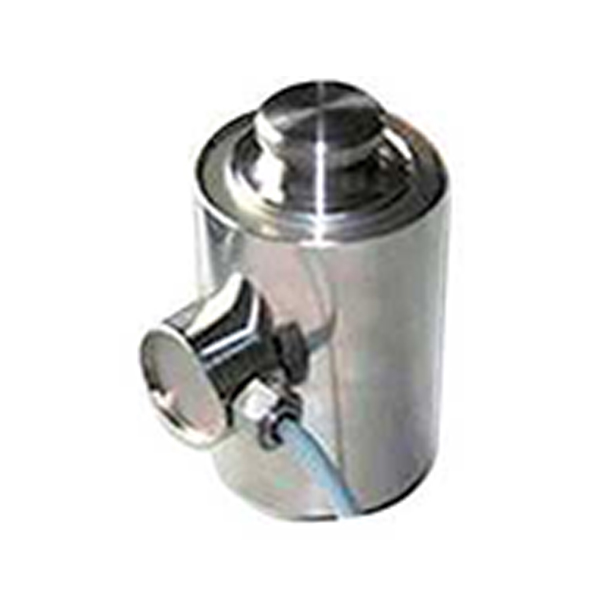 Column Type Digital Load CellThe column-type digital weighing sensor is designed for applications that require long-distance transmission and high stability. It supports a variety of specification...View Product →
For hazardous areas, the specification changes again. Cells and instruments used in flammable atmospheres must be intrinsically safe or explosion proof, typically marked Ex ia for the measuring circuit, and the barrier or isolated circuit becomes part of the certified assembly. Mixing a standard indicator with a certified cell voids the protection, even if both parts are individually rated.
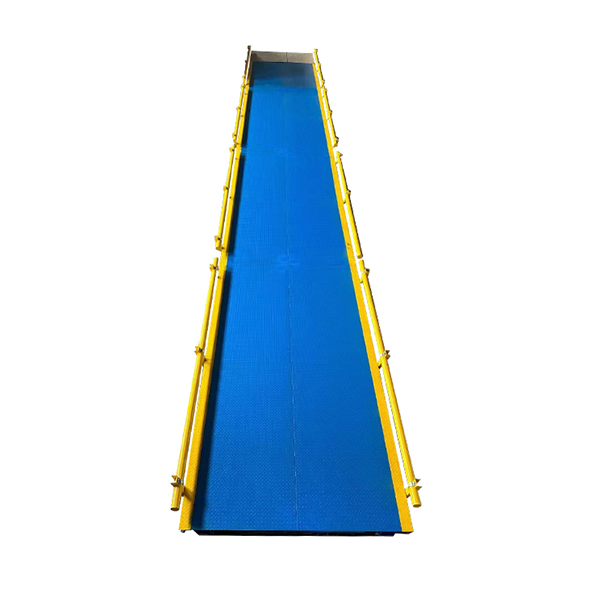
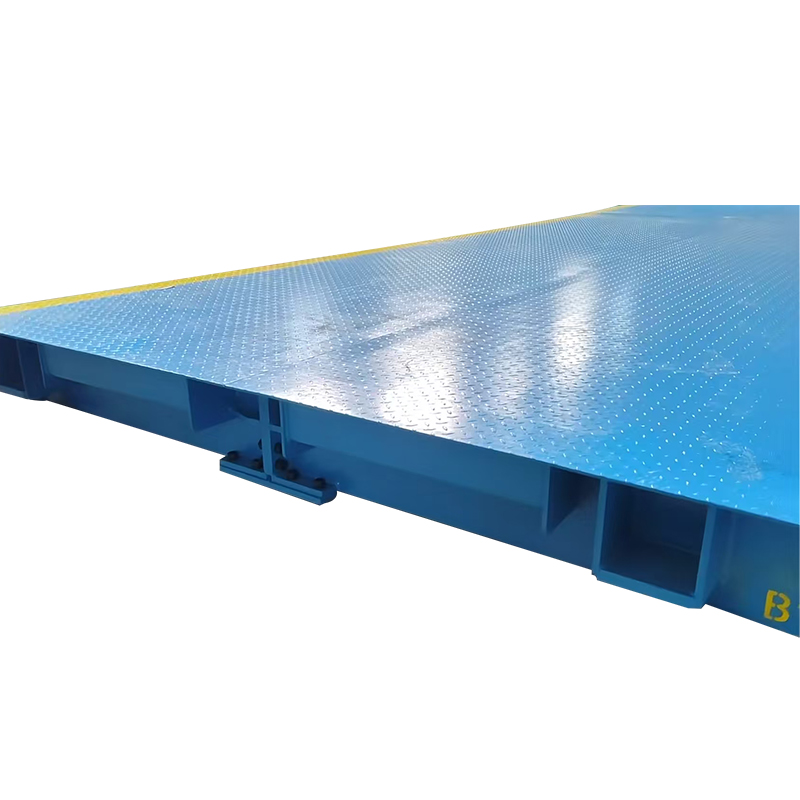
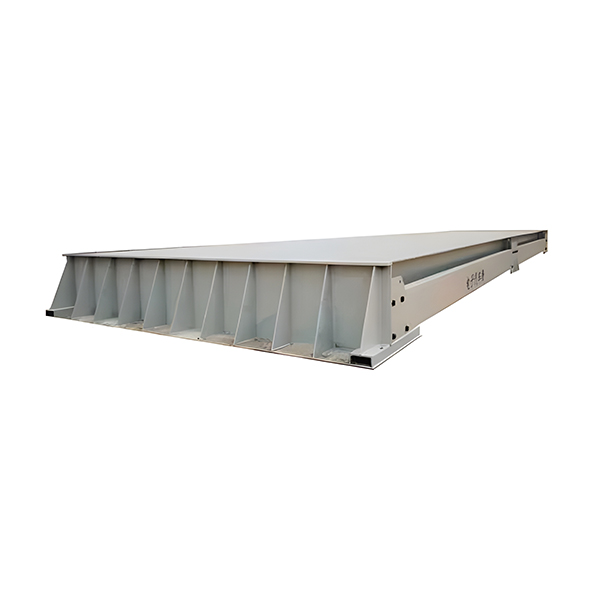
A weighbridge is the most visible industrial scale in most operations, and the most expensive to get wrong. The specification conversation usually starts with capacity, which is the easy part: a 3 by 18 metre platform with six to eight load cells covers the vast majority of two and three axle vehicles at 60 to 100 tonnes.
The harder decision is whether the deck sits in a pit or on the surface. Pit mounted designs give a flat yard with no ramps, so a long vehicle can approach from any angle and weighing takes roughly 25 to 40 seconds per truck once the driver is positioned. Surface mounted designs cost less in civil work and are simpler to relocate, but they need a straight, level approach of about 15 to 20 metres and they occupy yard space permanently. The trade-off between the two layouts is covered in more depth in this comparison of pit mounted versus surface mounted truck scales, including how each affects throughput and drainage maintenance.
Four details separate a weighbridge that survives a decade of quarry traffic from one that needs welding every second year:
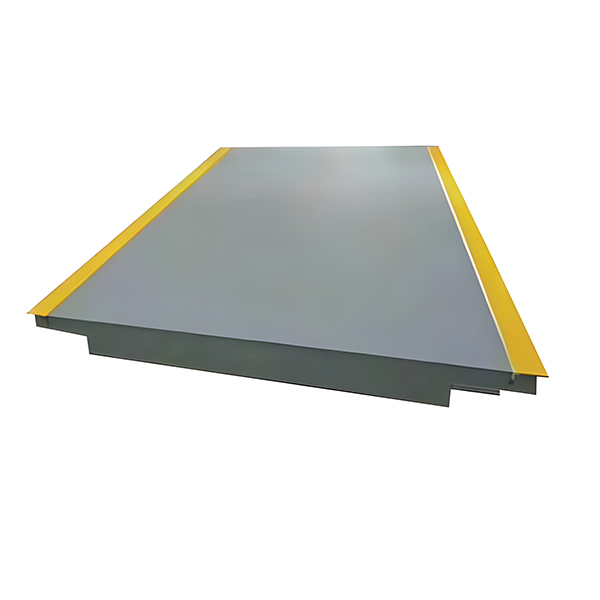 Digital Electronic Truck ScaleProduct Overview JIUDING Digital technology is the cornerstone of today's high-weighing equipment. With the increasing development of electronic technology, digital te...View Product →
Where site space is tight and vehicles cannot ramp up, a slope type deck built into a shallow excavation often costs less than rebuilding the yard. Where the scale must ship overseas, an export specification with reinforced packing and documentation is worth asking about early, because retrofitting transport frames later is expensive.
The indicator is where a physical quantity becomes a business document. An accurate scale with a weak indicator still gives you numbers; it just gives you numbers nobody can audit, batch, export or reconcile.
Three capability levels cover most industrial needs. The first is basic display and print, with a stable reading, a hold function and a serial port. The second adds digital load cell support, alibi memory for thousands of stored transactions, relay outputs for batching valves, and configurable print formats that match your existing ticket layout. The third adds network connectivity so weight data reaches a server or an ERP system without a person retyping it.
That third level is where industrial weighing stops being a standalone activity. RS-485 supports runs of up to roughly 1200 metres at moderate baud rates, Modbus RTU and Modbus TCP remain the most common industrial protocols, and an Ethernet or 4G capable terminal can push each transaction to a database as it happens. The practical result is fewer transcription errors, automatic stock updates, and a historical record you can query by truck, product or shift.
Enclosure choice follows the environment, not the budget. Kitchen and wet process areas justify a stainless steel front panel rated IP65 or better. Dusty yards tolerate powder-coated steel. Chemical plants and fuel terminals require an intrinsically safe instrument, and the certification is specific to the model, not to the product family as a whole.
Most weighing problems are solved by the four standard blocks, but certain duties need a different mechanical answer. A scale built for static truck traffic behaves badly when product arrives by conveyor at 200 tonnes per hour, and a platform scale placed under a hopper that drops material from two metres will not survive the season.
| Scale type | Typical duty | Specification that matters most |
|---|---|---|
| Belt scale | Continuous flow of bulk material on a conveyor | Belt speed range, idler alignment, calibration method |
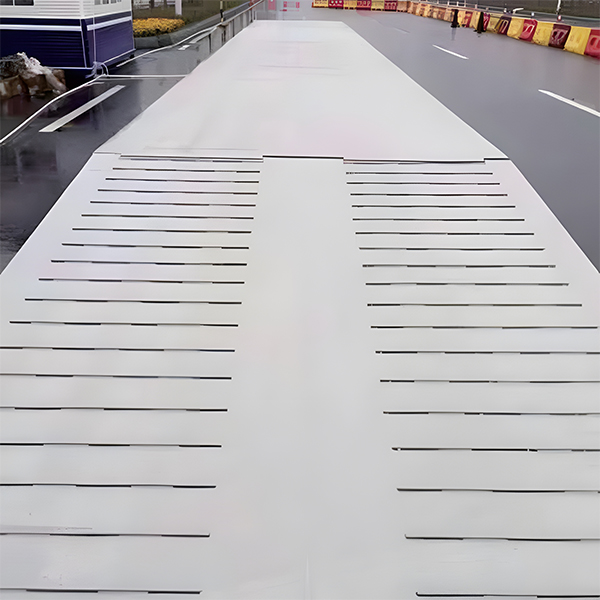
| Axle load scale | Static or slow-passage axle weight monitoring | Pad spacing, dynamic response, approach flatness |
| Buffer scale | Filling and packing lines with impact loading | Overload capacity, damping, shock absorber design |
| Silo and tank scale | Inventory and batch control on fixed vessels | Piping isolation, wind loading, number of support points |
| Pallet and platform scale | Warehouse checking, dispatch, quality control | Deck height for pallet trucks, mobility, battery life |
| Livestock scale | Animal weighing in farming and processing | Low deck, gait and fencing, washdown resistance |
Two supporting components deserve mention because they cause disproportionate downtime. A digital junction box replaces the summing board and potentiometers with a sealed module that reports each channel separately, which turns a two-hour diagnosis into a five-minute check. An uninterruptible power supply keeps the indicator alive through short outages, which prevents the half-written transaction that ruins a shift report.
Suppose a weighbridge drifts 50 kg low, which is inside the in-service tolerance for a 60-tonne Class III instrument with e equal to 20 kg. Now suppose the site handles 200 truckloads a day at an average invoice value of 90 USD per tonne. Fifty kilograms per truck is 10 tonnes a day. Over 300 working days that is 3000 tonnes, and at almost any commodity price it is a five-figure annual loss that never appears as a line item.
That is the argument for a structured maintenance and calibration rhythm rather than a reactive repair culture. Practical industrial practice looks like this:
Documented service coverage closes the gap between calibration events. A proper programme includes scheduled calibration, verification and certification, inspection of load cell cables and junction boxes, and a written record that shows the trend rather than a single pass or fail result. Trends are what tell you a foundation is settling or a cell is aging.
A supplier who can answer these questions in writing is a supplier who has installed scales before. The answers also give you a fair basis for comparing two quotations that look identical on the summary page.
Question seven is the one that gets skipped and regretted. Any industrial scale will eventually need a part, and a two-day wait is cheap while a two-month wait stops the site.
Weighing faults rarely appear suddenly. They accumulate, and the ones that cost the most are also the easiest to prevent.
Scheduling these checks into existing shift routines is more effective than a yearly overhaul, because it catches change while the cause is still obvious. A sudden 20 kg offset at the same time every morning points to temperature or sun exposure. A random offset that appears after rain points to the junction box.
For trade use, follow the re-verification interval required in your market, which is commonly 12 months. Between those visits, a monthly internal check with a known reference load and a daily zero check is realistic for most industrial sites and catches most drift long before it becomes a documentation problem.
Resolution is the smallest change the display can show, and accuracy is how close the shown value is to the true value. A display can show 10 kg steps while the instrument is only accurate to plus or minus 50 kg. Buying on resolution alone is one of the most common specification mistakes, because it says nothing about the load cells or the foundation.
Analog cells are simpler and cheaper and work well on short cable runs with a stable environment. Digital cells are preferable where cable runs are long, where individual channel diagnostics would reduce downtime, or where corner trimming in software is easier than adjusting potentiometers on site. On multi-cell weighbridges the diagnostic advantage usually justifies the difference.
Yes, if the indicator supports a network or serial protocol such as Modbus TCP, Modbus RTU or a plain TCP socket, and if it stores transaction records locally. The local storage matters, because it lets you recover transactions after a network outage without asking drivers to weigh again.
Thermal expansion of the deck and the load cells is the usual cause, followed by moisture in the junction box and mechanical binding at the deck edges. A drift that follows the sun is thermal. A drift that follows rain is electrical. A drift that appears only when trucks approach from one side is mechanical.
It decides whether the scale stays calibrated. A deck on a settling slab will pass verification on day one and fail it three months later, and the cost of correcting the foundation is far higher than the cost of doing it properly before installation. Foundation drawings and drainage should be agreed before the deck is ordered, not after.
Whenever the weighing point sits in a classified hazardous area, such as a solvent store, a fuel loading bay or a dust-handling plant. The requirement applies to the complete measuring circuit, so the load cells, junction box, cabling and indicator must all be part of a certified intrinsically safe or explosion proof assembly rather than individually rated parts.
An industrial scale is a measuring instrument that happens to be built from steel. The capacity on the quotation tells you what it can hold, not what it can prove. The numbers that decide your cost per weighing are the verification class and interval, the accuracy class and protection rating of the load cells, the protocol the indicator speaks, and the slab it stands on.
Buy those four things deliberately, write the answers into the purchase order, and put the maintenance checks into the shift routine. Everything else about the scale becomes a detail you can stop worrying about, which is exactly what a weighing instrument is supposed to be.
Copyright © Ningbo Jiuding Weighing Equipment Co., Ltd.