


 English
 中文简体
中文简体
Industry News
How to maintain weighbridge?
Content
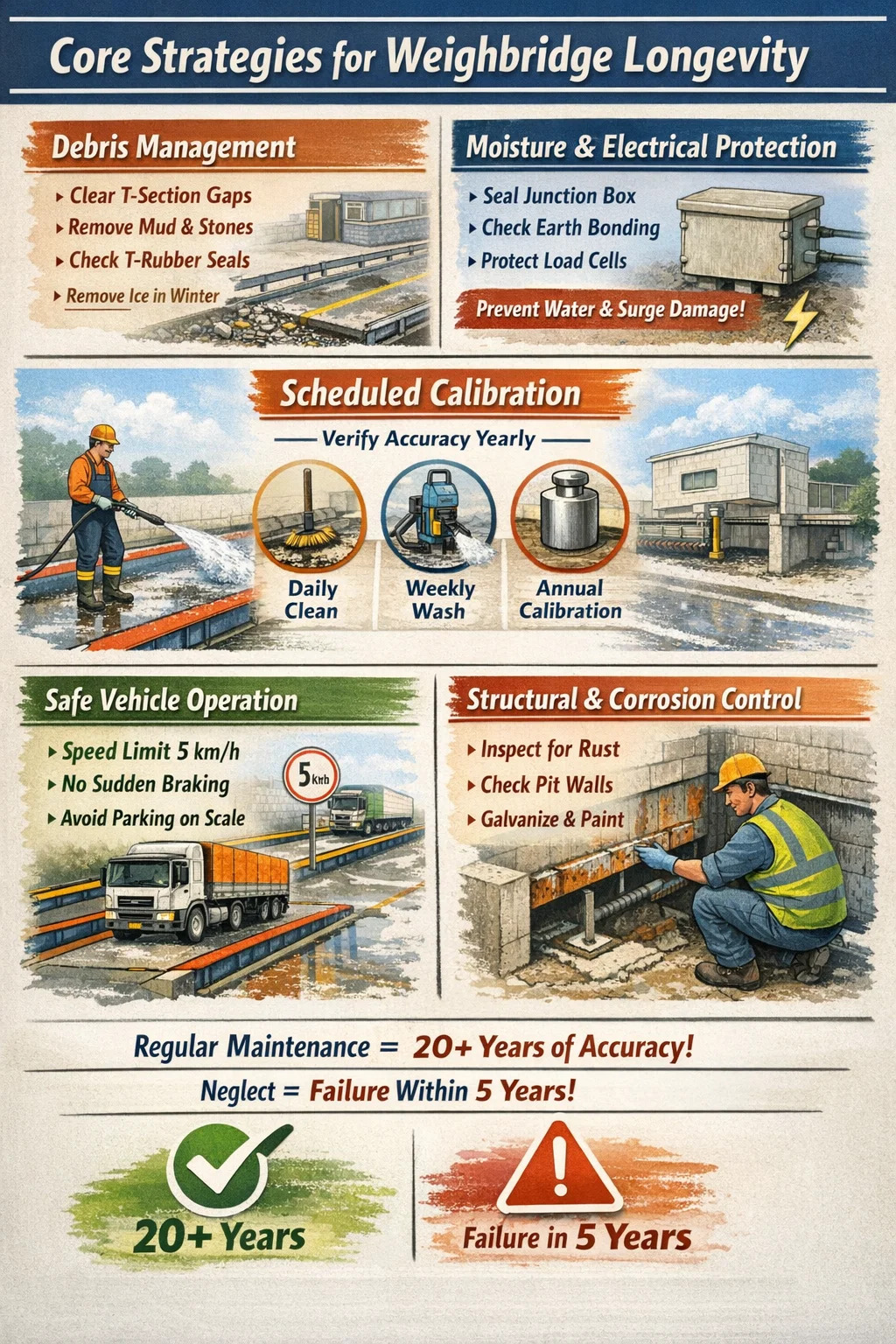
Core Strategies for Weighbridge Longevity
To maintain a weighbridge effectively, you must focus on three primary areas: rigorous debris removal, moisture control around electronic components, and scheduled professional calibration. Regular upkeep prevents measurement errors that can lead to financial losses and legal non-compliance. A well-maintained system can last over 20 years, whereas a neglected one may fail within five due to load cell damage or structural corrosion.
Daily and Weekly Cleaning Protocols
The most common cause of inaccurate weighing is physical interference. Mud, stones, and industrial waste can build up in the gaps between the weighbridge platform and the pit walls or foundation, effectively "binding" the scale.
Managing the "T-Section" Gaps
Ensure that the gaps at the ends of the platform are clear of debris. Even a small stone wedged in the gap can cause the weight reading to be light by hundreds of kilograms. During winter, check that ice hasn't formed in these areas, as frozen water acts as a rigid support that bypasses the load cells.
- Hose down the platform regularly to remove corrosive salt or chemicals.
- Check the "T-Rubber" seals for wear; replace them if they no longer prevent stones from entering the pit.
- Clear out any standing water in the pit to prevent high humidity from affecting the electronics.
Load Cell and Electronic System Care
The load cells are the heart of the weighbridge. These precision sensors are sensitive to both environmental factors and electrical surges. Maintaining them requires a delicate balance of protection and inspection.
Protection Against Electrical Damage
Lightning strikes and welding on the platform are the leading causes of load cell failure. Always ensure the earth bonding straps are intact. These copper straps bypass the load cells, directing electrical surges safely to the ground. If any welding must be done on the steel structure, the load cells should be physically disconnected first.
Junction Box Integrity
The junction box summarizes signals from all sensors. Ensure the lid is tightly sealed and the cable glands are secure. Moisture ingress here will cause "drifting" readings, where the weight on the display changes even when the vehicle is stationary.
Scheduled Inspection and Calibration Checklist
While daily cleaning can be done by site staff, periodic technical inspections are mandatory for trade-approved weighbridges. Below is a recommended maintenance schedule.
| Interval | Action Item | Purpose |
|---|---|---|
| Daily | Visual inspection of platform gaps | Prevent mechanical binding |
| Weekly | Jet wash under the platform | Remove dirt buildup around load cells |
| Monthly | Check end-stop clearances | Ensure platform moves freely |
| Annually | Professional Calibration | Verify accuracy with test weights |
Best Practices for Vehicle Operation
How vehicles interact with the weighbridge significantly impacts its wear rate. Sharp braking or accelerating on the platform creates "shunting" forces that can damage the load cell mounts.
- Enforce a strict speed limit of 5 km/h on the approach and the platform.
- Ensure trucks stop smoothly; no sudden "emergency" braking.
- Avoid letting vehicles park on the scale for extended periods (e.g., overnight), as this can cause the load cells to "creep" or settle.
Structural Maintenance and Corrosion Control
Whether your weighbridge is steel or concrete, the structural integrity must be monitored. For steel decks, look for signs of rust particularly around the welds and main beams. Rust weakens the structure, which can lead to the platform flexing under heavy loads, causing inaccurate readings.
If you use a pit-mounted system, checking the structural walls of the pit is also essential. If the pit walls crumble or shift due to soil movement, they can lean against the weighbridge, creating a massive friction error. Keeping the pit painted and the steel galvanized or properly coated is a long-term investment in precision.
Copyright © Ningbo Jiuding Weighing Equipment Co., Ltd.
