


 English
 中文简体
中文简体
Industry News
How to Tell If a Scale Is Accurate: A Complete Guide
Content
- 1 The Short Answer: How to Tell If a Scale Is Accurate
- 2 Why Scale Accuracy Matters More Than Most People Realize
- 3 The Zero Check: The Simplest Accuracy Test
- 4 Using Certified Test Weights to Verify Accuracy
- 5 Repeatability Testing: Catching Inconsistent Scales
- 6 Corner Loading and Sensitivity Tests
- 7 How to Tell If a Truck Scale Is Accurate
- 8 Environmental Factors That Affect Scale Accuracy
- 9 Signs That a Scale Has Lost Accuracy
- 10 Comparing Readings Across Multiple Scales
- 11 Calibration vs. Verification: Understanding the Difference
- 12 How Often Should You Check Scale Accuracy
- 13 What to Do When a Scale Fails an Accuracy Check
- 14 Practical Tips for Maintaining Long-Term Scale Accuracy
The Short Answer: How to Tell If a Scale Is Accurate
A scale is accurate when it consistently produces the same reading for a known weight, falls within the manufacturer's stated tolerance, and returns to zero after a load is removed. The fastest way to verify this is by placing a certified test weight on the platform and comparing the displayed value against the known mass. If the deviation exceeds the acceptable tolerance — typically ±0.1% of full scale capacity for commercial applications — the scale needs recalibration or repair.
This principle applies whether you are checking a kitchen postal scale or a full-size truck scale used at a commercial weigh station. The methods differ in complexity and equipment, but the underlying logic is identical: compare a known value against the displayed value, measure the gap, and judge whether that gap is acceptable for your purpose.
Below, this guide walks through every practical method in detail — from simple zero checks to formal calibration procedures used on truck scales and industrial platforms.
Why Scale Accuracy Matters More Than Most People Realize
An inaccurate scale is not merely an inconvenience. In commercial freight, a truck scale reading that is off by just 0.5% on a 40,000 lb load translates to a 200 lb error. Over hundreds of daily transactions, that kind of systematic bias adds up to significant financial loss or legal liability. In the United States, the National Institute of Standards and Technology (NIST) Handbook 44 governs the accuracy requirements for commercial weighing devices, and violations can result in fines, lost certifications, and voided contracts.
Beyond the commercial sector, accuracy matters in laboratories, pharmacies, shipping departments, agriculture, and anywhere that weight determines cost, dosage, or compliance. A bathroom scale that reads 3 lbs light might seem harmless, but the same level of relative inaccuracy on a medical scale used to calculate medication dosage for a pediatric patient is a serious clinical risk.
Understanding how to tell if a scale is accurate gives you the ability to catch problems before they cause real damage — financial, legal, or physical.
The Zero Check: The Simplest Accuracy Test
Before placing any load on a scale, confirm that the display reads exactly zero. This sounds trivial, but a non-zero empty reading is one of the most common signs of a scale problem. It can indicate drift in the load cells, mechanical debris under the platform, or an internal calibration offset.
How to perform a zero check
- Power on the scale and allow it to warm up for the manufacturer's recommended period — often 5 to 30 minutes for precision instruments.
- Remove all items from the platform and confirm nothing is pressing against the scale housing or frame.
- Read the display. It should show 0.0 or the equivalent zero value. If it does not, use the tare/zero button to reset — but note that consistently needing to manually re-zero is itself a warning sign.
- Place a known load, remove it, and verify the display returns to zero. A scale that does not return to zero — called "non-return to zero" error — indicates a mechanical or electronic fault.
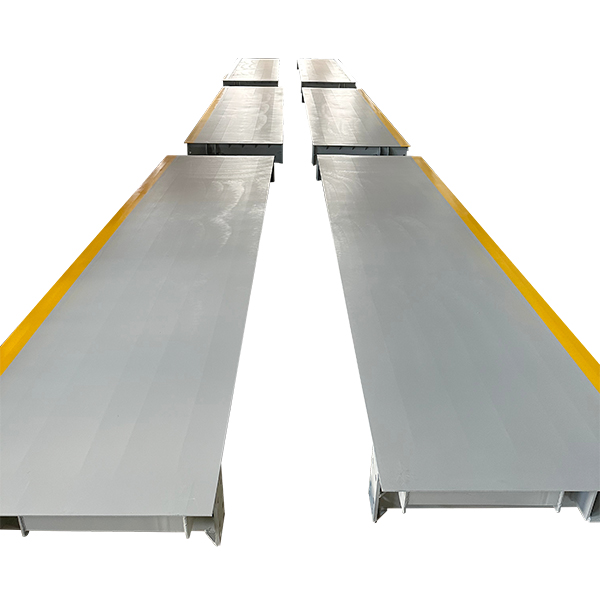
For truck scales, the zero check is especially important. Debris accumulation under deck plates — mud, gravel, ice — is a leading cause of zero error on outdoor installations. Many operators run a zero check at the start of every shift as standard practice.
Using Certified Test Weights to Verify Accuracy
Certified test weights are the gold standard for checking scale accuracy. These are precisely manufactured weights traceable to national or international measurement standards. In the US, NIST-traceable weights are used. In Europe, OIML (Organisation Internationale de Métrologie Légale) class weights are common.
Test weights come in classes ranging from Class 0 (the highest precision, used for calibrating other weights) to Class 7 (general industrial use). For most commercial scale verification, Class F or Class M weights are appropriate and cost-effective.
Step-by-step test weight procedure
- Zero the scale as described above.
- Place the certified test weight gently and squarely in the center of the platform.
- Allow the reading to stabilize fully — do not record a fluctuating value.
- Record the displayed weight and compare it to the certified mass of the test weight.
- Calculate the error: Error = Displayed Weight − Certified Weight.
- Express as a percentage: Error% = (Error ÷ Certified Weight) × 100.
- Compare against the scale's stated accuracy specification or the applicable legal tolerance.
For a truck scale with a 100,000 lb capacity, NIST Handbook 44 typically allows a maintenance tolerance of ±100 lbs for most applications. If your test shows a 250 lb error at 80,000 lbs, the scale is out of tolerance and must be recalibrated before being used for commercial transactions.
Test weights large enough to test a truck scale are specialized equipment — a single 1,000 lb certified test weight costs several hundred dollars, and testing a full-capacity truck scale may require 50,000 to 80,000 lbs of certified mass. This is why most truck scale operators contract with a licensed scale service company for full-span calibration tests, while relying on simpler checks for daily monitoring.
Repeatability Testing: Catching Inconsistent Scales
A scale can pass a single-point accuracy check and still be unreliable if it gives different readings for the same weight each time. This problem, called poor repeatability or precision, is distinct from accuracy but equally damaging in practice.
To test repeatability, weigh the same object five to ten times, removing and replacing it between each measurement. All readings should fall within a very tight range. The spread between the highest and lowest reading — called the repeatability range — should not exceed the scale's division value or stated repeatability specification.
For example, if a 50 lb test weight gives readings of 49.8, 50.1, 49.9, 50.0, and 50.2 lbs across five trials, the repeatability range is 0.4 lbs. Whether this is acceptable depends on the scale's division size and application. For a scale with a 0.5 lb division, this is borderline acceptable. For a scale with a 0.1 lb division, it indicates a problem.
On truck scales, poor repeatability is often caused by worn load cell cables, corroded junction boxes, or mechanical binding in the scale frame. A truck scale showing repeatability errors of more than 40 to 60 lbs on repeat weighings of the same vehicle warrants immediate inspection.
Corner Loading and Sensitivity Tests
A scale platform that reads correctly in the center may give different readings when the load is placed off-center. This is known as a corner load error or off-center load error, and it is particularly important for truck scales, platform scales, and any scale where the load position cannot be precisely controlled.
How to perform a corner load test
- Use a test weight that is approximately one-third to one-half of the scale's capacity for best sensitivity.
- Place the weight in the center of the platform, record the reading.
- Move the weight to each corner and each midpoint of the four edges, recording the reading at each position — typically nine positions total.
- Compare all readings. The variation between positions should not exceed the applicable tolerance.
For NTEP-certified commercial scales in the US, corner load variation is limited to one scale division across the platform. A scale failing this test usually needs load cell replacement, rebalancing, or mechanical adjustment of the platform mounting points.
On a truck scale, corner loading errors are checked differently — technicians place a known vehicle or test weight in the front, middle, and rear sections of the deck and compare readings. This reveals load cell imbalances that would cause systematic errors depending on where a truck's axle load happens to fall.
How to Tell If a Truck Scale Is Accurate
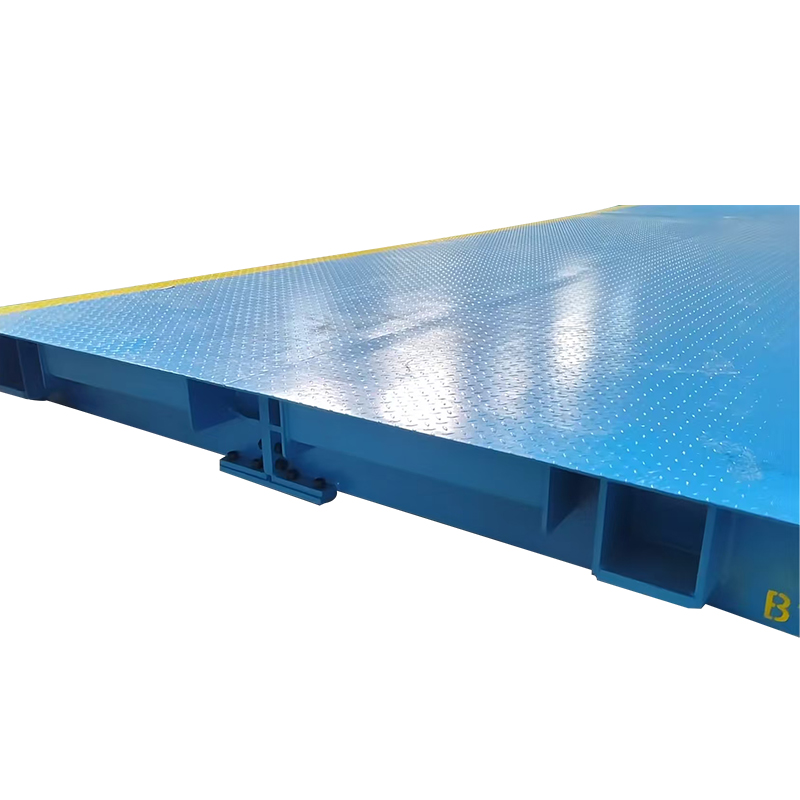
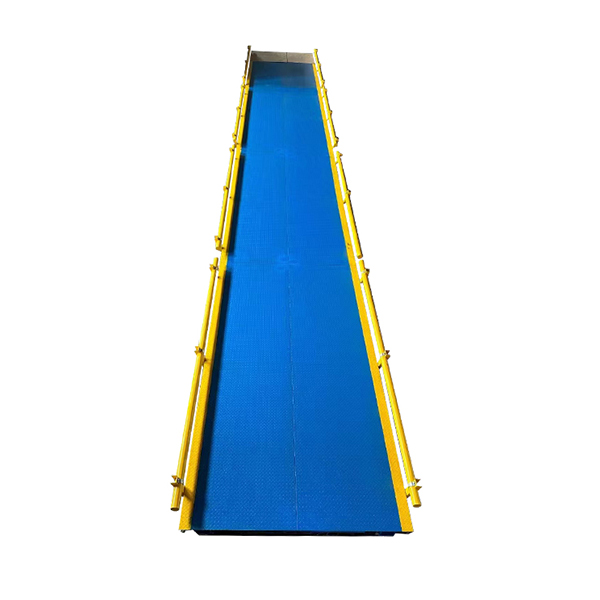
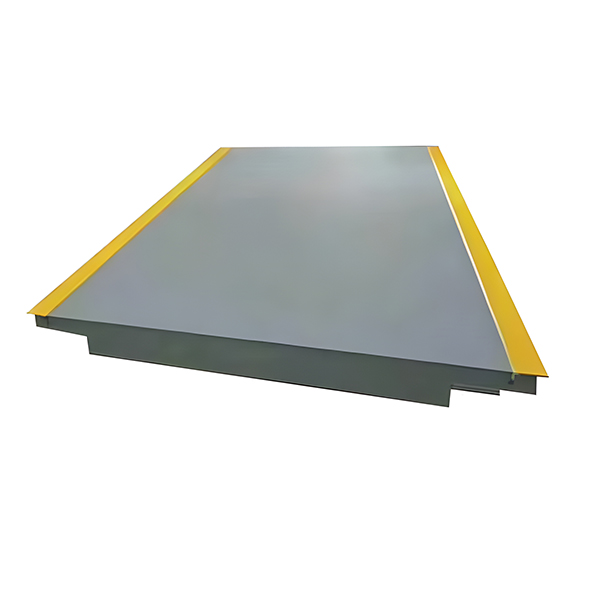
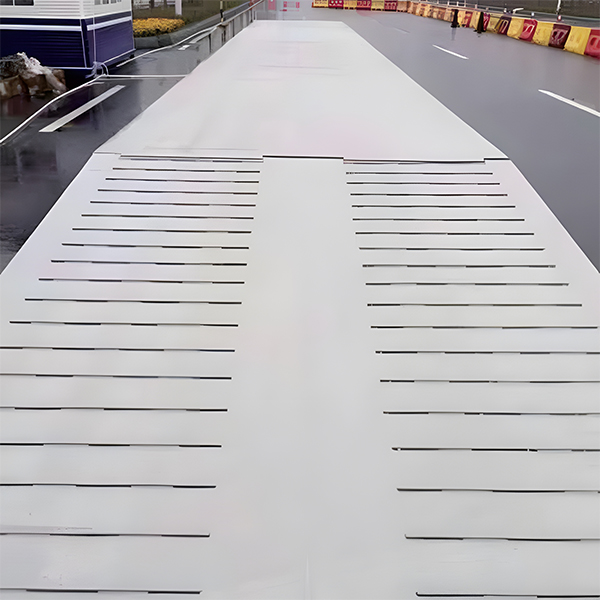
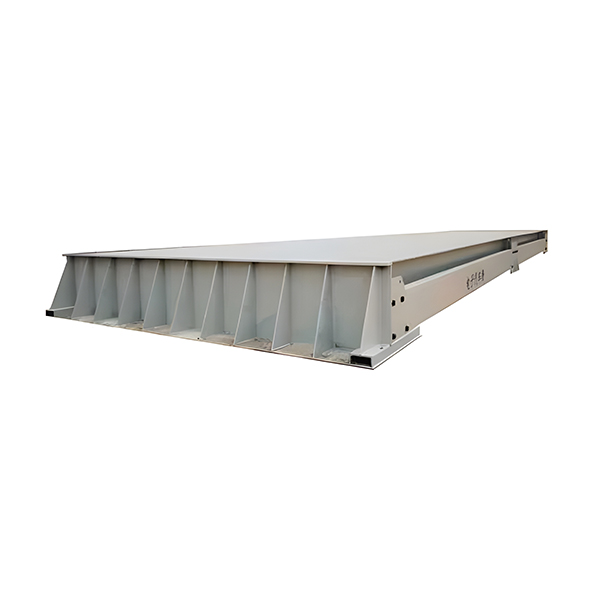
Truck scales — also called weighbridges or vehicle scales — present unique challenges because of their size, outdoor installation, and the enormous loads they handle. A typical truck scale deck is 70 to 105 feet long and designed to weigh vehicles up to 80,000 lbs or more. Verifying accuracy on this type of equipment requires a structured approach.
Daily checks operators should perform
- Zero check every morning before the first vehicle crosses. Record the zero reading in a log. A truck scale that consistently requires a large zero adjustment (more than 100 to 200 lbs on a 150,000 lb capacity scale) has an underlying problem.
- Visually inspect the deck and pit area for debris, standing water, or ice buildup, all of which can physically interfere with load cell function.
- Check that no material has accumulated under the deck edges or around the bumper pads that could bind the platform.
- Weigh a reference vehicle — a company-owned truck with a known empty or loaded weight — and compare against the expected value. Deviations of more than 0.1% to 0.2% on a consistent reference vehicle warrant investigation.
Periodic professional calibration
Most states require truck scales used in commerce to be inspected and certified by a licensed weights-and-measures official at least once per year. In high-volume operations, many operators choose semi-annual or quarterly calibration by a certified scale service company, using certified test weights or a calibration vehicle.
A full truck scale calibration test typically includes:
- Zero balance verification
- Increasing load test at multiple points (typically 20%, 50%, 75%, and 100% of capacity)
- Decreasing load test (to detect hysteresis — where readings differ depending on whether load is increasing or decreasing)
- Repeatability test at a mid-range load
- Section loading test to check individual sections of the deck
The results are documented on a calibration certificate, which should be retained on-site. If a truck scale fails any part of this test, it must be taken out of service for commerce until repaired and recertified.
| Scale Capacity | Acceptance Tolerance | Maintenance Tolerance |
|---|---|---|
| Up to 100,000 lbs | ±0.1% of applied load | ±0.15% of applied load |
| 100,001 to 200,000 lbs | ±0.1% of applied load | ±0.15% of applied load |
| Over 200,000 lbs | ±0.1% of applied load | ±0.15% of applied load |
Environmental Factors That Affect Scale Accuracy
Scale accuracy is not just a matter of calibration — environmental conditions play a major role. Understanding these factors helps you interpret accuracy checks correctly and identify root causes when a scale drifts out of tolerance.
Temperature
Most electronic scales and load cells have a specified operating temperature range, typically −10°C to +40°C for commercial instruments. Outside this range, the electronic components — particularly the load cell strain gauges — can drift, giving readings that are offset from the true value. A scale calibrated at room temperature (around 20°C) and then operated in a cold warehouse at −5°C may show a systematic shift of 0.05% to 0.1%, which is enough to matter in precision applications.
For truck scales installed outdoors, thermal expansion and contraction of the steel deck and frame can change the mechanical loading on each load cell between summer and winter. This is one reason many operators recalibrate their truck scale both in spring and fall.
Vibration and nearby machinery
Vibration from nearby equipment — conveyor belts, compressors, forklifts, or heavy traffic — can cause a scale to display an unstable or inflated reading. Many digital scales include vibration filters in their firmware to average out dynamic noise, but strong sustained vibration can overwhelm these filters. If a scale shows erratic readings that disappear when surrounding equipment is shut off, vibration is the likely cause rather than a calibration problem.
Wind loading on truck scales
Outdoor truck scales are susceptible to wind loading. A large side panel on a truck can act like a sail, and strong crosswinds can introduce dynamic vertical forces on the deck that temporarily alter the reading. This is one reason some truck scale installations include wind barriers. For weighing in windy conditions, many operators instruct drivers to pull fully onto the scale and allow the reading to stabilize for at least 10 to 15 seconds before recording the weight.
Moisture and corrosion
Water intrusion into load cell summing boxes, corroded cable connections, and moisture damage to indicator electronics are among the most common causes of long-term drift in scale accuracy. A scale that reads correctly in dry conditions but drifts during wet weather almost always has a moisture ingress problem in the wiring or junction box. Regular inspection and replacement of cable seals and gaskets is a maintenance task that directly affects accuracy.
Signs That a Scale Has Lost Accuracy
You do not always need test equipment to suspect a scale problem. Certain operational warning signs are reliable indicators that accuracy has been compromised:
- Unstable or fluctuating display when the load is stationary. A stable load should produce a stable reading within one or two scale divisions.
- Readings that change when you tap or shift the platform without adding weight. This indicates a mechanical problem — binding, a loose junction box, or a damaged load cell.
- Non-return to zero after removing a load — the display shows a residual value, positive or negative, rather than returning cleanly to zero.
- Gradual drift in readings for the same reference load over days or weeks. For a truck scale, if your reference vehicle that has always weighed 42,500 lbs is now consistently reading 42,900 lbs with no changes to the vehicle, the scale is drifting high.
- Display errors or fault codes — many modern digital indicators will display diagnostic codes (e.g., "ADC ERROR," "LOADCELL FAULT," or "OVER CAPACITY") that signal hardware or software problems affecting accuracy.
- Customer complaints or cross-check discrepancies — if multiple customers are reporting that your truck scale weights do not match the certified weights from another scale, that is a strong signal requiring immediate investigation.
Comparing Readings Across Multiple Scales
One practical verification method — particularly useful when certified test weights are not available — is to cross-check a scale's reading against another calibrated scale. This works well for smaller scales: weigh an object on your scale, then weigh it on a recently certified reference scale, and compare the two readings.
For truck scales, cross-checking is done by weighing the same loaded truck on two different certified scales within a short time window, ensuring nothing has been added or removed from the truck between weighings. Fuel consumption between the two scales adds a small error — a heavily loaded semi-truck consumes roughly 0.3 to 0.5 lbs of fuel per mile — so this method works best when the two scales are within a few miles of each other.
This cross-check method will not tell you which scale is correct if they disagree, but it will confirm whether a significant discrepancy exists and motivate a more rigorous investigation using certified test weights.
Calibration vs. Verification: Understanding the Difference
These two terms are often used interchangeably but they mean different things, and confusing them can lead to incorrect conclusions about whether a scale is ready for use.
Verification is the process of checking whether a scale meets its accuracy specification. You apply a known weight, measure the error, and compare it against the tolerance. Verification does not change anything about the scale — it only tells you whether the scale is currently within spec.
Calibration is the process of adjusting the scale so that its readings align with the reference standard. Calibration always involves some kind of adjustment — changing an electronic span setting, adjusting a mechanical lever ratio, or modifying firmware parameters — followed by a verification test to confirm the adjustment worked.
Not every scale allows user calibration. Many legal-for-trade scales — including most certified truck scales — have their calibration parameters locked or sealed to prevent unauthorized adjustment. On these scales, calibration must be performed by an authorized service technician, and the seal is re-applied after any adjustment. Breaking the calibration seal without authorization may void the scale's legal certification and expose the operator to regulatory penalties.
How Often Should You Check Scale Accuracy
The right frequency depends on how the scale is used, what it is used for, and what the consequences of an inaccurate reading are. Here is a practical framework:
| Scale Type | Use Case | Recommended Check Frequency |
|---|---|---|
| Truck scale | Commercial freight billing | Zero check daily; full calibration annually or semi-annually |
| Platform scale | Warehouse receiving | Verify with test weight weekly or monthly |
| Bench scale | Shipping and postage | Verify monthly; recalibrate quarterly |
| Precision analytical balance | Laboratory or pharmacy | Verify before every use with internal or external calibration weight |
| Retail counter scale | Grocery or deli | Legally required annual inspection; operator check monthly |
High-volume or high-stakes applications justify more frequent checks. A truck scale processing 200 or more transactions per day should be checked more often than one processing 20. Any scale that has been subjected to an unusual event — overloading, mechanical impact, flood, or power surge — should be verified before returning to service regardless of when it was last checked.
What to Do When a Scale Fails an Accuracy Check
If your verification test shows the scale is out of tolerance, the response depends on how far out of tolerance it is and what type of scale it is.
For small, non-legal-for-trade scales
If the scale allows user calibration, follow the manufacturer's procedure: typically, you place a known weight, press the calibration button, and the scale adjusts its span. After calibration, run the verification test again to confirm the adjustment was successful. If the scale cannot be brought within tolerance even after calibration, the load cell or electronics may be damaged and the scale should be replaced.
For legal-for-trade scales and truck scales
Take the scale out of commercial service immediately. Contact a licensed scale service company to inspect, repair, and recalibrate the scale. Do not attempt to break seals or adjust calibration parameters yourself. After service is complete, a weights-and-measures inspector may need to recertify the scale before it can be used for commerce again.
For truck scale failures, consider the transactions completed on the scale since the last known good calibration. Depending on the magnitude of the error and your contractual obligations, you may have a duty to notify customers and correct billing records. Consulting your legal team or industry association is advisable in cases of significant systematic error.
Practical Tips for Maintaining Long-Term Scale Accuracy
Accuracy is not a one-time achievement — it requires ongoing attention. The following practices will help keep any scale, from a bench scale to a large truck scale, performing correctly over time:
- Keep the platform clean. Residue from previous loads, spilled materials, or debris buildup adds phantom weight and prevents accurate zero balancing. On truck scales, regular cleaning of the deck, pit, and bumper areas is essential maintenance.
- Never overload the scale. Overloading — even briefly — can permanently deform load cell strain gauges. Most load cells have a safe overload limit of around 150% of rated capacity, but repeated overloads below this level cause cumulative fatigue. Always respect the scale's maximum capacity marking.
- Protect cable and junction box integrity. On truck scales and outdoor platform scales, inspect load cell cables for rodent damage, abrasion, and moisture intrusion at least twice a year. Replace damaged cables before they cause reading errors.
- Allow adequate warm-up time. Electronic scales perform best after reaching thermal equilibrium. Checking accuracy on a scale that was just powered on after sitting in a cold environment is likely to give results that do not reflect steady-state performance.
- Keep records. Maintain a calibration log for every scale with entries for each verification test, calibration adjustment, and service event. A complete history allows you to identify gradual drift trends before they become failures, and it provides documentation in the event of a dispute or regulatory inspection.
- Train operators. Many scale accuracy problems start with operator behavior — not taring correctly, slamming loads onto the platform, or ignoring error messages. Basic operator training on how to use a scale correctly, and how to recognize signs of malfunction, is one of the most cost-effective investments a facility can make.

Copyright © Ningbo Jiuding Weighing Equipment Co., Ltd.
