


 English
 中文简体
中文简体
Industry News
How to Tell If Your Scale Is Accurate: A Complete Guide
Content
- 1 The Short Answer: Here Is How You Know Your Scale Is Accurate
- 2 Why Scale Accuracy Matters More Than Most People Realize
- 3 The Zero-Balance Test: Start Here Every Single Time
- 4 The Known-Weight Test: The Most Direct Accuracy Check
- 5 The Repeatability Test: Does Your Scale Give the Same Answer Twice?
- 6 The Corner-Load or Shift Test: Checking Accuracy Across the Entire Platform
- 7 How to Tell If Your Truck Scale Is Accurate: Specific Methods for Large Vehicle Scales
- 8 Environmental Factors That Quietly Destroy Scale Accuracy
- 9 Red Flags That Indicate Your Scale Has an Accuracy Problem
- 10 How Often Should You Verify Scale Accuracy?
- 11 What the Calibration Process Actually Involves
- 12 DIY Accuracy Checks You Can Do Without Certified Weights
- 13 Maintaining Accuracy Between Calibration Events
- 14 When to Call a Professional Calibration Technician
The Short Answer: Here Is How You Know Your Scale Is Accurate
A scale is accurate when its readings consistently match a known reference weight within the manufacturer's stated tolerance — typically ±0.1% to ±0.5% of the displayed value for most commercial and industrial scales. For a truck scale, accuracy is usually certified within ±20 pounds on a 80,000-pound load, which works out to roughly 0.025% variance. If your scale passes a zero-balance test, a known-weight test, and a repeatability test all on the same day, you have strong evidence that it is functioning correctly.
That said, passing those tests once is not enough. Environmental factors, load cell wear, overloading, and temperature swings can all shift readings between calibration events. The sections below walk through every method you can use — from a quick five-minute check to a full certified calibration — so you always have confidence in what your scale is telling you.
Why Scale Accuracy Matters More Than Most People Realize
Inaccurate scales cost money — sometimes a lot of it. A truck scale that reads just 1% high on every load can mean a trucking company is consistently hauling more product than it is billing for. On a route with 50 loads per day at an average payload of 40,000 pounds, a 1% error equals 400 pounds per load, or 20,000 pounds of unbilled product every single day. Multiply that across a year and the financial loss becomes staggering.
Beyond finances, there are regulatory and safety implications. In the United States, commercial scales used for trade must comply with NIST Handbook 44, which sets maximum permissible errors for every class of scale. A truck scale found out of tolerance during a state weights-and-measures inspection can be placed out of service immediately, resulting in operational shutdowns and potential fines. In legal-for-trade applications, the stakes are simply too high to leave scale accuracy to guesswork.
Even in non-trade environments — like a private manufacturing facility using floor scales for internal quality control — inaccurate readings lead to batch failures, rejected shipments, or wasted raw materials. The time invested in verifying scale accuracy always pays off.
The Zero-Balance Test: Start Here Every Single Time
Before you put any weight on a scale, it should read zero — or return to zero after you remove a load. This is called the zero-balance test, and it is the fastest indicator that something is wrong.
How to perform the zero-balance test
- Make sure the scale platform is completely empty and clean — even a thin layer of debris can add a few grams on a precision scale.
- Power on the scale and allow it to warm up for the manufacturer's recommended period (typically 5–30 minutes for precision lab scales, and a few minutes for industrial floor scales).
- Check the display. It should read exactly zero or within one display division of zero.
- Place a known weight, then remove it. The scale should return to zero within one to two display divisions.
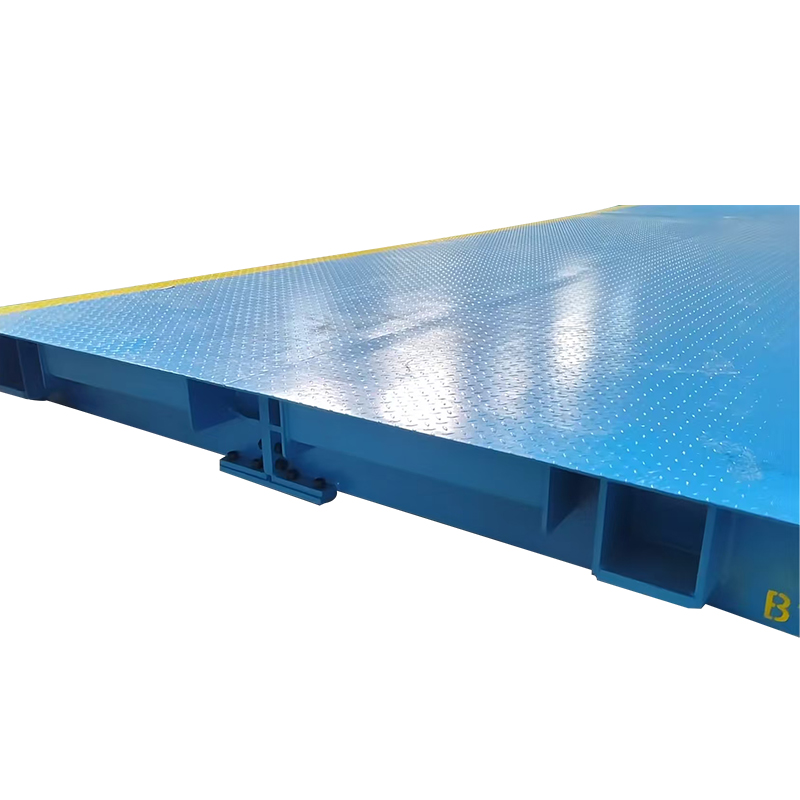
For a truck scale, the zero-balance check involves driving the truck completely off the deck and confirming the indicator reads zero (or within the certified tolerance). If the truck scale consistently fails to return to zero after an empty deck, the most common culprits are debris packed under the deck, a damaged load cell, or a wiring issue in the junction box.
A zero-balance failure does not always mean the scale is broken — it may simply need to be re-zeroed through the indicator's zero-tracking feature. However, if re-zeroing is required every single session, that is a warning sign worth investigating.
The Known-Weight Test: The Most Direct Accuracy Check
The most straightforward way to tell if your scale is accurate is to weigh something you already know the exact weight of. This is called a span test or known-weight test, and it is the backbone of any proper calibration verification.
Choosing the right test weights
Your test weights need to be more accurate than the scale you are testing. The general rule is a 4:1 accuracy ratio — your test weight should be at least four times more accurate than the scale's tolerance. For a truck scale certified to ±20 pounds, you would want test weights accurate to within ±5 pounds or better. Certified test weights are categorized by class:
| Weight Class | Typical Use | Accuracy |
|---|---|---|
| ASTM Class 1 | Laboratory analytical balances | ±0.001% or better |
| ASTM Class 4 / OIML F1 | Precision industrial scales | ±0.01% |
| ASTM Class 6 / OIML M1 | Commercial floor scales and truck scales | ±0.05% |
| Cast iron test weights | Truck scales, platform scales | ±0.1% to ±0.5% |
How to run the known-weight test correctly
- Zero the scale with an empty platform.
- Place your certified test weight gently and centrally on the platform.
- Record the reading without touching the scale or platform.
- Calculate the error: (Scale Reading − True Weight) ÷ True Weight × 100 = % Error.
- Compare this to the manufacturer's stated tolerance. If within tolerance, the scale passes.
- Repeat at multiple points across the scale's range — at least at 25%, 50%, and 100% of capacity.
Testing only at one weight point is a common mistake. A scale can be perfectly accurate at 50% of its capacity and significantly off at 90% capacity. Always test across the full range, especially for truck scales where loads vary enormously from an empty trailer to a fully loaded one.
The Repeatability Test: Does Your Scale Give the Same Answer Twice?
A scale that gives different readings for the same weight placed in the same position has a repeatability problem. This is distinct from an accuracy problem — a scale can be consistently wrong (always reading 5 pounds heavy) but still be repeatable. Both issues matter, but a repeatability failure often points to a mechanical or electronic fault that needs repair rather than simple recalibration.
Running the repeatability test
- Place a known weight on the scale. Record the reading.
- Remove the weight completely. Allow the display to return to zero.
- Replace the weight in exactly the same position. Record again.
- Repeat this process at least five times.
- Calculate the range: maximum reading minus minimum reading.
For most industrial scales, the spread across five readings should be within one to two display divisions. On a scale with a 0.1-pound resolution, readings should not vary by more than 0.2 pounds across five identical placements. For a truck scale with a 20-pound resolution, variation beyond 40 pounds on a repeatability test is a red flag.
Common causes of poor repeatability include worn or contaminated load cells, loose mounting hardware, debris lodged in the check rods or bumpers of a truck scale deck, and intermittent electrical connections in the signal cable or junction box.
The Corner-Load or Shift Test: Checking Accuracy Across the Entire Platform
Many people only test a scale in the center of the platform, but in real-world use, loads are rarely perfectly centered. The corner-load test — sometimes called the shift test or eccentric load test — verifies that the scale reads consistently regardless of where the weight is placed.
How to perform the corner-load test
- Use a test weight that is approximately one-third of the scale's total capacity.
- Place the weight in the center of the platform and record the reading.
- Move the weight to each corner (front-left, front-right, back-left, back-right). Record the reading at each position.
- Also test the midpoints of each edge (front center, back center, left center, right center).
- Compare all readings. The maximum acceptable deviation from the center reading depends on scale class but is typically within two display divisions for commercial scales.
For a truck scale, the shift test is particularly critical because axle positions vary by vehicle type. A flatbed truck's rear axles will load the back portion of the deck while a tandem axle dump truck distributes weight differently. A truck scale that reads accurately at the center but drifts by 100+ pounds at the front edge can consistently under- or over-report axle weights, which has direct implications for legal road weight compliance.
Eccentric load errors on a multi-load-cell scale are usually traced back to one cell with drifted output. Comparing the millivolt output of each individual load cell through the indicator's diagnostics mode can quickly identify which cell is out of specification.
How to Tell If Your Truck Scale Is Accurate: Specific Methods for Large Vehicle Scales
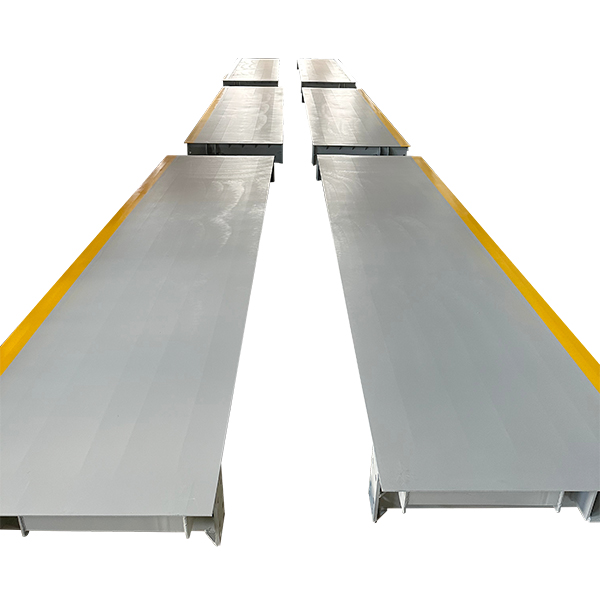
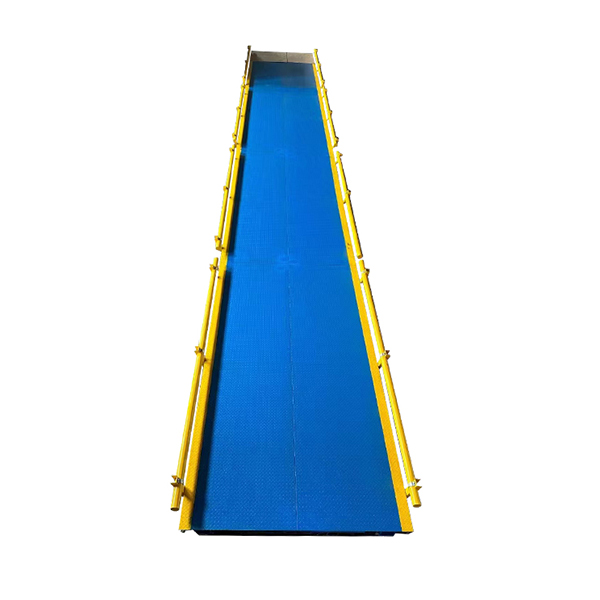
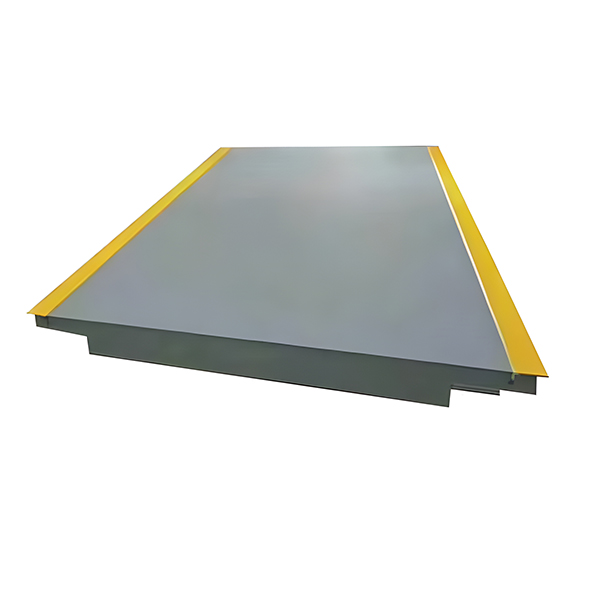
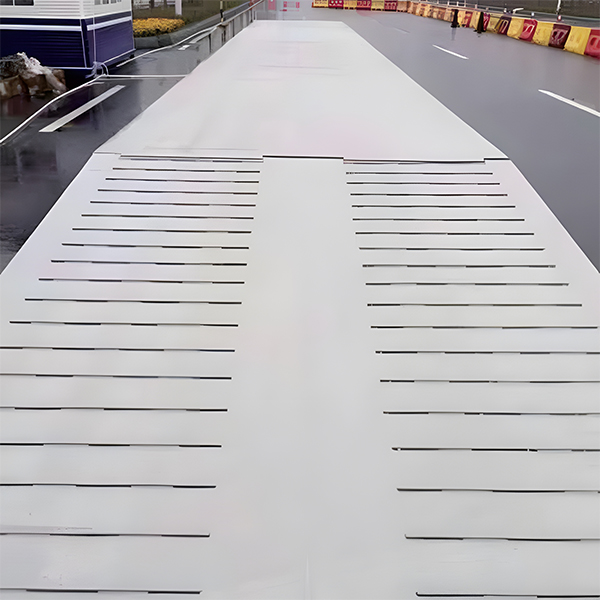
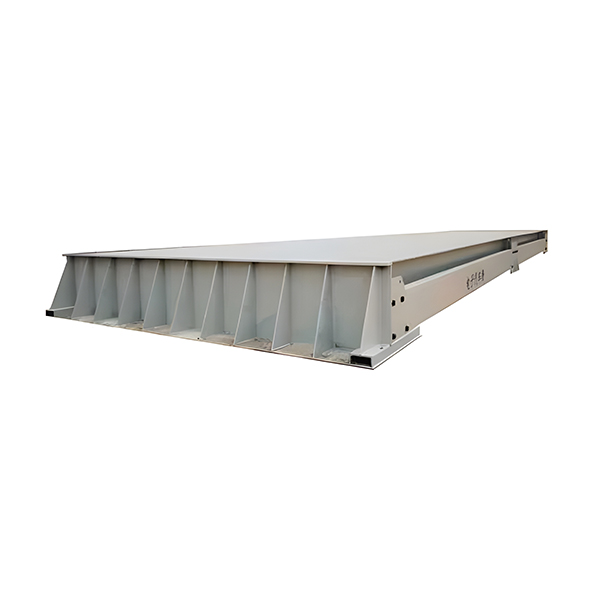
Truck scales — also called weighbridges or vehicle scales — present unique accuracy challenges because of their size, outdoor exposure, and the enormous loads they handle. A standard full-length truck scale might be 70 to 110 feet long, supported by 6 to 10 load cells, and rated to capacities of 100,000 to 200,000 pounds. Verifying their accuracy requires more than a few hand-held test weights.
Method 1: Certified test truck comparison
The most common field verification method is to weigh a certified reference vehicle — a truck whose gross weight, axle weights, and individual tire loads are precisely known from a certified reference scale. You drive the reference truck across your truck scale, record the weights, and compare them to the certified reference values. Most state departments of transportation use this method for routine accuracy audits.
If you do not own a reference truck, you can use a vehicle that has been recently weighed on a certified scale. Drive it to your truck scale immediately after, before any loading or unloading changes the weight, and compare the two readings. If the two scales agree within the combined tolerance of both instruments, your scale is likely accurate.
Method 2: Certified weight cart or portable test weights
Calibration service companies use weight carts loaded with certified cast iron weights — typically sets of 1,000-pound or 2,000-pound weights that can be combined to test the scale across its full range. A proper truck scale calibration test typically uses a minimum of 50% to 100% of the scale's rated capacity, placed at multiple deck positions. This is the most rigorous in-field method and is required for legal-for-trade certification in most jurisdictions.
Method 3: Load cell diagnostic comparison
Modern truck scale indicators display the individual millivolt output (mV/V) of each load cell in a diagnostic menu. By comparing the relative outputs of each cell under a known load, you can identify cells that are underperforming or overreporting. A healthy load cell typically outputs between 1.5 and 3.0 mV/V at full rated load. Cells reading significantly outside the expected band while their neighbors read normally are candidates for replacement. This method does not replace certified weight testing but is an excellent routine monitoring tool between calibration events.
Method 4: Cross-checking with onboard vehicle scales
Many modern semi-trucks are equipped with onboard weighing systems that estimate payload from air suspension pressure. While these systems are not certified for trade purposes and typically carry an accuracy of only ±2% to ±3%, they provide a useful sanity check. If your truck scale consistently reads 5% or more different from the onboard system across multiple vehicles, that discrepancy deserves investigation. The truck scale is far more likely to be accurate, but a consistent trend across many vehicles could point to a calibration drift.
Environmental Factors That Quietly Destroy Scale Accuracy
Even a perfectly calibrated scale can become inaccurate within days if environmental conditions work against it. Understanding these factors helps you decide when to recheck accuracy outside of your normal calibration schedule.
Temperature
Load cells are sensitive to temperature changes. Most commercial load cells have a temperature coefficient of approximately ±0.003% per degree Fahrenheit. On a truck scale handling 80,000-pound loads, a 30°F temperature swing — common in many climates between morning and afternoon — can theoretically shift the reading by around 72 pounds. High-quality load cells compensate for this internally, but older or damaged cells may not. Always allow a truck scale to stabilize at ambient temperature before running a calibration check, and be aware that scales calibrated in summer may drift slightly in deep winter.
Moisture and corrosion
Water infiltration into load cells is one of the leading causes of truck scale inaccuracy. Even IP67 or IP68 rated load cells can develop micro-cracks in their cable seals over years of use, allowing moisture to slowly corrode the strain gauge bonding. Signs of moisture damage include erratic readings, a display that drifts slowly upward or downward under a static load, and visible rust on load cell mounting hardware. Inspect seals and cable entry points annually at minimum.
Debris and foreign objects
Gravel, mud, ice, and plant matter packed into the gaps around a truck scale deck prevent the platform from moving freely under load. This is an extremely common problem that causes the scale to read consistently low, because part of the load transfers through the stuck debris into the foundation rather than through the load cells. A truck scale that begins reading consistently 200 to 500 pounds lower than expected in spring often has debris or ice problems left over from winter. Clean the deck gaps thoroughly before any accuracy verification.
Wind and vibration
For precision bench scales, even a mild breeze from an open door can cause readings to fluctuate. For truck scales located outdoors, strong crosswinds can exert measurable lateral force on a large vehicle sitting on the scale, causing minor but real reading variations. If your site experiences frequent high winds, consider the effect when interpreting borderline pass/fail results during accuracy testing.
Red Flags That Indicate Your Scale Has an Accuracy Problem
You do not always need formal test weights to suspect something is wrong. The following signs warrant an immediate accuracy check:
- The display never fully settles. The reading keeps changing slowly even with a static load on the platform. This often indicates a damaged load cell or wiring fault.
- Zero drift between uses. Every morning the scale shows a positive or negative resting value that requires manual re-zeroing. Occasional minor drift is normal; daily drift of more than a few display divisions is not.
- Inconsistent readings for the same vehicle. If the same truck consistently returns readings that vary by more than the scale's stated tolerance on back-to-back passes without being reloaded, the scale has a repeatability problem.
- Customers or suppliers are disputing weights. If multiple trade partners are consistently questioning your weights, that pattern is statistically meaningful. One dispute can be a loading error; five in a row from different parties suggests the scale.
- Recent physical impact or overload. A truck scale that has been struck by a vehicle, or that has had a load significantly exceeding its rated capacity, should be tested immediately. Overloads beyond 125% of rated capacity can permanently damage load cells.
- The indicator shows error codes or one load cell reads zero. Most modern truck scale indicators monitor individual load cell health and will flag a cell that goes out of range. Never dismiss these alerts as software glitches.
- Calibration has not been done in over 12 months. Even a scale with no obvious symptoms can drift over time. Annual calibration is the standard recommendation for most commercial and industrial applications.
How Often Should You Verify Scale Accuracy?
The right verification frequency depends on how critical the weighing is and how harsh the operating environment. Here is a practical framework:
| Scale Type | Use Case | Recommended Verification Frequency |
|---|---|---|
| Precision laboratory balance | Pharmaceutical, research | Before every use (daily or per batch) |
| Commercial retail scale | Point of sale, food service | Daily zero check; certified calibration every 6–12 months |
| Industrial floor scale | Shipping, receiving, production | Weekly check with test weights; certified calibration annually |
| Truck scale (legal for trade) | Commercial weighing, DOT compliance | Daily zero check; certified calibration every 6 months or as required by state law |
| Truck scale (private, non-trade) | Internal inventory, process control | Monthly comparison check; certified calibration annually |
Note that state and local regulations may mandate specific calibration intervals for legal-for-trade scales. In many U.S. states, truck scales used for commercial transactions must be inspected and sealed by a licensed weights-and-measures official at least once per year, and some high-volume operations opt for semi-annual or quarterly certified calibrations to protect against costly disputes.
What the Calibration Process Actually Involves
Many people confuse scale verification (checking whether the scale is accurate) with scale calibration (adjusting the scale to be accurate). Verification tells you where you stand. Calibration fixes the problem if you are out of tolerance. Here is what a proper calibration involves:
Step 1: Pre-calibration inspection
Before touching any calibration settings, the technician should inspect the scale physically. For a truck scale, this means checking deck condition, load cell mounting hardware, junction box wiring, bumper clearances, and foundation integrity. Calibrating a scale with a mechanical problem only masks the issue temporarily — it will drift again quickly.
Step 2: Zero calibration
With the platform empty, the indicator's zero point is set. The deadload (the weight of the platform and deck structure itself) is mathematically removed from the reading so the display shows zero with nothing on it.
Step 3: Span calibration
A certified reference weight — or a reference vehicle of known weight — is placed on the scale. The technician adjusts the indicator's span constant until the displayed reading matches the known value. For a truck scale, this adjustment is typically performed at 50% to 100% of rated capacity to ensure the calibration covers the real-world operating range.
Step 4: Linearity verification
After setting zero and span, the technician places weights at several intermediate points — for example, 25%, 50%, 75%, and 100% of capacity — to verify that the calibration is linear across the range. If a scale passes at 50% but reads high at 90%, the load cells themselves may have a non-linearity problem that calibration adjustments cannot fix.
Step 5: Documentation and sealing
A calibration certificate is issued documenting all test weights used, all readings obtained, and whether the scale passed or failed. For legal-for-trade scales, the indicator is sealed with a physical or electronic anti-tamper seal. Tampering with calibration settings after sealing is a legal violation in most jurisdictions.
DIY Accuracy Checks You Can Do Without Certified Weights
Not every accuracy check requires certified test weights or a calibration technician. There are practical field methods you can use when you need a quick sanity check:
The water jug method (for smaller scales)
One liter of water weighs exactly 1 kilogram (2.205 pounds) at room temperature. A sealed container holding exactly 5 liters of water weighs 5.000 kg. This is accurate enough to verify a consumer or light commercial scale at low capacities — useful for a kitchen scale or a small postal scale. Measure the water volume carefully with a calibrated measuring jug, seal the container to prevent evaporation, and weigh it promptly.
The cross-scale comparison method
If you have access to two scales of similar capacity, weigh the same object on both. If they agree within both instruments' tolerances, you have reasonable confidence both are accurate. If they disagree by more than the combined tolerance, at least one has a problem. This method does not tell you which one is wrong, but it flags that further investigation is needed. For truck scales, the cross-scale method means weighing the same vehicle on your scale and a nearby certified public scale back to back.
The packaged goods method
Commercially packaged goods are required by law to contain at least the stated net weight. A sealed, undamaged bag of sugar labeled 5 pounds should weigh at least 5 pounds (and usually a fraction more, since manufacturers use slight overfill to avoid short-weight violations). Weighing multiple sealed packages and comparing the results to the stated weight is a rough accuracy check. Do not expect precision to the ounce, but consistent readings 10% below the label weight point to a scale problem.
Maintaining Accuracy Between Calibration Events
The best way to preserve scale accuracy is to treat the scale well between calibration visits. These practices significantly reduce drift and extend the time between required adjustments:
- Never exceed the rated capacity. Overloading is the single fastest way to permanently damage a load cell. Post the capacity rating visibly for truck scale operators.
- Keep the platform clean. For truck scales, schedule regular cleaning of the pit and deck gaps. For bench and floor scales, wipe down the platform before and after each shift.
- Avoid dynamic loading. Dropping heavy items onto a platform or driving a truck too fast over the approach ramp creates impact forces that can be several times the static load weight. Requiring a slow, controlled approach to truck scales significantly extends load cell life.
- Log zero readings daily. Keep a simple log of the zero reading at the start of each shift. A trend of slowly increasing or decreasing zero readings over weeks is an early warning of a load cell or foundation issue — much easier to address when caught early.
- Protect cables and junction boxes. Cable damage from vehicles, rodents, or corrosive chemicals is a common cause of accuracy problems. Route cables in conduit, inspect junction boxes quarterly, and replace any cracked or abraded cable jackets immediately.
- Allow warm-up time. Particularly in cold climates, give the scale electronics time to reach operating temperature before weighing. Most manufacturers specify a 15–30 minute warm-up for digital indicators after power-on in cold conditions.
When to Call a Professional Calibration Technician
Some accuracy problems are beyond the scope of in-house troubleshooting. Call a certified scale technician when:
- The scale fails a known-weight test and re-zeroing does not correct it.
- The indicator displays a load cell error code or the reading is clearly impossible (negative values under load, wildly high values on an empty deck).
- The scale is required to be legal for trade and the calibration seal has expired or been tampered with.
- The scale has been physically damaged — a truck scale struck by a vehicle, a floor scale that was dropped during relocation, or any scale that has been submerged in water.
- The scale was recently moved to a new location. Even a short move can shift a truck scale's foundation relationship with its load cells, requiring a full re-calibration.
- The annual calibration interval has been reached, regardless of apparent accuracy. Regulatory compliance is not optional for trade scales.
When selecting a calibration service provider, look for technicians who hold a current National Institute for Standards and Technology (NIST) traceable calibration certificate for their reference weights, and who are familiar with your specific scale brand and model. For truck scales in particular, experience with the specific load cell brand matters — the configuration and diagnostic procedures differ significantly between manufacturers like Rice Lake, Mettler Toledo, Cardinal, and Fairbanks.

Copyright © Ningbo Jiuding Weighing Equipment Co., Ltd.
