Pallet Truck Scales For Sale: The Direct Answer
A pallet truck scale is a hand pallet jack fitted with a built-in weighing system, letting warehouse staff lift, move, and weigh a load in a single motion instead of running it across a separate floor scale. If you are shopping for pallet truck scales for sale, the short version is this: pick a unit rated for at least 20% more than your heaviest routine load, choose between hydraulic and electric lift depending on how often the truck runs per shift, and confirm the indicator has a hold function so the weight does not disappear the moment the forks come off the ground. For most small and mid-size warehouses moving 500 kg to 2,000 kg pallets, a 2,000 kg to 3,000 kg capacity electric-lift model with a load cell built into each fork gives the best balance of speed, durability, and cost per weighing cycle.
Manufacturers such as Ningbo Jiuding Weighing Equipment Co., Ltd build these units specifically for repeated daily cycling, which matters because a pallet truck scale is not used once and put away, it is used dozens or hundreds of times a shift, so the load cells, the hydraulic seals, and the wheel bearings all take far more wear than a typical bench or floor scale ever sees.
Search interest around pallet truck scales for sale tends to spike alongside two events: a warehouse adding a new outbound lane that needs its own weighing point, or an existing floor scale becoming a bottleneck once order volume grows past what a single fixed station can process. In both cases the underlying question is the same, does the operation need a mobile weighing point that travels to the load, or a fixed weighing point the load travels to. For anything involving repeated handling across a warehouse floor rather than a single choke point like a shipping dock, the mobile pallet truck scale answers that question more efficiently in almost every case we see across food, chemical, and general distribution operations.
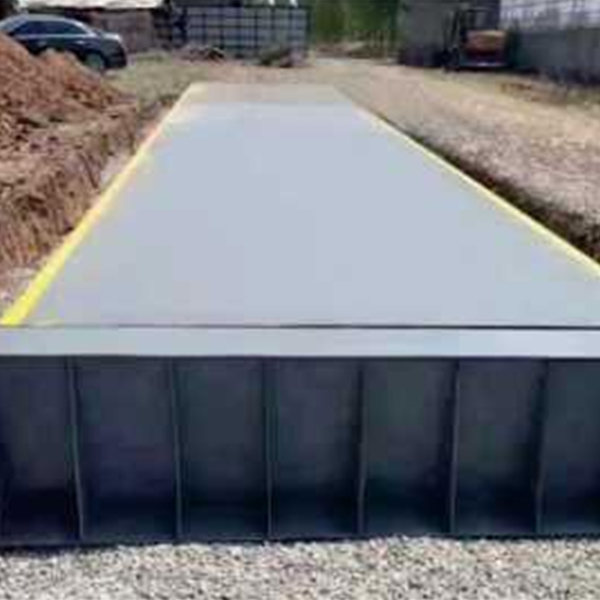
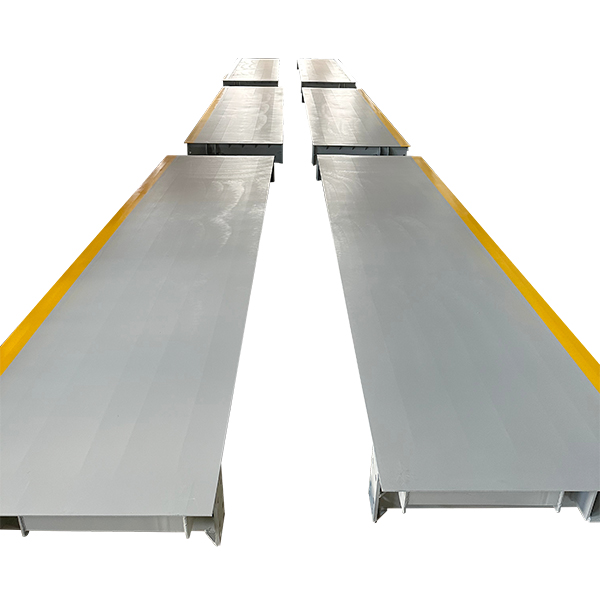
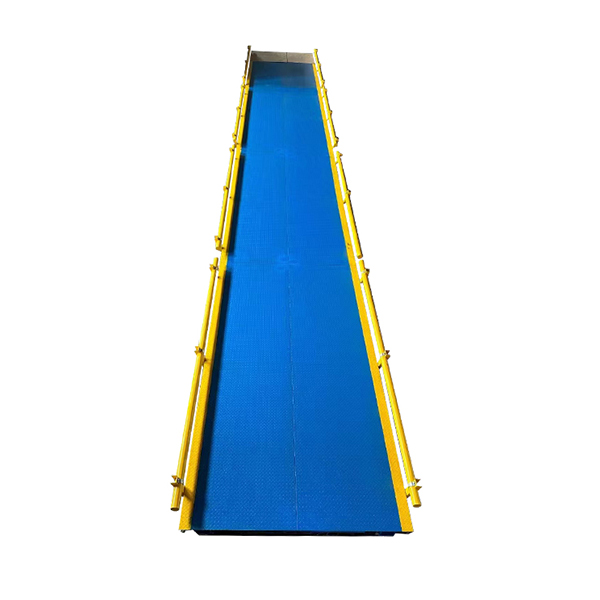
It also helps to be clear about what a pallet truck scale is not. It is not a substitute for a full vehicle truck scale used to weigh loaded trucks and trailers at a yard entrance, and it is not designed for continuous outdoor exposure the way a weighbridge is. Its role sits between those two extremes, inside the four walls of a warehouse, DC, or production floor, moving with the operator rather than staying fixed in one spot.
How A Pallet Truck Scale Actually Works
The mechanism is simpler than most buyers expect. Two load cells, one under each fork, sit between the fork frame and the wheel assembly. When the forks lift a pallet, the load cells compress by a fraction of a millimeter, that tiny deflection is converted into an electrical signal, and the indicator mounted on the handle converts the signal into a weight reading in real time. Because the sensing happens inside the forks themselves, there is no separate weighing platform to drive onto, no ramp, and no dedicated floor space required.
Most units on the market today use one of three lifting methods, and the method changes both the price and the day-to-day feel of the truck:
- Manual hydraulic lift: the operator pumps the handle to raise the forks, standard on entry-level and mid-range trucks
- Electric lift with manual steering: a small battery-driven pump raises the forks at the push of a button, while the operator still walks the truck
- Fully electric ride-on or walk-behind models: both lift and drive are powered, common in distribution centers running long aisle runs
Every one of these still shares the core weighing principle with a standard truck scale used for full vehicle weighing: strain-gauge load cells producing a signal proportional to compressive force. The pallet truck version is simply that same sensing technology miniaturized and mounted inside a mobile fork.
Behind the indicator display, a small amount of signal processing happens on every lift. Raw load cell output is a very small analog voltage, on the order of millivolts, so the indicator amplifies that signal, filters out vibration noise from the truck moving across the floor, and applies a stability check before locking the number in. This is why a good indicator will show the reading briefly fluctuate before settling, that fluctuation is the filter doing its job rather than a sign of a faulty scale. Cheaper indicators skip a proper filtering stage to save cost, which is one reason two trucks with identical load cells can still show noticeably different reading stability in daily use.
Single-Point Versus Dual-Point Load Cell Layouts
Most pallet truck scales use two load cells, one per fork, and average the two readings to compensate for a load sitting slightly off-center on the pallet. A small number of budget models use a single load cell mounted at the base of the fork frame instead, which is less expensive to build but gives noticeably less accurate readings when the pallet load is unevenly distributed, which in real warehouse conditions is more common than buyers expect. For any operation weighing product that is billed or reordered based on that weight, the dual load cell layout is worth the modest price difference.
Why Warehouses Are Replacing Floor Scales With Pallet Truck Scales
Three operational numbers explain most of the buying decisions we see in 2026: cycle time, floor space, and mis-ship rate.
| Metric |
Fixed Floor Scale |
Pallet Truck Scale |
| Average weighing cycle |
45 to 90 seconds, including approach and departure |
8 to 15 seconds, weight appears as the load lifts |
| Dedicated floor space |
Fixed pit or platform, usually 1.2m x 1.5m minimum |
None, the scale travels with the truck |
| Bottleneck risk during peak shift |
High, single station queues form fast |
Low, multiple trucks weigh in parallel across the floor |
Typical operating differences between a fixed floor scale and a mobile pallet truck scale in a mid-size distribution warehouse.
Warehouses running outbound freight billed by weight see the biggest payback, because every pallet gets weighed at the point of pick rather than being batched to a single scale at the dock, which is where under-billing and freight disputes most often start.
There is also a labor pattern worth noting. A fixed floor scale usually requires the operator to break their normal handling motion, lift the pallet onto a separate powered pallet jack or forklift, drive it to the scale location, wait for the reading, then continue to the next step. A pallet truck scale removes that detour entirely, the weighing step happens inside a motion the operator was already performing. Across a full shift with a few hundred pallet moves, that removed detour is where most of the time savings actually comes from, not from the weighing itself being faster in isolation.
Cost Of Ownership: What A Pallet Truck Scale Really Costs Over Time
Purchase price is only part of the real cost picture. A useful way to compare options is to break total cost into four buckets over a typical five-year service life: purchase price, energy or battery replacement, wear-part replacement, and downtime cost from repairs.
| Cost Bucket |
Manual Hydraulic |
Electric Lift |
| Purchase price |
Lower, roughly 600 to 1,200 USD |
Higher, roughly 1,300 to 2,500 USD |
| Battery replacement over 5 years |
None |
1 to 2 replacements, roughly 150 to 300 USD each |
| Hydraulic seal kit replacement |
Every 12 to 18 months under heavy use |
Every 18 to 30 months under equivalent use |
| Operator fatigue and pace impact |
Higher, repeated pumping adds up over a shift |
Lower, push-button lift reduces physical strain |
Illustrative five-year cost comparison between manual hydraulic and electric-lift pallet truck scales under heavy daily use.
As a rough example, a warehouse running two manual hydraulic trucks at 150 lifts per shift each will typically replace hydraulic seal kits twice as often as a warehouse running the same lift count on electric units, because the manual pump mechanism sees far more repeated wear cycles per lift. Over a five-year window, that difference alone can close most of the upfront price gap between a manual and an electric truck, before even factoring in the labor time saved from not pumping the handle by hand hundreds of times a shift.
Key Specifications To Compare Before You Buy
Spec sheets from different suppliers are not laid out the same way, so it helps to compare on the same six fields every time.
Capacity And Graduation
Capacity is the maximum safe load, graduation is the smallest weight increment the indicator will display. A truck rated for 2,000 kg with a 1 kg graduation is fine for general receiving, but if you are weighing ingredients, additives, or anything billed in smaller units, look for a 0.5 kg or 0.2 kg graduation instead. Buying more capacity than you need does not hurt accuracy, but buying too little capacity for a coarser graduation will.
Fork Dimensions
Standard forks run 550mm wide by 1,150mm long, matching a standard pallet footprint, but if your operation runs Euro pallets or oversized skids, confirm fork length and width before ordering, since a mismatched fork will either overhang the pallet or fail to seat under it properly.
Battery Life And Charging
Electric-lift models typically run 8 to 10 hours on a full charge under normal duty, roughly 300 to 400 lift cycles, and most use sealed lead-acid or lithium battery packs with a 6 to 8 hour recharge window. Lithium packs cost more upfront, roughly 25% to 35% more than sealed lead-acid, but they hold charge longer in storage and tolerate partial charging without the memory-effect degradation older battery chemistries show.
Indicator Features
Look for hold/lock function, tare function for subtracting pallet or container weight, low-battery warning, and an IP54 or higher splash resistance rating if the truck will see any wet floor exposure. Wireless data output through Bluetooth or RS232 is increasingly standard on mid-range units, letting the reading feed directly into a warehouse management system instead of being copied by hand.
Wheel Material
Polyurethane wheels are the default for indoor concrete floors and last considerably longer than nylon under constant load cycling. Rubber wheels are quieter and gentler on epoxy-coated floors but wear faster under heavy daily use.
Overall Weight And Turning Radius
A heavier truck body improves stability under full load but is harder to maneuver in tight aisles. Compare the turning radius against your narrowest aisle width, not just the general warehouse floor plan, since dock doors and staging lanes are usually the tightest points in the layout.
Power Supply And Charging Infrastructure
Most electric-lift trucks charge from a standard single-phase outlet, either 110V or 220V depending on the region, using an onboard charger built into the truck body. Confirm the charging voltage matches your facility before ordering, and if the truck will operate across multiple sites in different regions, ask whether the supplier offers a dual-voltage charger or a swappable charging module rather than a fixed single-voltage unit.
Display Type And Readability
LCD displays with a backlight remain the most common choice because they stay readable under warehouse lighting and in direct sunlight near dock doors, where some LED displays wash out. A larger digit height, typically 25mm to 40mm, matters more than buyers initially expect once the truck is in daily use, since operators read the display while standing and moving rather than stopped and looking closely.
Environmental Rating
An indicator rated IP54 handles dust and occasional splashes, which covers most dry warehouse floors. Cold storage, wash-down areas, or outdoor loading zones call for IP65 or higher, along with a battery chemistry rated for the temperature range the truck will actually see, since standard sealed lead-acid batteries lose usable capacity noticeably below 0 degrees Celsius.
Comparing Manual, Semi-Electric, And Full-Electric Models
| Type |
Typical Duty Cycle |
Approx. Price Range (USD) |
Best Fit |
| Manual hydraulic |
Under 50 lifts per shift |
600 to 1,200 |
Small warehouses, occasional weighing |
| Electric lift, manual drive |
50 to 200 lifts per shift |
1,300 to 2,500 |
Mid-size distribution, receiving docks |
| Full electric |
200 plus lifts per shift, long travel distances |
2,800 to 5,500 |
Large 3PL and high-volume fulfillment centers |
Approximate 2026 market pricing ranges for pallet truck scales by lift and drive type; actual pricing varies by capacity, indicator brand, and region.
Price alone rarely tells the full story. A manual hydraulic truck bought for a job that actually needs 150 lifts a shift will wear out its pump seals within a year, while a full-electric truck bought for a warehouse doing 30 lifts a day is paying for capability that sits idle most of the shift.
Industries Where Pallet Truck Scales See The Heaviest Use
Weighing at the point of handling matters most wherever the cost of a load is tied directly to its weight rather than its unit count.
- Food and beverage distribution, where inbound raw materials and outbound finished goods are both billed by weight
- Chemical and agricultural supply, where bulk bags and drums need repeated weight verification through the handling chain
- Third-party logistics and freight forwarding, where outbound freight charges are calculated per kilogram at the pallet level
- Metal and building materials distribution, where individual pallets can vary widely in weight even within the same product line
- Pharmaceutical and cosmetics warehousing, where inventory accuracy directly affects reorder and shrinkage tracking
Suppliers like Ningbo Jiuding Weighing Equipment Co., Ltd serve most of these sectors from a single production line by offering interchangeable indicator options and fork lengths rather than building one fixed configuration, which shortens lead time for buyers who need a specific capacity or fork size rather than a generic off-the-shelf unit.
Connecting A Pallet Truck Scale To Your Warehouse System
A weight reading that only lives on the truck's own display is useful for a single operator in the moment, but most mid-size and large operations get far more value once that reading feeds directly into inventory, billing, or receiving records. Three connection methods cover nearly all current installations.
Bluetooth To A Handheld Or Tablet
The truck's indicator pairs with a handheld scanner or tablet running the warehouse management app, so the weight reading attaches automatically to the pallet or order record the operator is already scanning. This is the most common setup for receiving docks, since it avoids any hand-keyed weight entry, which is one of the more frequent sources of data entry error in receiving workflows.
RS232 Or USB To A Fixed Terminal
Older warehouse systems that do not support wireless pairing can still connect through a wired serial or USB link at a fixed docking point, where the operator briefly connects the truck to transmit a batch of readings collected during the shift. This suits operations that weigh a batch of pallets before returning to a staging area rather than transmitting each reading immediately.
Standalone Logging With No System Integration
Smaller operations often run the truck as a standalone unit, recording weights by hand from the display or using the indicator's own internal memory, which typically stores several hundred to a few thousand recent readings that can be reviewed or exported later. This is the simplest setup and requires no IT involvement, but it does put the accuracy of the paper or spreadsheet record entirely on the operator remembering to log each weight correctly.
Whichever method fits your operation, confirm before ordering whether the indicator's data protocol is documented and open, or proprietary to that supplier, since a proprietary format can make it harder to switch systems or add a second brand of truck to the fleet later.
Common Mistakes Buyers Make When Choosing A Pallet Truck Scale
After looking at how these purchasing decisions typically play out, a handful of recurring mistakes account for most of the regret we see from buyers within the first year of ownership.
Sizing Capacity To The Average Load Instead Of The Heaviest Load
An operation moving mostly 800 kg pallets but occasionally handling a 1,900 kg pallet needs a truck rated well above 1,900 kg, not one sized to the average. Overloading a truck rated below the actual peak load accelerates load cell fatigue and can trip the indicator's overload protection mid-lift, stopping work at exactly the wrong moment.
Ignoring Aisle Width And Turning Radius
A truck that looks compact on a spec sheet can still have a wider turning radius than expected once the fork length and wheelbase are factored in together. Measure the tightest point in your actual layout, not the average aisle width, before finalizing a model.
Choosing The Cheapest Indicator Rather Than The Most Durable One
Two trucks with identical load cells and identical hydraulic systems can have very different real-world reliability depending on indicator quality alone. A basic indicator without proper signal filtering or splash protection is often the first component to fail, well before the mechanical parts of the truck show any wear.
Skipping A Site Assessment For Floor Condition
Cracked, uneven, or heavily sloped concrete affects reading stability more than most buyers expect, since the truck needs to sit reasonably level for the load cells to read accurately. A brief floor assessment before ordering, checking for major cracks, drainage slopes, or transition ramps along the truck's normal route, avoids reading complaints that turn out to be a floor issue rather than an equipment issue.
Accuracy, Calibration, And Keeping Readings Reliable
A new pallet truck scale typically holds accuracy within 0.1% to 0.2% of applied load when it leaves the factory. That accuracy drifts over time from three sources: load cell fatigue after tens of thousands of lift cycles, hydraulic seal wear that changes how evenly the forks rise, and mechanical shock from being dropped, overloaded, or dragged across uneven flooring. A practical field routine keeps drift manageable:
- Check zero reading with empty forks at the start of every shift
- Verify against a known reference weight monthly, not just annually
- Keep a log of any reading that seems off by more than 1% so drift patterns show up before they become a real accuracy problem
- Avoid dragging the truck sideways under load, which puts uneven lateral stress on the load cells
For operations that also run a fixed truck scale for full vehicle weighing at the yard entrance, cross-checking a sample pallet weight between the pallet truck scale and the yard truck scale once a week is a simple way to catch drift on either unit before it affects billing or inventory records.
Maintenance That Actually Extends Service Life
Most premature failures on pallet truck scales trace back to three causes: hydraulic fluid contamination, load cell overload past rated capacity, and battery neglect on electric-lift models. A maintenance routine that fits into a normal shift schedule looks like this:
| Task |
Frequency |
Why It Matters |
| Wipe load cell housing and fork tips |
Daily |
Debris buildup can throw off fork alignment over time |
| Inspect wheel bearings and axles |
Weekly |
Worn bearings add uneven drag that shows up as reading instability |
| Check hydraulic fluid level |
Monthly |
Low fluid causes uneven lift, which stresses one load cell more than the other |
| Full battery cycle (electric models) |
Monthly |
A full discharge and recharge helps sealed lead-acid packs hold capacity longer |
A practical maintenance schedule that keeps a pallet truck scale accurate and reduces unplanned downtime.
Troubleshooting Common Problems Before Calling A Technician
Not every reading problem requires a service call. These are the issues operators can usually check and resolve on the spot.
Display Shows Zero Even Under Load
Check that the indicator is actually powered on and that the battery is not fully discharged, which is the single most common cause. If power is confirmed, check the cable connection between the load cell and the indicator for a loose or corroded connector, especially on trucks that see outdoor or wash-down exposure.
Reading Jumps Around And Will Not Settle
This is almost always a floor or handling issue rather than an equipment fault. Confirm the truck is sitting on a level, stable surface, that the load is fully seated on the forks rather than partially overhanging, and that no part of the load is touching the floor or a rack upright while the reading is being taken.
Reading Is Consistently Off By The Same Amount
A consistent offset, rather than a random fluctuation, usually points to a zero point that has drifted and needs recalibration against a known reference weight, or a load cell that has taken a mechanical shock and needs inspection. If the offset appeared suddenly after a specific incident, such as the truck being dropped off a dock edge or overloaded, treat it as a load cell inspection issue rather than a routine calibration drift.
Truck Will Not Lift Or Lifts Unevenly On One Side
On hydraulic models, this typically points to low hydraulic fluid or air trapped in the hydraulic line. On electric models, check the battery charge level first, then inspect for an error code on the indicator, since most electric lift systems will display a specific fault code rather than simply failing silently.
Quick Glossary Of Terms You Will See On Spec Sheets
| Term |
What It Means |
| Capacity |
The maximum load the truck is rated to lift and weigh safely |
| Graduation (d) |
The smallest weight increment the display can show, e.g. 1 kg or 0.5 kg |
| Tare |
Subtracting the weight of an empty pallet, container, or fixture so only the product weight shows |
| Hold/Lock |
Freezing the displayed reading after the load is lifted, so it stays visible after the forks lower |
| Load cell |
The strain-gauge sensor that converts mechanical force into an electrical signal |
| IP rating |
A two-digit code describing resistance to dust and water, higher numbers mean better protection |
Common spec sheet terminology explained in plain terms for first-time buyers.
What To Ask A Supplier Before You Order
Buyers who skip these questions are the ones most likely to end up with a truck that does not fit their floor. Before placing an order, confirm the following directly with the supplier:
- What is the standard lead time for the exact capacity and fork length you need, versus their stocked configurations
- Does the indicator support the data output format your existing warehouse system uses
- What is the warranty period on the load cells specifically, separate from the general truck warranty
- Are replacement load cells and hydraulic seals available as standalone parts, or does a failure mean replacing the whole fork assembly
- Can the supplier provide reference sites or past shipment volumes for your industry specifically
A manufacturer that answers these clearly and quickly, the way an established supplier like Ningbo Jiuding Weighing Equipment Co., Ltd typically does for bulk and OEM orders, is generally a safer long-term partner than one that only quotes a price without addressing parts availability or lead time.
Frequently Asked Questions
How much does a pallet truck scale usually cost?
Entry-level manual hydraulic units start around 600 to 800 USD, mid-range electric-lift models run 1,300 to 2,500 USD, and full-electric ride-on units with higher capacity and longer battery life can run 2,800 to 5,500 USD depending on indicator features and fork configuration.
Can a pallet truck scale replace a fixed floor scale entirely?
For most day-to-day weighing it can, since accuracy on a well-maintained unit is comparable to a floor scale within the same tolerance class. Operations that need very fine graduation, extremely high capacity beyond 3,000 kg, or a permanent legal-for-trade weighing point at a single fixed location often still keep one fixed scale alongside their fleet of pallet truck scales.
How long do the batteries last on an electric pallet truck scale?
A full charge typically lasts 8 to 10 hours of normal shift use, roughly 300 to 400 lift cycles, before needing a recharge. Lithium battery packs generally hold usable charge for 3 to 5 years of daily cycling, while sealed lead-acid packs average 2 to 3 years before capacity drops enough to need replacement.
What causes a pallet truck scale to give inconsistent readings?
The most common causes are an uneven floor surface, a load cell nearing the end of its fatigue life after heavy use, hydraulic fluid contamination causing uneven fork lift, or a zero point that has drifted and needs recalibration against a known reference weight.
Is a higher capacity always the safer choice?
Not necessarily. Buying well beyond your actual load range means the graduation is often coarser, which can reduce precision on lighter, everyday loads. The better approach is matching capacity to your heaviest routine load plus a reasonable safety margin, rather than buying the highest capacity available regardless of what you actually move.
How is a pallet truck scale different from a standard truck scale?
A standard truck scale is a large fixed or portable platform designed to weigh an entire vehicle, typically installed at a yard entrance or weighbridge. A pallet truck scale is a mobile hand truck with load cells built into the forks, designed to weigh individual pallets as they are moved through the warehouse rather than whole vehicles at a single checkpoint.
Do these scales work well on uneven or outdoor surfaces?
Indoor concrete or epoxy floors give the most consistent readings. On outdoor or uneven surfaces, weight readings can shift slightly depending on how evenly the truck sits, so operations weighing outdoors regularly should choose a model with a wider wheelbase and confirm the indicator has a stability filter that waits for the reading to settle before locking in the value.
How often should load cells be replaced?
Under normal duty, load cells commonly last 5 to 8 years before fatigue-related drift becomes noticeable enough to affect accuracy. Trucks running well above 200 lifts per shift, or operations that regularly load close to full rated capacity, tend to see that lifespan shortened to closer to 3 to 5 years, which is another reason accurate capacity sizing at purchase time matters.
Can one pallet truck scale be used across multiple different pallet sizes?
Yes, as long as the fork length and width comfortably fit under the pallet's stringers or blocks. Standard forks handle both GMA and Euro pallet formats without issue, it is oversized or custom skids that require checking fork dimensions specifically before ordering.
Is training required before staff can operate one safely?
Basic hand pallet truck operation is generally intuitive, but a short walkthrough covering load centering, maximum rated capacity, and how to read and interpret the indicator display helps new operators avoid the most common early mistakes, particularly overloading and taking readings before the display has fully stabilized.
What is the typical lead time when ordering a pallet truck scale?
Stocked standard configurations, common capacities and fork sizes, typically ship within 1 to 2 weeks. Custom fork lengths, specific indicator brands, or bulk OEM orders generally run 3 to 6 weeks depending on the supplier's production schedule, which is why confirming lead time upfront matters more for custom configurations than for standard stocked units.
Do pallet truck scales need periodic recalibration by a technician?
Routine zero-checks and reference weight verification can be done in-house as described earlier in this guide. A full technician recalibration, adjusting the internal calibration parameters rather than just checking against a reference weight, is generally only needed if the reading has drifted beyond what a simple zero adjustment corrects, or after a significant mechanical shock to the truck.



 English
 中文简体
中文简体