


 English
 中文简体
中文简体
Industry News
Axle Load Scale Guide: Types, Accuracy, and How to Choose
Content
- 1 What an Axle Load Scale Actually Measures
- 2 How Load Scales Capture Weight in the Field
- 3 Comparing Load Scale Types by Use Case
- 4 Why Axle Weight Matters More Than Gross Weight Alone
- 5 Accuracy: What the Numbers on the Spec Sheet Actually Mean
- 6 Selecting the Right Scale for Your Operation
- 7 Calibration and Maintenance That Keep Readings Trustworthy
- 8 Common Mistakes That Skew Axle Weight Readings
- 9 Regional Axle Weight Frameworks Worth Knowing
- 10 Reading the Indicator: Features That Matter Day to Day
- 11 Durability Factors That Determine Real Service Life
- 12 Fitting a Load Scale Into a Broader Fleet Workflow
- 13 Cost Considerations Beyond the Purchase Price
- 14 Glossary of Common Load Scale Terms
- 15 Frequently Asked Questions
- 15.1 What is the difference between an axle load scale and a gross vehicle weight scale
- 15.2 How accurate do portable axle scales need to be for reliable use
- 15.3 Can one portable pad weigh a full tandem axle group
- 15.4 How often should an axle load scale be recalibrated
- 15.5 Do weigh-in-motion systems replace static axle scales
- 15.6 Why does one axle read differently each time the same load is weighed
- 15.7 What is the practical difference between hydraulic and strain gauge load cells
- 15.8 Do axle load scales need a level concrete pad to work correctly
- 15.9 How many pads does a full rig typically need
An axle load scale measures the weight carried by a single axle or group of axles rather than the gross weight of an entire vehicle, and the short answer for most fleet operators is this: a portable or permanently installed axle load scale is the only practical way to confirm compliance with axle weight limits before a truck ever reaches a public weigh station. Gross vehicle weight can be perfectly legal while one axle is still overloaded, and that single axle is what triggers fines, roadside downgrades, and accelerated road damage.
This guide breaks down how load scales work, which axle configurations they need to handle, what accuracy actually means in the field, and how to pick equipment that survives daily use on a yard rather than only in a calibration lab.
What an Axle Load Scale Actually Measures
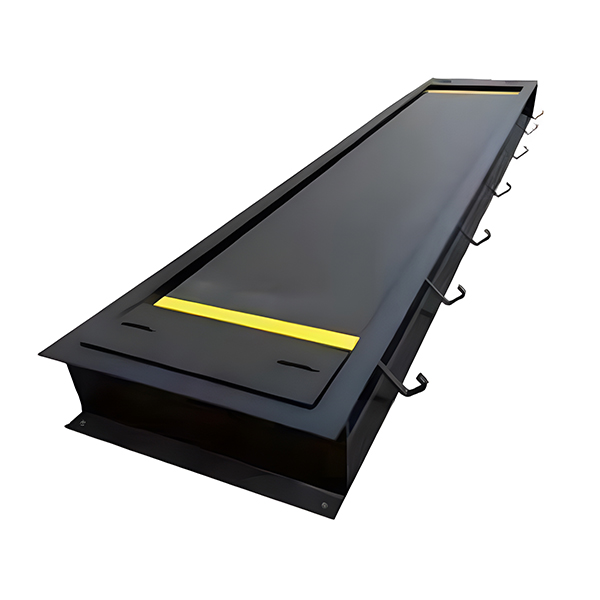
A truck's gross weight is distributed unevenly across its axles depending on load position, trailer type, and suspension design. Regulators in the United States, the European Union, and most of Asia set separate legal limits for steer axles, drive axles, and trailer axle groups, in addition to an overall gross weight cap. An axle load scale isolates the force pressing down through one axle at a time, so a driver or yard operator can see exactly where a shipment needs to shift before it becomes a violation.
In the U.S., the federal steer axle limit is commonly capped near 12,000 pounds, while tandem drive or trailer axle groups are typically allowed up to 34,000 pounds under the Federal Bridge Gross Weight Formula, subject to axle spacing. These numbers vary by state and by bridge formula calculation, which is exactly why axle-specific measurement matters more than a single gross weight reading.
How Load Scales Capture Weight in the Field
Most modern axle load scales rely on one of three sensing methods, and each trades off differently between portability, durability, and precision.
Strain Gauge Load Cells
A strain gauge bends a metal element under load and converts that flex into an electrical signal. This is the dominant technology in portable wheel-weighing pads because the cells are compact, respond quickly, and hold calibration well between uses.
Hydraulic Load Cells
Hydraulic sensors measure pressure change in a sealed fluid chamber. They tend to be more tolerant of temperature swings and mechanical shock, which is why they show up more often in permanently embedded pit scales at ports and mine sites.
Piezoelectric Sensors
Piezoelectric weigh-in-motion systems generate a voltage pulse as an axle rolls over the sensor strip. These are built for continuous traffic monitoring rather than static, precise readings, so they suit screening applications more than certified compliance checks.
Comparing Load Scale Types by Use Case
| Scale Type | Typical Capacity | Best Fit | Portability |
|---|---|---|---|
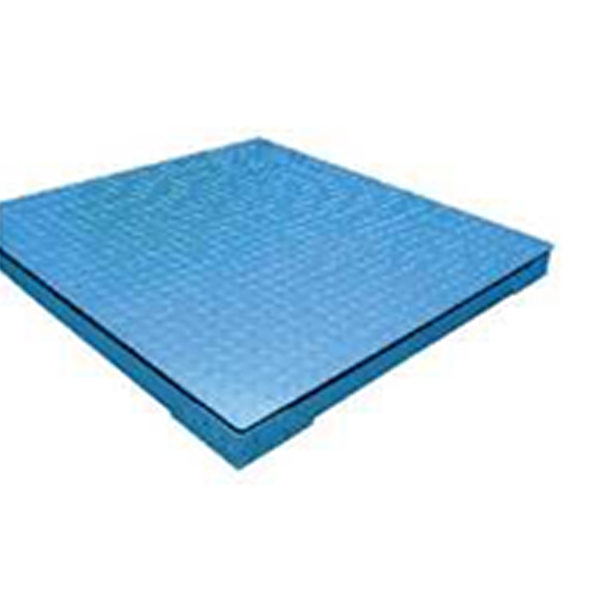
| Portable wheel pads | Up to 40,000 lb per pad | Yard checks, pre-trip screening | High |
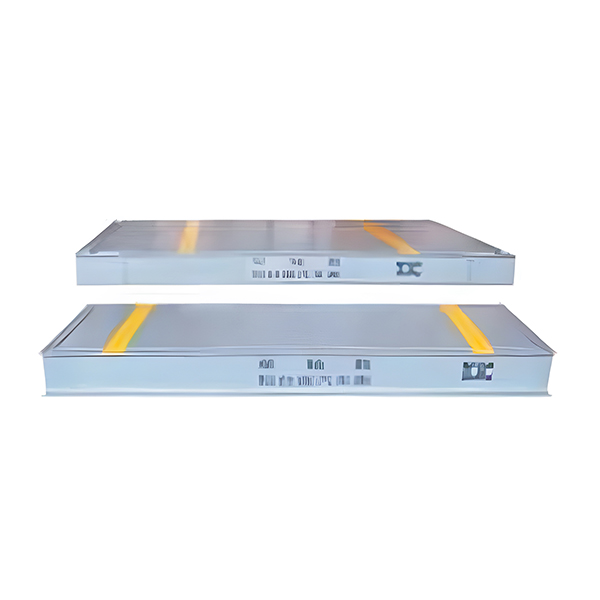
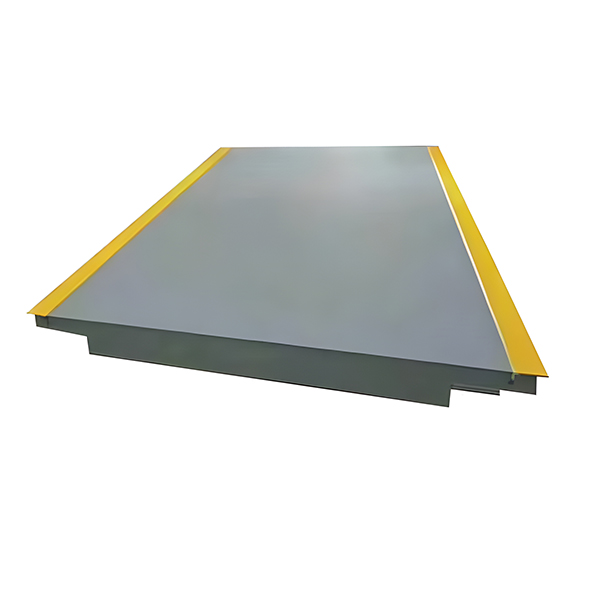
| Portable axle scale (full-width) | Up to 60,000 lb per axle | Dual-tire axles, wide axle groups | Moderate |
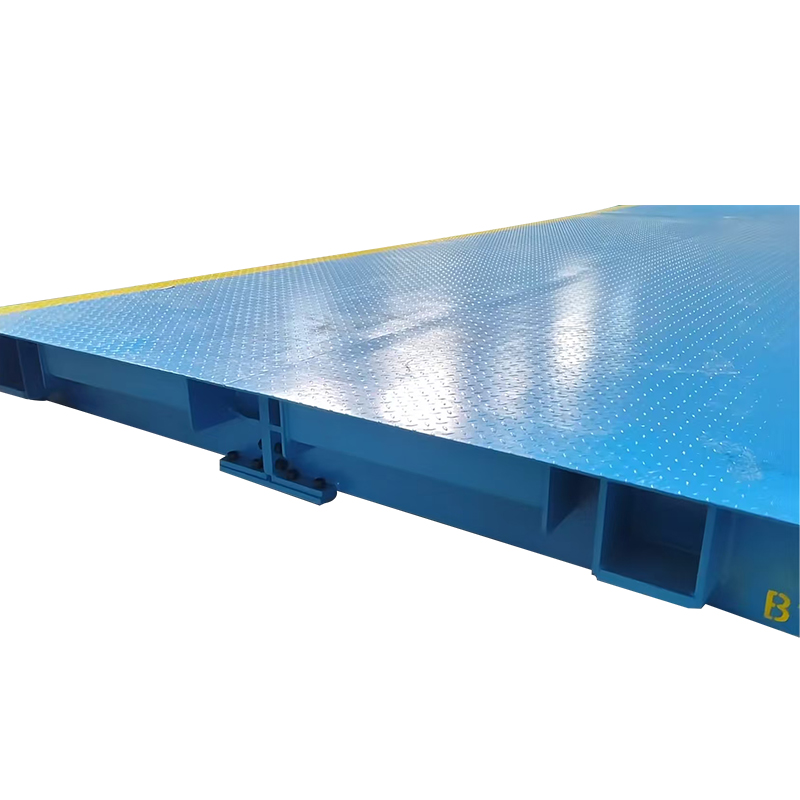
| Permanent in-ground pit scale | 80,000 lb and above, full vehicle | Ports, quarries, high daily throughput | None (fixed) |
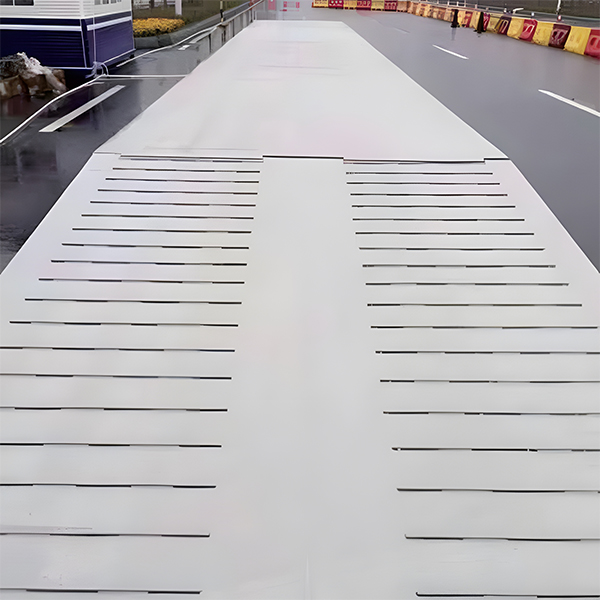
| Weigh-in-motion (WIM) | Varies by installation | Continuous traffic screening | None (fixed) |
Why Axle Weight Matters More Than Gross Weight Alone
Pavement engineers use the fourth-power law to describe how road wear scales with axle load: doubling the weight on an axle roughly increases the damage to pavement by a factor of sixteen, not two. This relationship is why regulators enforce axle-specific limits rather than only capping total vehicle weight, and it is also why a single overweight axle carries disproportionate cost in fines and infrastructure liability compared to a modest gross weight overage.
An axle load scale gives an operator the chance to correct load distribution, such as sliding a trailer tandem or repositioning cargo, before that imbalance ever reaches a public scale house.
Accuracy: What the Numbers on the Spec Sheet Actually Mean
Accuracy claims on load scales are usually expressed as a percentage of full-scale capacity, not as a percentage of the actual reading, and that distinction matters more than most buyers realize. A scale rated at plus or minus one percent of a 40,000-pound capacity can be off by up to 400 pounds at any reading, including when weighing a much lighter 10,000-pound axle.
Look for scales that publish accuracy figures under NTEP (National Type Evaluation Program) Class III/IIIL testing in North America, or OIML Class III internationally, since these certifications standardize how accuracy is tested rather than relying on a manufacturer's own bench conditions.
- Confirm whether the stated accuracy is percent of reading or percent of capacity
- Check the certified temperature range, since cold-weather yards see real drift in uncertified units
- Ask whether the pads or platforms have been zeroed and span-calibrated against a certified reference weight, not just factory defaults
Selecting the Right Scale for Your Operation
Choosing an axle load scale is really a question of how often you weigh, where you weigh, and what tolerance for error your operation can absorb.
Low-Frequency, Multi-Site Checks
Operations that move between yards, job sites, or customer locations benefit from lightweight portable pads that a single person can carry and set up in a few minutes, even if that convenience trades off some ruggedness.
High-Frequency, Single-Site Weighing
A dedicated yard or dock that weighs dozens of vehicles a day is usually better served by a permanent in-ground or portable full-width axle scale, since the wiring, indicator, and pad wear are all designed for continuous cycling rather than occasional field use.
Heavy Equipment and Off-Road Axles
Mining trucks, agricultural equipment, and other high-capacity off-road axles need scales rated well above standard highway limits, often 60,000 pounds or more per axle, along with wider pads that accommodate oversized tires.
Calibration and Maintenance That Keep Readings Trustworthy
A load scale is only as reliable as its last calibration. Field pads that get dragged across gravel yards or driven over repeatedly accumulate wear on load cells and connector cables faster than the specification sheet implies. A practical maintenance rhythm includes:
- Zero-check the scale before each weighing session using an empty, unloaded pad reading
- Span-calibrate against a certified test weight on a recurring schedule, commonly every six to twelve months depending on usage volume
- Inspect cables, connectors, and pad surfaces for cracking or moisture intrusion after exposure to rain or wash-down cycles
- Store portable pads flat and off the ground to avoid warping that throws off level readings
Common Mistakes That Skew Axle Weight Readings
Even accurate equipment produces bad numbers when the setup is wrong. The most frequent field errors include weighing on an unlevel or sloped surface, which shifts load away from the pad and toward the unweighed wheels; failing to weigh all axles in a group simultaneously, which lets the vehicle rock and redistribute weight mid-reading; and placing pads on soft ground that lets one side sink slightly lower than the other. A concrete or asphalt pad, checked with a simple level before each session, resolves most of these issues without any equipment upgrade.
Regional Axle Weight Frameworks Worth Knowing
Axle weight limits are not a single global number, and buyers sourcing or operating equipment across borders benefit from understanding the general shape of each major framework rather than memorizing every figure.
North America
The United States uses a combination of a flat single-axle cap, a tandem-axle cap, and the Federal Bridge Gross Weight Formula, which reduces the allowable weight as axle groups sit closer together. Canada follows a broadly similar bridge-formula approach, though provincial variation is common for specialized hauls.
European Union
EU member states generally apply a single-axle limit near 10 to 11.5 tonnes for drive axles, with lower limits for non-driven axles, and total vehicle combinations typically capped around 40 to 44 tonnes depending on the country and trailer configuration.
Asia-Pacific
Limits across the region vary widely by country and by road classification, with many markets setting single-axle limits in the range of 10 to 13 tonnes for standard highway use, and separate, often lower, allowances for secondary or rural roads.
Because these frameworks shift by region and even by road type within a single country, an axle load scale that reports raw axle weight, rather than one that only outputs a pass or fail result, gives an operator the flexibility to check a shipment against whichever limit actually applies to that route.
Reading the Indicator: Features That Matter Day to Day
The load cells only capture raw force. The indicator, the handheld or console display paired with the pads, is what turns that force into a usable number, and indicator quality varies enormously between entry-level and professional-grade equipment.
| Feature | What It Solves |
|---|---|
| Axle group summation | Automatically adds individual pad readings into a tandem or tridem group total |
| Gross weight roll-up | Combines every axle group into a single vehicle total without manual addition |
| Wireless pad linking | Removes trip-hazard cabling across a busy yard and speeds up setup |
| Ticket printing or data export | Creates a retrievable weighing record for internal load-audit purposes |
| Battery runtime and low-power alerts | Prevents mid-shift shutdowns during high-volume weighing days |
An indicator that automatically sums axle groups and rolls them into a gross total removes a common source of manual arithmetic error, particularly on multi-axle trailers where four, six, or more pad readings need to be combined correctly before a driver can trust the result.
Durability Factors That Determine Real Service Life
A load scale's published specifications rarely capture how it survives daily contact with tires, gravel, weather, and repeated loading and unloading. Several build factors separate equipment that lasts years from equipment that needs replacement within a single season.
- Pad surface material: textured high-grip surfaces reduce tire slip during positioning without sacrificing durability
- Ingress protection rating: pads rated for dust and water exposure hold up far better in yards without covered weighing areas
- Overload protection: internal mechanical stops that prevent a load cell from being crushed if a vehicle briefly exceeds rated capacity
- Cable strain relief: reinforced cable entry points reduce the most common point of field failure on wired pad systems
- Ramp edge design: a low-angle, chamfered edge reduces impact shock each time a tire rolls onto the pad
Operations weighing vehicles outdoors year-round should weigh these durability factors as heavily as raw accuracy specifications, since a highly accurate scale that fails within months delivers worse long-term value than a slightly less precise unit built for continuous outdoor use.
Fitting a Load Scale Into a Broader Fleet Workflow
Weighing a vehicle is rarely the end goal by itself. Most fleets treat the axle load scale as one step in a larger pre-trip or dispatch workflow, and the way a scale connects to that workflow affects how much time it saves in practice.
Manual Logging
Smaller operations often record readings by hand or photograph the indicator screen for their records. This works reliably at low volume but becomes a bottleneck once daily weighing counts climb into the dozens.
Data Export to Spreadsheets
Mid-size operations frequently export readings to a shared spreadsheet or basic database, giving dispatch a searchable history without investing in a full telematics platform.
Telematics and Yard Management Integration
Larger fleets increasingly connect load scale readings directly into yard management or telematics software, so a weight reading automatically attaches to a specific trailer, load, and driver record without any manual data entry step.
Cost Considerations Beyond the Purchase Price
The sticker price of an axle load scale is only part of its total cost of ownership. A realistic comparison factors in several recurring costs alongside the upfront purchase.
| Cost Factor | Why It Recurs |
|---|---|
| Calibration checks | Periodic verification against a reference weight to catch drift before it affects readings |
| Pad or cable replacement | Wear parts that see the most physical stress from daily tire contact |
| Battery replacement | Rechargeable packs in wireless indicators degrade gradually with daily charge cycles |
| Software or firmware updates | Keeps data export formats compatible with evolving fleet management systems |
Weighed against these recurring costs, the avoided expense from catching a single overweight axle before it reaches a public scale, including fines, delay, and any cargo reshuffling on the road, typically outweighs the annual upkeep cost of a well-built scale many times over.

Glossary of Common Load Scale Terms
| Term | Meaning |
|---|---|
| Axle group | Two or more axles close enough together to be regulated as a single weight unit |
| Span calibration | Adjusting a scale's output to match a known reference weight across its full range |
| Zero drift | Gradual change in the unloaded reading over time or temperature |
| Bridge formula | A calculation that lowers allowable axle group weight as axle spacing decreases |
| Static weighing | Measuring weight with the vehicle fully stopped, as opposed to weigh-in-motion |
Frequently Asked Questions
What is the difference between an axle load scale and a gross vehicle weight scale
An axle load scale measures the weight on one axle or axle group at a time, while a gross vehicle weight scale, such as a full platform truck scale, captures the total weight of the entire vehicle in a single reading. Fleets typically need both, since a heavy but evenly distributed vehicle can still hide an individual overloaded axle.
How accurate do portable axle scales need to be for reliable use
Accuracy needs vary by use case, but scales used for serious compliance screening generally publish figures under a recognized testing standard, with accuracy typically within a small percentage of rated capacity under controlled test conditions rather than only under ideal lab settings.
Can one portable pad weigh a full tandem axle group
A single pad only captures the wheel or tire directly on it. Full tandem or tridem axle groups require a full set of pads, one under each tire position, weighed simultaneously so the vehicle stays level and the load is not shifted mid-measurement.
How often should an axle load scale be recalibrated
A common interval is every six to twelve months for portable pads in regular use, though scales exposed to harsh conditions, heavy daily cycling, or recent physical impact should be checked sooner using a reference weight.
Do weigh-in-motion systems replace static axle scales
Weigh-in-motion systems are built for continuous traffic screening and flagging likely overweight vehicles, not for precise, stationary measurement. Static portable or permanent axle scales remain the standard for confirming an exact, trustworthy weight reading.
Why does one axle read differently each time the same load is weighed
Small variation between readings is usually caused by an unlevel weighing surface, uneven tire pressure between sides, or a vehicle rocking slightly during measurement. Consistent surfaces and weighing all axles in a group at once largely resolve this.
What is the practical difference between hydraulic and strain gauge load cells
Strain gauge cells respond quickly and are common in lightweight portable pads, while hydraulic cells tolerate temperature swings and mechanical shock better, which is why permanently installed pit scales more often use hydraulic sensing.
Do axle load scales need a level concrete pad to work correctly
A firm, level surface produces the most consistent readings, since soft or sloped ground lets one side of the vehicle sink or shift weight away from the pad. A simple level check before each session prevents most surface-related errors.
How many pads does a full rig typically need
A standard tractor-trailer combination generally needs enough pads to cover the steer axle, drive tandem, and trailer tandem simultaneously, which usually means six pads for a full, accurate single-pass reading.
Copyright © Ningbo Jiuding Weighing Equipment Co., Ltd.
