

 English
 中文简体
中文简体
Industry News
Home / News / Industry News / Receiving Scale: Types, Selection Criteria, and Maintenance for Inbound Weighing
Content
A receiving scale is the most direct way to stop inbound weight losses before they enter your inventory. In facilities that take more than 30 deliveries per day, unchecked differences between supplier invoices and delivered quantities routinely cause inventory shrinkage of 1 to 3 percent. Install the right scale at the dock, and you gain a defensible weight record for every load before it moves into stock, production, or your ERP system.
Example: a packaging plant receives 40 pallets of film resin each week. The purchase order says 20,000 kg per truck, while the driver's delivery note lists 19,500 kg. Without an inbound weighing record, the 500 kg gap disappears into shrinkage. Over 50 weeks, that single discrepancy totals roughly 25,000 kg of paid-for material that was never verified to arrive. A receiving scale converts that guesswork into a measured, recorded fact.
The practical conclusion is simple: if your receiving area handles more than a handful of inbound loads per day, or if any supplier invoice is paid on stated weights rather than measured weights, a receiving scale is core equipment, not an optional accessory.
A receiving scale is an industrial weighing system dedicated to the inbound goods area of a warehouse, factory, or distribution center. Production scales control recipes, shipping scales confirm outbound loads, but the receiving scale exists for a narrower job: establishing the actual weight of everything that enters the facility, at the moment it enters.
The typical receiving workflow has five steps:
That last step matters to procurement and finance as much as to the warehouse team. Verified inbound weights create the evidence trail needed to claim shortages, challenge overbilling, and keep stock accuracy consistently above 98 percent even in busy dock environments.
Receiving scales also support freight audits. When a carrier bills for 21,000 kg but the scale shows 19,500 kg, the discrepancy is visible in seconds. At that rate, across 48 truckloads per year, the annual phantom weight reaches 72,000 kg. The scale pays for itself from this single control point alone.
Different docks create different load patterns, so there is no universal best receiving scale. The right choice depends on the form of the inbound goods: pallets, whole vehicles, or loose items. Weighing the wrong load type on the wrong equipment causes either overload damage or frustratingly slow operation.
Platform scales are the workhorse of most receiving areas. The weighing deck sits flush with or slightly above floor level, so a forklift can place an entire pallet directly on the scale. Capacities commonly range from 0.5 to 3 tons, and deck sizes are matched to pallet formats: a 1.2 m x 1.2 m deck handles one standard pallet, while 1.5 m x 1.5 m or 2 m x 2 m is better when loads overhang on all sides.
For fast-paced docks, look for a low-profile frame, an anti-slip deck surface, and a construction that allows easy cleaning underneath. A platform scale with a 0.5 kg division on a 1 t range can detect a missing bag or box weighing half a kilogram on a full pallet load, which is usually enough to prevent supplier shortfalls from going unnoticed.
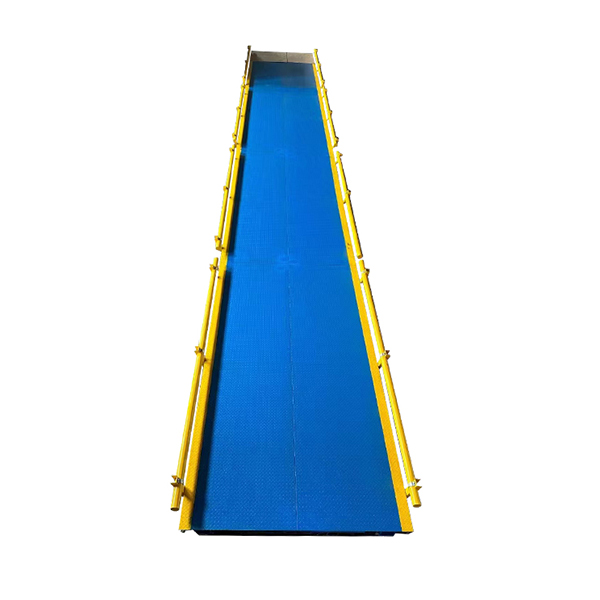
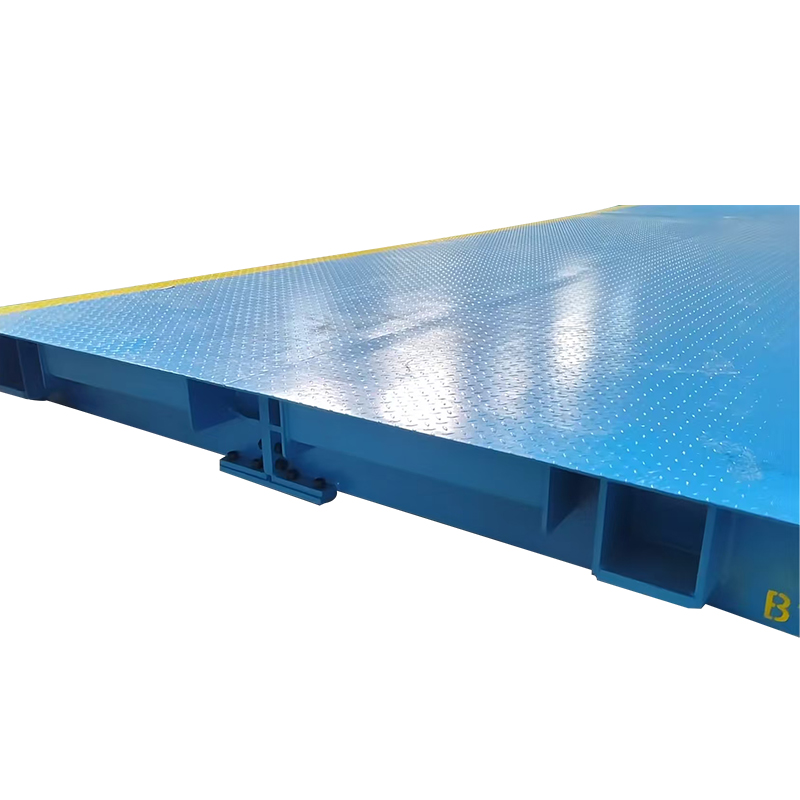
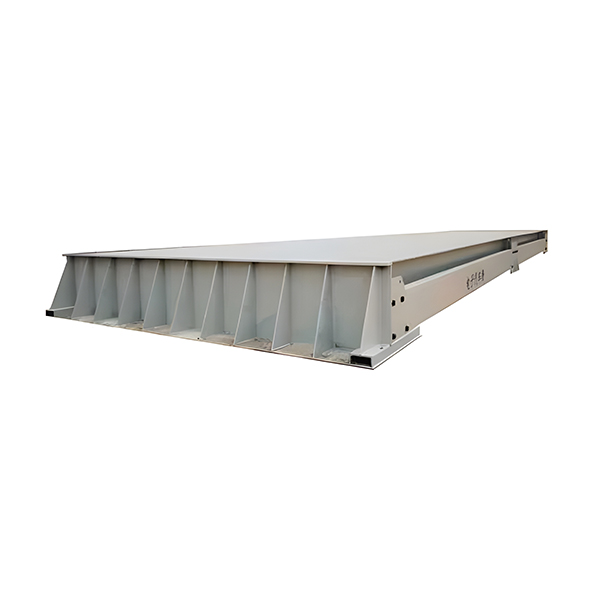
When goods arrive by truck rather than by pallet, such as bulk aggregates, scrap metal, grain, chemicals, or returnable containers, a truck scale is the correct tool. These scales weigh the entire vehicle and its cargo, so capacities typically start at 30 tons and extend to 100 tons or more for heavy haulage.
Inbound truck weighing follows the gross-tare method: the loaded vehicle is weighed on arrival, then weighed again after unloading, or its tare weight is recalled from a stored database, to calculate the net delivered quantity. For facilities that weigh several inbound vehicles per day, a digital electronic truck scale with hermetically sealed digital load cells delivers stable, repeatable readings and supports automatic data capture. Digital load cells are especially practical outdoors, where temperature swings and moisture would otherwise degrade analog signal quality over time.
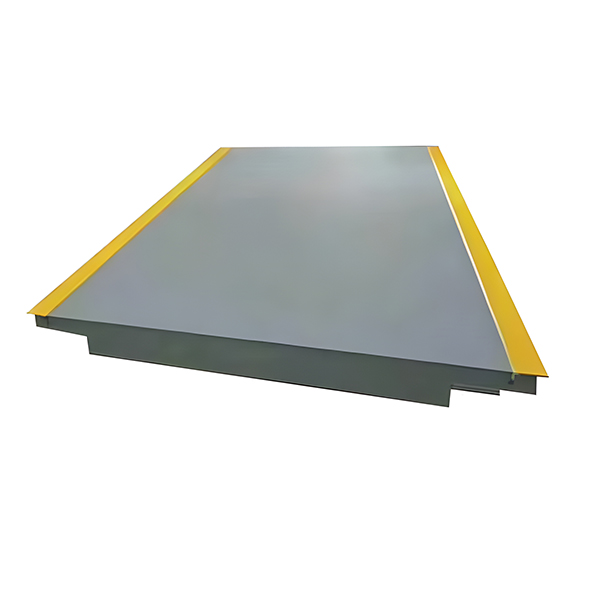 Wholesale Digital Electronic Truck Scale Manufacturer, Factory - Ningbo Jiuding Ningbo Jiuding Weighing Equipment Co., Ltd is China wholesale Digital Electronic Truck Scale manufacturer and OEM/ODM Digital Electronic ...View Product →
If your dock receives a mix of full truckloads and less-than-truckload shipments, combining a truck scale with a small platform scale covers both ends of the flow: the vehicle is weighed on arrival, and palletized partial loads that need spot checks are weighed at the dock without tying up the truck.
Many receiving docks handle bags, drums, and crates that are dropped directly onto the scale deck. Under impact, the instantaneous force can be several times the static weight. A 25 kg bag dropped from a conveyor height of 50 cm can momentarily stress the deck with more than 120 kg of force. Standard platform structures are not always designed for that repetition.
A buffer scale is purpose-built for this condition. It uses a reinforced deck and a damping structure to absorb shock loading without damaging load cells or disturbing calibration. Capacities are commonly available from 0.5 t to 10 t. If your inbound line involves any free-fall or drop-off loading, choosing an impact-resistant buffer scale instead of a standard platform scale protects your accuracy budget and avoids premature sensor failure.
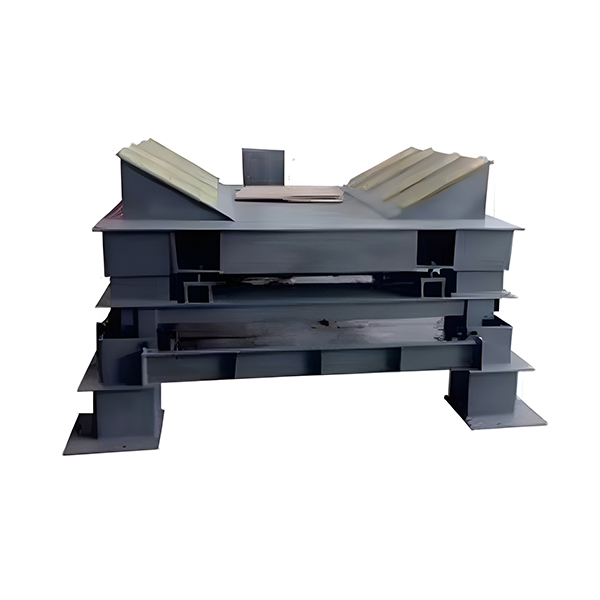 Wholesale Buffer Scale Manufacturer, Factory - Ningbo Jiuding Weighing EquipmentNingbo Jiuding Weighing Equipment Co., Ltd is China wholesale Buffer Scale manufacturer and OEM/ODM Buffer Scale factory,Product characte...View Product →
Receiving areas that process parcel-sized shipments, small components, or quality-control samples need resolution rather than capacity. A bench scale in the 5 to 100 kg range offers a practical balance: compact enough to sit on a workstation, accurate enough to verify item counts by weight, and inexpensive enough to deploy at multiple receiving points.
Bench scales with a piece-counting function are especially useful for hardware, fastener, and spare-part receiving, where an incoming carton may contain dozens of different SKUs. The operator places a sample on the scale, and the scale calculates the quantity based on average piece weight, cutting receiving time roughly in half compared with manual counting.
| Scale Type | Typical Capacity | Best Suited For | Typical Resolution |
|---|---|---|---|
| Platform / floor scale | 0.5 - 3 t | Pallets, crates, containers | 0.5 - 1 kg |
| Truck scale | 30 - 100 t | Whole vehicles, bulk materials | 10 - 20 kg |
| Buffer scale | 0.5 - 10 t | Impact loading, dropped bags and drums | 0.5 - 2 kg |
| Bench scale | 5 - 100 kg | Small parts, samples, parcels | 1 - 20 g |
Regardless of scale type, five specification areas determine whether the equipment protects your operation or frustrates it: capacity, platform size, resolution, load cell protection, and connectivity. Checking these one by one before purchase prevents the two most common failures: overloading and unreadable data.
Select a rated capacity at least 20 percent above your heaviest regular load. If the heaviest pallet weighs 1,100 kg, a 1.5 t platform scale is the minimum sensible choice; a 1 t scale is already overloaded on its hardest day. Repeated overloads are the leading cause of load cell deformation, and a deformed load cell silently shifts readings in one direction, usually toward underweighting, which is exactly the direction that hides supplier shortages.
Deck dimensions should exceed the footprint of your largest pallet or container by at least 10 cm on each side, so the load is fully supported and the weighing result does not depend on where the forklift places the load. Also check the scale height and ramp angle. A platform height above 6 cm starts to slow forklift traffic; a height above 10 cm creates a real bump that fatigues both drivers and equipment.
The division size, usually marked as d=, defines the smallest readable increment. A 1 t platform scale with a 0.5 kg division can flag a missing bag or box of around half a kilogram. For bulk inbound weighing on a 60 t truck scale, 20 kg divisions are standard and sufficient, because the smallest discrepancy worth chasing is usually one bag or one drum, which weighs more than 20 kg. Match the resolution to the smallest discrepancy you want to detect on the largest load you actually weigh.
Load cells are the measuring organs of a scale, and their protection level determines long-term stability. Hermetically sealed digital load cells with IP67 or IP68 protection resist moisture, dust, and washdown chemicals, which makes them the preferred choice for outdoor truck scales and food receiving areas.
When the scale must transmit signals over cable runs longer than 20 meters, digital load cells maintain accuracy better than analog cells, because the analog-to-digital conversion happens inside the sensor itself. You can read more about how column-type digital load cells ensure long-distance data transmission in our technical guide.
A receiving scale becomes truly valuable when it is connected. Look for indicators with RS232, RS485, Ethernet, or IoT interfaces that can push weight data directly to a computer, label printer, or ERP module. A scale that only displays a number on a screen still protects you partially, but it cannot build a searchable receiving record without manual transcription, and manual transcription is where the next round of errors is born.
The weighing indicator is the operator's main interface, and its quality directly affects throughput. A good indicator does more than show a number: it stores transaction history, supports multiple product IDs, communicates with barcode scanners and printers, and flags weighments that fall outside expected ranges.
Modern IoT-enabled indicators add a network layer. An indicator such as the Jiuding D39 IoT weighing instrument connects to the local network or the cloud, so receiving managers can review inbound records from a desk instead of walking to the dock. Data can be synchronized to weighing software and then pushed into accounting or inventory systems, eliminating the double-entry work that slows down receiving lines.
On the software side, a dedicated weighing program records each transaction with a timestamp, operator ID, and optional annotation, creating a complete audit trail. When the receiving scale, the indicator, and the software share the same data model, a supplier discrepancy can be raised and resolved within minutes of truck arrival, rather than days later when the inventory variance appears in a month-end report.
For facilities with multiple inbound lanes, IoT connectivity also enables live monitoring of scale status. A sudden shift in zero balance or an unusual calibration drift can trigger an alert, so maintenance happens before the scale starts producing bad numbers.
The best receiving scale in the world will underperform if it is positioned badly or mounted on an unstable surface. Three issues dominate: scale location, approach, and foundation.
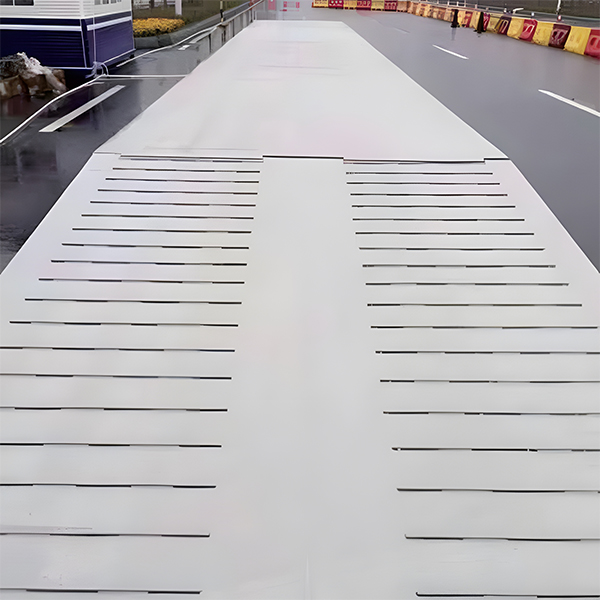
Pit-mounted scales sit flush with the floor, so forklifts drive across them without ramps. Surface-mounted scales are easier to retrofit but require a ramp on at least one side. For truck scales, the pit-versus-surface decision affects drainage, cleaning, and the vehicle approach angle. The foundation must be level, rigid, and strong enough to carry the maximum axle load without flexing; typical concrete foundations for truck scales are 300 to 400 mm thick and reinforced across the full scale length.
Position the weighing point so that every inbound vehicle or pallet passes over it without reversing or maneuvering. Add guide rails or wheel stops where needed, and plan power and data cabling before the concrete is poured, not after. A stable power supply with surge protection, or an uninterruptible power supply, protects both the scale and the data it records during storms and grid fluctuations.
Once the scale is installed, a structured installation verification, setup, and configuration process ensures the load cells are properly seated, the indicator is set with the correct calibration parameters, and the first readings match a known test weight. Skipping this step is one of the most common causes of premature receiving scale drift and short load cell life.
A receiving scale works continuously, and weighing accuracy never stays permanently fixed. Load cell fatigue, mechanical wear, and environmental contamination all shift readings over time. The maintenance effort is small, but it must be scheduled rather than reactive.
Start with routine checks that take less than two minutes per day:
Calibration frequency depends on duty level. A high-volume receiving scale operating 20 hours per day should be verified at least monthly with calibrated test weights. A moderate-duty scale can be checked quarterly, and a light-duty bench scale annually. In every case, keep a calibration log that records the date, the test weights used, and the displayed values. This log is the fastest way to spot drift before it produces bad inventory numbers.
| Duty Level | Typical Usage | Verification Frequency |
|---|---|---|
| High | 20+ hours per day, continuous weightments | Monthly |
| Medium | 8 to 20 hours per day | Quarterly |
| Light | A few weightments per day | Annually |
A preventive maintenance plan is an even better starting point if the receiving area cannot afford unplanned downtime. A scheduled program that includes linearity checks, bolt torque verification, and indicator diagnostics will normally catch developing faults between calibration cycles. Combined with spare parts such as load cells and a junction box, a simple maintenance schedule keeps receiving scales reliable for a decade or more.
A receiving scale verifies the weight of inbound goods at the point of delivery. It creates a measured record used for purchase order matching, supplier dispute resolution, and accurate inventory entry.
That depends on the smallest discrepancy you want to detect. For palletized goods, a 0.5 kg division on a 1 to 3 t scale catches missing boxes and bags. For bulk truck deliveries, 10 to 20 kg divisions are usually sufficient because the quantities at stake are larger.
Yes. Indicators with RS232, RS485, Ethernet, or IoT interfaces transmit weight data to weighing software, which exports records to ERP, accounting, or inventory systems. This integration removes manual data entry, speeds up the receiving line, and creates an auditable trail for every shipment.
High-use scales should be verified monthly with calibrated test weights. Moderate-duty scales can be checked quarterly, and light-duty bench scales annually. Keep a dated calibration log with the test weights used and the values displayed.
Choose a scale rated at least 20 percent above your heaviest regular load. If your heaviest pallet weighs 1,100 kg, a 1.5 t platform scale is the right starting point. If inbound trucks gross at 55 t, choose a 60 t or 80 t truck scale to leave headroom for future vehicles.
A receiving scale measures inbound goods for purchase order verification and inventory input. A shipping scale measures outbound goods for sales invoicing and freight calculation. They often use similar hardware, but they sit at different control points in the logistics chain and answer different questions.
Copyright © Ningbo Jiuding Weighing Equipment Co., Ltd.