


 English
 中文简体
中文简体
Industry News
Can anyone use a public weighbridge?
Content
- 1 What Makes a Weighbridge "Public"
- 2 Who Typically Uses a Public Weighbridge
- 3 Practical Restrictions You May Encounter at a Public Weighbridge
- 4 What You Receive: The Weighbridge Certificate
- 5 How to Find a Public Weighbridge Near You
- 6 Legal Requirements That Drive Demand for Public Weighbridge Access
- 7 Comparison: Public Weighbridge vs. Other Weighing Options
- 8 The Process of Using a Public Weighbridge Step by Step
- 9 Decline of Public Weighbridges and What It Means for Access
- 10 Tips for Getting the Most From a Public Weighbridge Visit
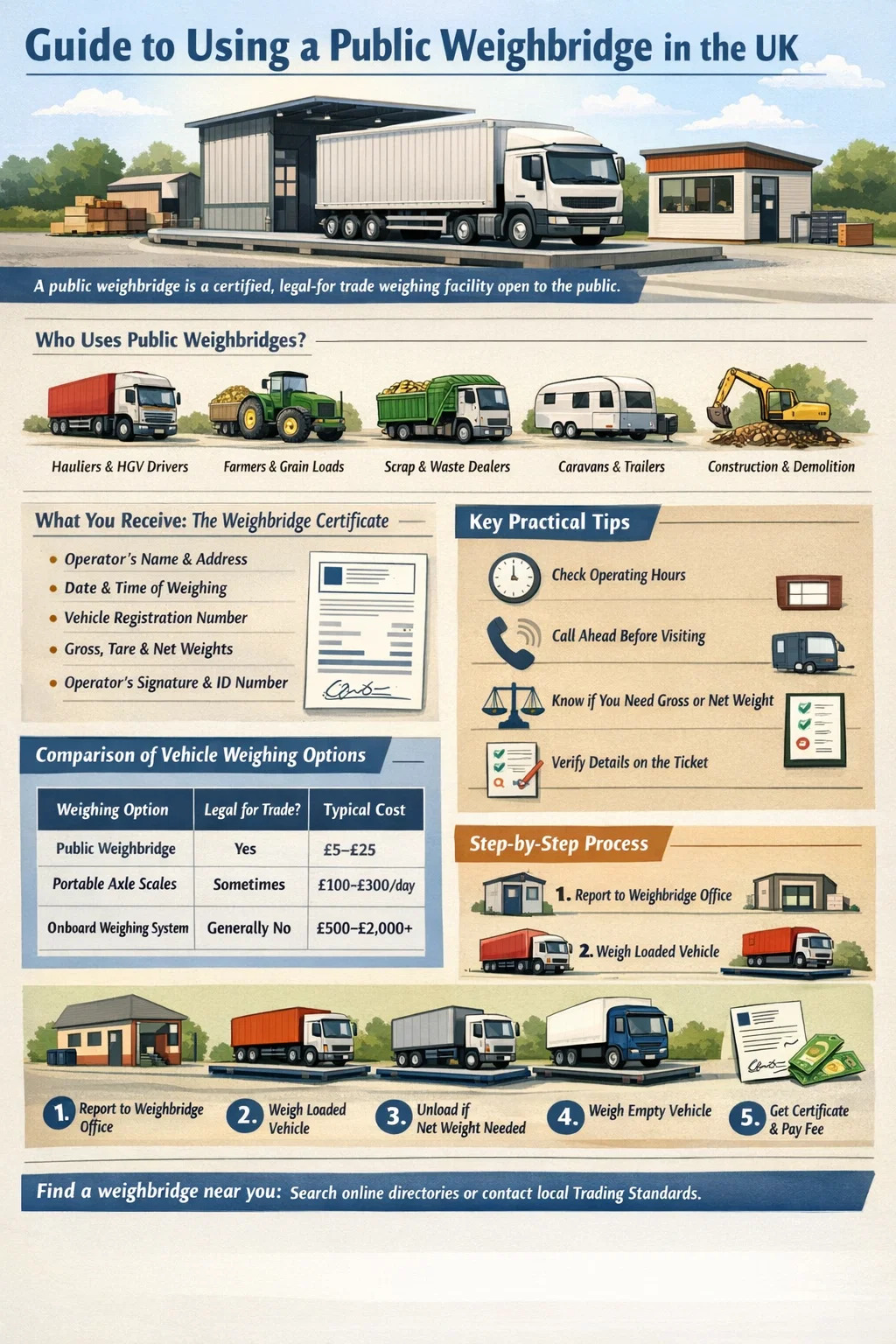
Yes — in most cases, anyone can use a public weighbridge. Public weighbridges are specifically operated to provide weighing services to members of the public and businesses that do not have access to a private weighbridge on their own premises. Whether you are an individual wanting to check a horse trailer's weight, a small haulage contractor needing a certified ticket for a delivery, or a farmer weighing a load of grain, a public weighbridge will typically accept your vehicle without requiring any prior arrangement or membership.
That said, "public" does not mean entirely unrestricted. Some public weighbridges operate during fixed hours only, some require pre-booking at busy sites, and a handful are operated by local authorities with specific conditions attached to their use. Understanding exactly what access you have — and what a public weighbridge is actually obliged to provide — saves wasted journeys and ensures you get the certified weight ticket you need.
What Makes a Weighbridge "Public"
The term "public weighbridge" has a specific legal meaning in the UK under the Weights and Measures Act 1985. A public weighbridge is one that is made available to the public for weighing vehicles and their loads — it must be a verified, legal-for-trade instrument operated by an appointed weighbridge operator. The operator is required by law to weigh any vehicle presented to them during operating hours and to issue a certificate of weighing (the weight ticket) upon request.
This is a meaningful distinction. A weighbridge at a quarry that is used exclusively for the quarry's own operations is not a public weighbridge, even if members of the public could theoretically drive up to it. Only when a weighbridge is formally designated and operated as a public facility — with a qualified weighbridge operator in attendance and a verified instrument — does it carry the legal status and obligations that the term implies.
The Role of the Appointed Weighbridge Operator
The weighbridge operator at a public facility must hold a certificate of competence issued under the Weights and Measures (Weighing Equipment) (Amendments and Transitional Provisions) Regulations. Their responsibilities include ensuring the instrument is operating within its verified accuracy limits, managing the weighing process correctly (ensuring the full vehicle is on the platform, no part overhanging), and issuing legally valid weight certificates. A certificate issued by an unqualified operator at an unverified instrument carries no legal standing and could not be used for trade, compliance, or enforcement purposes.
Local Authority vs. Privately Operated Public Weighbridges
Historically, most public weighbridges in the UK were operated by local councils. Over the last few decades, the number of council-operated public weighbridges has fallen sharply — from several thousand in the mid-twentieth century to fewer than a few hundred today — as local authorities have reduced services and many sites were closed or sold off. The gap has been partially filled by privately operated public weighbridges at haulage depots, waste facilities, quarries, and agricultural merchants, which open their weighbridge to paying members of the public during operating hours.
Who Typically Uses a Public Weighbridge
Public weighbridges serve a wide range of users with very different reasons for needing a certified weight. The common thread is that these users do not have access to a weighbridge of their own and need a legal, verified weight reading for practical or regulatory purposes.
- Independent hauliers and owner-operators — checking that a loaded vehicle is within the legal gross vehicle weight (GVW) limit before starting a journey. In the UK, operating an overloaded HGV can result in fines of up to £300 per offence per axle at the roadside, so operators without an on-site weighbridge rely on public facilities for compliance checks.
- Farmers and agricultural merchants — weighing grain, livestock feed, fertiliser, or harvested crops at point of sale or delivery. Many agricultural supply chains require a certified weight ticket as proof of quantity delivered.
- Scrap metal and recycling dealers — verifying the weight of metal, paper, or other recyclable materials before or after collection. Scrap dealers are often legally required to record transaction weights, and a public weighbridge ticket provides this documentation.
- Skip hire and waste contractors — particularly for small operators who move waste to transfer stations without a weighbridge at their yard, a public weighbridge provides the tonnage data needed for waste transfer notes.
- Private individuals with caravans or horse trailers — checking tow weights against vehicle manufacturer limits and legal requirements. An overloaded trailer relative to the towing vehicle's maximum towing capacity is both illegal and a significant safety risk.
- Construction contractors — confirming that skips, aggregate deliveries, or demolition waste loads meet customer specifications or contract quantities.
- Motorhome and campervan owners — larger motorhomes frequently approach or exceed their Maximum Technically Permissible Laden Mass (MTPLM), and insurance and MOT validity may depend on the vehicle being operated within this limit.
Practical Restrictions You May Encounter at a Public Weighbridge
While access is generally open, there are practical limitations that affect whether you can use a particular public weighbridge for your specific need. Being aware of these before you visit prevents wasted time.
Operating Hours
Public weighbridges at commercial sites — aggregate depots, recycling centres, and haulage yards — typically operate during normal business hours, often Monday to Friday 7am to 5pm, and sometimes Saturday mornings. Weekend and evening access is unusual. Some local authority weighbridges have reduced to part-week opening. Arriving outside operating hours means no qualified operator is present, and no legal certificate can be issued regardless of whether the instrument itself is switched on.
Platform Size and Capacity Limits
Not every public weighbridge can handle every vehicle. Standard commercial weighbridges typically have platforms 18 metres long and a capacity of 60 to 80 tonnes — adequate for most HGVs. However, if you are bringing a very long road train, a specialist abnormal load vehicle, or a combination exceeding the platform length, the weighbridge operator may be unable to provide a single gross weight reading. Similarly, very light vehicles such as small vans or cars with trailers may fall below the instrument's minimum weighing capacity, producing unreliable readings.
Queue Times at Busy Sites
Public weighbridges at working quarries or active recycling centres may have significant vehicle queues during peak hours. At a busy site, a weighbridge processing 200 vehicles per day means an average vehicle passes through roughly every two to three minutes during operating hours, but peak morning and early afternoon periods can create queues of 10 to 20 minutes or more. If your visit is time-sensitive, calling ahead to ask about queue levels is worthwhile.
Payment and Fees
Public weighbridge operators are entitled to charge a fee for their service. Fees vary considerably by location and operator type. Typical charges range from £5 to £25 per weighing transaction, with some local authority sites historically offering lower rates and some specialist or remote sites charging at the higher end. Some operators offer account facilities for regular users, with invoicing at end of month rather than payment on each visit. Cash, card, and account payments are all common depending on the operator.
What You Receive: The Weighbridge Certificate
The primary output of a public weighbridge visit is the weight certificate — sometimes called a weighbridge ticket or docket. This document is the legal record of the weighing transaction and carries significant practical and regulatory value.
What a Valid Certificate Must Show
A legally valid weighbridge certificate issued at a public weighbridge must include the following information:
- Name and address of the weighbridge operator
- Date and time of the weighing
- Vehicle registration number
- Gross weight, tare weight (if a separate tare weighing was performed), and net weight
- Description of the goods being weighed (where applicable)
- Signature or identifier of the authorised weighbridge operator
- Instrument identification (the weighbridge's stamp number assigned during verification)
A certificate missing any of these elements may not be accepted by Trading Standards, the Environment Agency, or other regulatory bodies as valid proof of weight. Always check the ticket before leaving the weighbridge site.
Gross Weight vs. Net Weight — Understanding What You Are Paying For
Many users of public weighbridges need a net weight — the weight of the load itself, not the vehicle. Getting a net weight requires two weighings: one with the vehicle loaded (gross) and one with the vehicle empty (tare). The difference between the two is the net load weight. Some operators hold a registered tare weight on file for known regular vehicles, allowing a net weight to be calculated from a single gross weighing. For a new vehicle, you will typically need to pay for two separate weighings to get a net weight, so factor this into your expected cost and time.
How to Find a Public Weighbridge Near You
Finding a public weighbridge within a practical distance is a common challenge, particularly for users in rural areas where the decline in local authority-operated weighbridges has left significant geographic gaps. Several approaches can help locate the nearest suitable facility.
Online Weighbridge Directories
Several websites maintain searchable directories of public weighbridges in the UK, allowing users to search by postcode or county. These directories are maintained by weighbridge trade associations and industry bodies. Results typically show the address, operator contact details, operating hours, and maximum capacity. Because public weighbridge availability changes frequently as sites open and close, it is always worth calling ahead to confirm the site is still operational before making a journey, especially for less frequently listed sites.
Local Authority and Trading Standards Offices
Local authority Trading Standards departments maintain registers of verified weighing instruments within their area, which may include public weighbridges. They can confirm which instruments are currently verified and legally operational, though they may not always be able to confirm which privately operated weighbridges offer public access. Contacting your local Trading Standards office directly is particularly useful if you need a weighbridge for a legal or enforcement purpose and want to be certain the instrument you use has current verification.
Industry Contacts and Trade Networks
For agricultural users, local agricultural merchants, cooperative buying groups, and NFU regional offices often know which nearby facilities offer public weighing services. Similarly, haulage associations and waste management trade bodies maintain networks that can point members toward accessible public weighbridges. If you are a regular user, joining a trade network that actively maintains such information can save significant time compared to searching from scratch each time you need a certified weight.
Legal Requirements That Drive Demand for Public Weighbridge Access
Understanding why public weighbridge access matters requires looking at the legal framework that makes certified weight records necessary in the first place. Several distinct regulatory regimes create demand for public weighbridge services.
Road Traffic and Vehicle Weight Limits
The Road Vehicles (Construction and Use) Regulations 1986 and subsequent amendments set out maximum weights for vehicles and axles operating on UK public roads. A standard two-axle rigid lorry is limited to 18 tonnes gross; a five-axle articulated vehicle can operate at up to 44 tonnes under certain conditions. Exceeding these limits is a criminal offence. DVSA (Driver and Vehicle Standards Agency) enforcement officers use portable weighing equipment and direct vehicles to static public weighbridges for confirmed weighing. A driver whose vehicle is found to be overloaded faces fixed penalty notices, and the vehicle may be prohibited from continuing until the load is reduced.
Waste Regulation and Transfer Notes
Under the Environmental Protection Act 1990 and the Waste (England and Wales) Regulations 2011, waste carriers must maintain accurate records of the waste they collect and transfer, including quantity by weight or volume. Licensed waste facilities typically require a weighbridge ticket as part of the waste transfer documentation. Small waste contractors who collect from multiple sources and transfer to a licensed site daily use public weighbridges to generate the verified weight records needed to comply with their carrier licence conditions and Environmental Permitting requirements.
Trade and Commercial Contracts
Contracts for the sale of bulk goods — grain, aggregates, coal, scrap metal, timber — are almost always priced by weight. A public weighbridge ticket provides an independent, legally certified record of the quantity delivered or collected, which protects both buyer and seller in the event of a dispute. Without an independent certified weight, resolving disagreements about delivery quantities becomes extremely difficult, particularly where the buyer and seller use different weighing equipment that may not agree.
Insurance and Road Fund Compliance
Some vehicle insurance policies, particularly for commercial vehicles, contain clauses that void cover if the vehicle is operated in an overloaded condition. A public weighbridge visit provides documented proof that a vehicle was within its permitted weight limits at a specific date and time, which can be valuable evidence in the event of an insurance claim following an incident. For motorhome and campervan owners specifically, operating a vehicle above its MTPLM may also affect the validity of the vehicle's type approval, creating implications for both insurance and roadworthiness.
Comparison: Public Weighbridge vs. Other Weighing Options
A public weighbridge is not always the only option for getting a vehicle weight. Depending on your situation, there may be alternatives worth considering. The table below compares the main options across key practical factors.
| Weighing Option | Legal for Trade? | Typical Cost | Accuracy | Availability |
|---|---|---|---|---|
| Public weighbridge | Yes | £5–£25 per weighing | ±0.1% or better | Business hours, varies by location |
| DVSA weighing site | Yes (enforcement use) | Not available to general public | High | Not publicly accessible |
| Portable axle scales (hired) | Sometimes (if verified) | £100–£300+ per day hire | ±0.5%–1% | Hire company dependent |
| Onboard vehicle weighing system | Generally no | £500–£2,000+ (capital cost) | ±1%–3% | Continuous, on vehicle |
| Weigh-in-motion (WIM) roadside | Pre-selection only | Not for public use | ±5%–15% (indicative) | Fixed road locations |
For most users who need a certified, legally valid weight record — particularly for trade, compliance, or enforcement purposes — a public weighbridge remains the most accessible and cost-effective option. The alternatives either require significant capital investment, are not legally recognised for trade purposes, or are simply not available to the general public.
The Process of Using a Public Weighbridge Step by Step
For first-time users, understanding what to expect during a public weighbridge visit removes any uncertainty and helps ensure you leave with the documentation you need.
- Arrive and report to the weighbridge office. Most public weighbridges have a control cabin or office at the approach. Introduce yourself and explain what you need — gross weight only, or gross and tare for a net weight calculation. Provide your vehicle registration and any reference information such as a purchase order number or customer name if this is a commercial transaction.
- Drive the loaded vehicle onto the platform. Follow the operator's instructions precisely. The entire vehicle — including the cab, trailer, and load — must be on the platform with no part resting on the approach ramp or surrounding ground. The operator will confirm when the vehicle is correctly positioned.
- The operator takes the gross weight reading. With the vehicle stationary, the weighing instrument stabilises and the operator records the gross weight. This typically takes 20 to 60 seconds.
- Drive off and unload (if a net weight is required). If you need a net weight, you will need to deliver or discharge your load and return to the weighbridge to be weighed empty. The operator will record the tare weight and calculate the net.
- Collect your certificate and pay the fee. The operator will print and sign the weight certificate. Retain this document — it is your proof of the weighing transaction and may be required by customers, regulators, or enforcement authorities.
The whole process for a single gross weighing typically takes five to fifteen minutes from arriving at the site to leaving with a certificate, depending on queue length and the speed of the operator's systems. Automated sites with ANPR and electronic ticketing can reduce this to under five minutes for registered regular users.
Decline of Public Weighbridges and What It Means for Access
The significant reduction in the number of operational public weighbridges in the UK over recent decades has created real access problems for some users — particularly in rural areas and for small operators who cannot justify the cost of a private installation.
In the mid-twentieth century, public weighbridges were a fixture of most market towns and urban centres, often operated by the borough or district council. Many were located at livestock markets, goods yards, and town centre weighing stations. As road haulage grew more sophisticated and large operators invested in on-site weighbridges, the commercial case for many council-operated facilities weakened. Combined with budget pressures on local authorities, hundreds of public weighbridges closed between the 1970s and 2000s, and many remaining sites were transferred to private operators.
The practical consequence for small businesses and individuals is that the nearest public weighbridge may now be 20, 30, or even 50 miles away in some parts of the country. This creates a disproportionate burden on small agricultural producers, rural waste contractors, and independent hauliers, who may face a half-day round trip simply to get a certified weight that a larger operator with an on-site weighbridge obtains in minutes. Industry bodies and some local authorities have acknowledged this gap, though comprehensive solutions have not emerged at a national level.
The Role of Commercial Sites in Filling the Gap
Privately operated weighbridges at quarries, recycling centres, agricultural merchants, and haulage depots that offer public access have become an important part of the infrastructure many businesses depend on. These operators generate revenue from public weighing services that helps offset the cost of maintaining and re-verifying their weighbridge. For a weighbridge operator processing 20 to 30 public weighings per day at £10 to £15 per transaction, this represents £200 to £450 per day in additional revenue on top of their core business activity — a meaningful contribution to the total cost of ownership of the equipment.
Tips for Getting the Most From a Public Weighbridge Visit
Whether you are a first-time user or an occasional visitor, a few practical steps ensure your weighbridge visit is efficient and that the documentation you receive is fit for its intended purpose.
- Call ahead to confirm the site is operational and that the weighbridge can accommodate your vehicle type and size before making the journey.
- Know whether you need gross weight or net weight before you arrive. If you need a net weight, plan for two separate weighings — with load and without.
- Arrive early in the operating day if possible. Morning slots at commercial sites typically have shorter queues than mid-morning to early afternoon, which is often the busiest period for delivery traffic.
- Bring your vehicle registration document or a note of the registration if you will need the tare weight recorded for future reference. Some operators will add it to their system for future visits.
- Check the certificate before leaving the site. Verify that the date, time, registration, and weights are all correctly recorded. Errors are easier to correct before you leave than after.
- Keep copies of all weight certificates. For waste contractors and agricultural producers, these records may need to be produced on request by regulators. The Environment Agency can request to see waste transfer documentation including weighbridge tickets going back up to three years.
- If you are a regular user, ask about account facilities. Monthly invoicing and a stored tare weight can save time and paperwork on every future visit.



Copyright © Ningbo Jiuding Weighing Equipment Co., Ltd.
