


 English
 中文简体
中文简体
Industry News
What Is Another Name for a Weighbridge? Complete Guide
Content
- 1 The Direct Answer: Another Name for a Weighbridge
- 2 Full List of Alternative Names for a Weighbridge
- 3 Regional Naming Differences: Why the Same Device Has So Many Names
- 4 How a Weighbridge Works: Core Mechanism Explained
- 5 Types of Weighbridges and Their Specific Names
- 6 Industries That Rely on Weighbridges and Truck Scales
- 7 Weighbridge Certification and Legal-for-Trade Requirements
- 8 Key Components of a Modern Weighbridge System
- 9 Weighbridge vs. Truck Scale: Is There Any Real Difference?
- 10 Factors That Affect Weighbridge Accuracy
- 11 Buying or Specifying a Weighbridge: What to Look For
The Direct Answer: Another Name for a Weighbridge
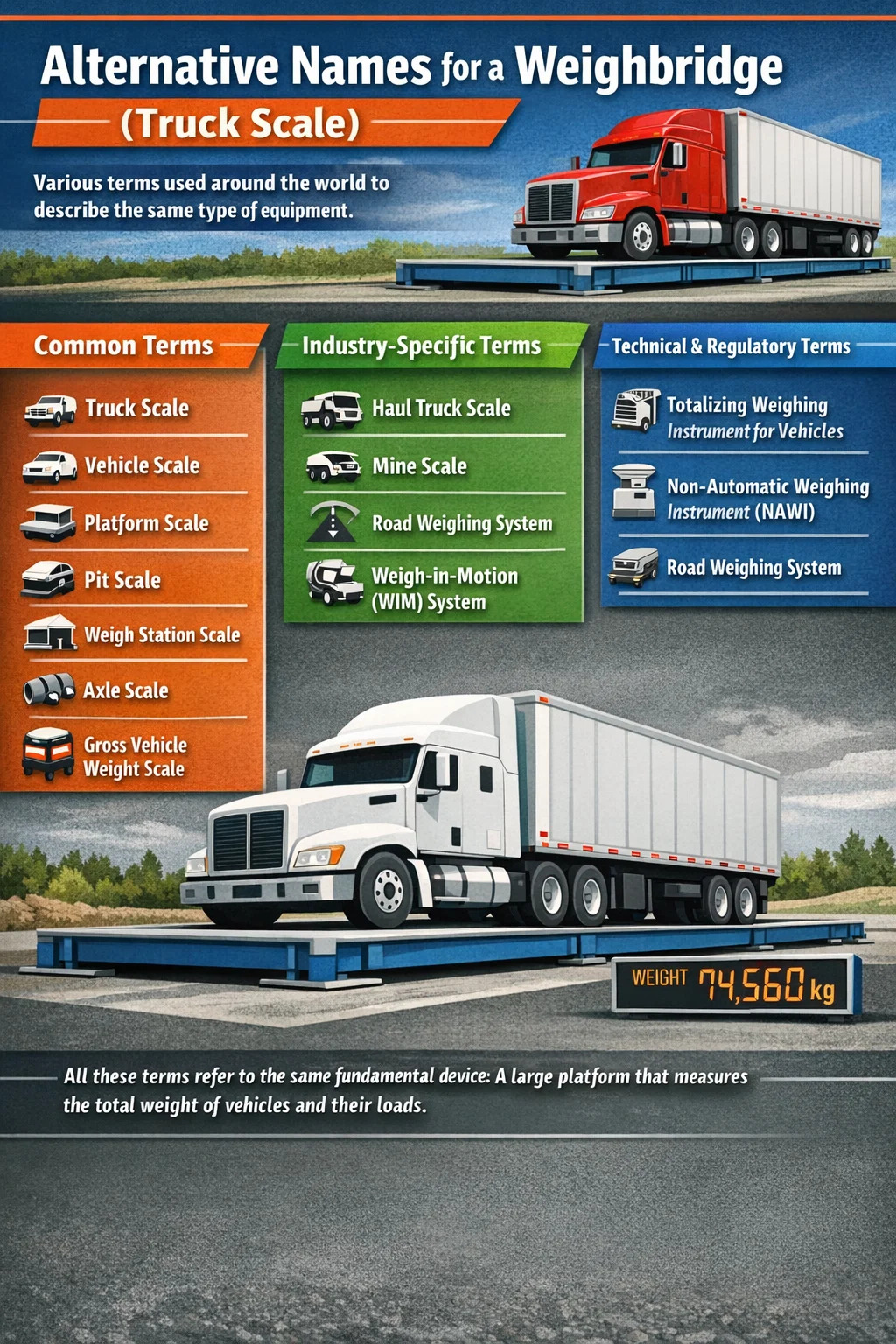
A weighbridge is most commonly known by another name: a truck scale. This is the most widely used alternative term, particularly in North America, where "weighbridge" is considered a more British or Commonwealth English term. However, the device also goes by several other names depending on the industry, region, and application. You may encounter it referred to as a vehicle scale, axle scale, pit scale, platform scale, or simply a weigh station scale.
In formal trade and legal metrology documents, particularly those issued by bodies such as the International Organization of Legal Metrology (OIML), the device may also be referred to as a totalizing weighing instrument for vehicles or a non-automatic weighing instrument (NAWI) for road vehicles. In mining and quarry industries, workers commonly call it a mine scale or haul truck scale. Regardless of the name used, all these terms refer to the same fundamental device: a large platform designed to measure the total weight of vehicles and their loads.
Full List of Alternative Names for a Weighbridge
The terminology used for weighbridges varies significantly by country, industry, and context. Below is a comprehensive list of names and terms used around the world to describe what is fundamentally the same piece of equipment:
- Truck scale — the most common North American alternative
- Vehicle scale — a general term used in logistics and transportation
- Platform scale — common in industrial and manufacturing settings
- Pit scale — refers specifically to a below-ground installation type
- Weigh station scale — used in highway enforcement and compliance contexts
- Axle scale — refers to a portable version that measures axle by axle
- Haul truck scale — used in mining operations for large off-road vehicles
- Mine scale — specific to underground or open-pit mining environments
- Gross vehicle weight scale — a regulatory and compliance-oriented term
- Road weighing system — common in European traffic management documentation
- Weigh-in-motion (WIM) system — a dynamic variant that records weight without stopping the vehicle
Understanding these alternatives is practically important. When sourcing equipment, reading technical specifications, or interpreting compliance requirements, you may encounter any of these terms. For example, a US Department of Transportation document will likely reference a "truck scale," while a South African mining procurement document will specify a "haul truck scale" or simply "weighbridge."
Regional Naming Differences: Why the Same Device Has So Many Names
The variation in naming is largely a product of linguistic geography and industry tradition. The word "weighbridge" has its roots in British English and dates back to the 18th century, when the first static weighing platforms were constructed to weigh horse-drawn wagons crossing a bridge-like structure over a pit containing the scale mechanism. This origin is reflected in countries with historical ties to the UK — including Australia, New Zealand, South Africa, India, and much of Southeast Asia — where "weighbridge" remains the dominant term today.
In contrast, the United States and Canada developed their own terminology independently. The practical, descriptive term "truck scale" became standard in North American industry manuals, equipment catalogs, and highway regulations. The American Trucking Associations (ATA) and the Federal Motor Carrier Safety Administration (FMCSA) consistently use "truck scale" or "vehicle scale" in their published materials, which has reinforced this usage across the continent.
In continental Europe, particularly in German-speaking countries, the term Fahrzeugwaage (vehicle scale) is common, while in French-speaking regions, it is known as a pont-bascule, which translates literally to "tipping bridge" — a direct nod to the same historical origin as the English "weighbridge." In Spanish, the equivalent is báscula puente, again meaning "bridge scale."
This international diversity in naming means that procurement professionals, engineers, and compliance officers working across borders must be familiar with multiple terms to avoid confusion during specification or purchasing processes.
How a Weighbridge Works: Core Mechanism Explained
Regardless of what it is called, all weighbridge or truck scale systems operate on the same fundamental principle: they measure the downward force exerted by a loaded vehicle and convert that force into a weight reading. The core technology involves load cells, which are electromechanical sensors placed beneath the weighing platform. Modern weighbridges typically use between 4 and 8 load cells, each capable of measuring compressive force with an accuracy tolerance as tight as ±0.1% of the applied load.
The Load Cell System
Load cells used in weighbridges are predominantly strain gauge-based devices. When a vehicle drives onto the platform, the steel structure flexes microscopically. This deformation changes the electrical resistance within the strain gauge, and this resistance change is measured, amplified, and converted into a digital weight reading by the indicator or junction box. Each load cell in a modern weighbridge typically has a capacity ranging from 30 tonnes to 100 tonnes, and multiple cells combine to give the total platform capacity, which commonly ranges from 60 tonnes to over 200 tonnes for heavy industrial applications.
Tare and Gross Weight Calculation
The weighbridge system records two weights to determine payload: the gross vehicle weight (GVW) — the total weight of the vehicle plus its load — and the tare weight — the weight of the empty vehicle. The net payload is simply GVW minus tare. This two-step process is fundamental to commercial trade, waste disposal billing, and logistics management. In automated systems, RFID tags or license plate recognition cameras can store a vehicle's tare weight so that operators only need to weigh the loaded vehicle for every subsequent transaction.
Weigh-in-Motion Technology
A newer development in weighbridge technology is the weigh-in-motion (WIM) system, which measures vehicle weight without requiring the vehicle to stop. Sensors embedded in the road surface capture axle loads dynamically as vehicles pass at normal travel speeds, sometimes up to 130 km/h. WIM systems are widely used for highway enforcement pre-screening, structural monitoring of bridges and roads, and traffic data collection. While WIM systems are less accurate than static weighbridges (typically ±5–10% versus ±0.1% for static), they offer the significant advantage of measuring thousands of vehicles per day without disrupting traffic flow.
Types of Weighbridges and Their Specific Names
The variety of names for weighbridges also reflects real differences in design and installation type. The following table summarizes the main types, their common names, and their typical applications:
| Type | Common Alternative Names | Typical Capacity | Primary Use |
|---|---|---|---|
| Pit-mounted weighbridge | Pit scale, below-ground truck scale | 60–150 tonnes | Ports, grain terminals, permanent installations |
| Surface-mounted weighbridge | Above-ground truck scale, portable scale | 60–120 tonnes | Waste facilities, quarries, temporary sites |
| Axle weighbridge | Axle scale, portable axle pad scale | 10–30 tonnes per axle | Road enforcement, load distribution checks |
| Weigh-in-motion system | WIM scale, dynamic weighbridge, road sensor scale | Up to 150 tonnes | Highway monitoring, bridge protection, traffic data |
| Rail weighbridge | Rail scale, wagon scale, railcar weighbridge | 100–300 tonnes | Freight rail, coal and mineral exports |
The distinction between pit-mounted and surface-mounted designs is particularly important when evaluating installation costs. A pit-mounted weighbridge requires significant civil engineering work — excavation, drainage, and concrete construction — which can add 30–50% to the total project cost compared to a surface-mounted installation. However, pit-mounted scales offer better ramp approach angles and are often preferred at permanent, high-throughput sites.
Industries That Rely on Weighbridges and Truck Scales
Weighbridges — under all their various names — are foundational infrastructure across a surprisingly wide range of industries. Their role is not merely administrative; in many sectors, an inaccurate weighbridge reading directly translates to financial loss, legal liability, or safety risk.
Logistics and Road Freight
In the road freight sector, truck scales at loading depots and distribution centers ensure that vehicles do not exceed legal gross vehicle weight limits before departing. In the United States, the federal bridge formula limits most standard semi-trucks to 80,000 lbs (approximately 36,287 kg) gross vehicle weight. Exceeding this limit exposes operators to fines that can reach $10,000 or more per violation in some states, in addition to potential liability for road damage. Weighbridges at loading docks prevent these overloading events before vehicles enter the public road network.
Agriculture and Grain Trading
Grain terminals, feed mills, and agricultural commodity traders use weighbridges as the primary point of trade. When a farmer delivers a load of wheat or corn, the weighbridge determines the exact tonnage, which forms the basis of the payment. In this context, accuracy is a matter of direct financial consequence. In Australia alone, over 35 million tonnes of grain are weighed through certified weighbridges annually at receivals. Legal-for-trade certification — typically governed by national weights and measures authorities — is mandatory for these applications.
Waste Management and Recycling
Waste transfer stations, landfills, and recycling centers use weighbridges to record the tonnage of waste received and dispatched. This serves two purposes: billing customers based on weight, and tracking regulatory compliance with waste disposal quotas. In the UK, for example, the Landfill Tax is charged per tonne of waste disposed, making accurate weighbridge records a direct financial and legal requirement. Typical landfill weighbridges process hundreds of vehicle movements per day, and automated systems with barrier gates, cameras, and software integration are standard at large facilities.
Mining and Quarrying
In mining environments, weighbridges (often called haul truck scales or mine scales in this context) measure the payload of material extracted and transported. For large open-pit mines using 200-tonne haul trucks, even a 1% error in payload measurement across thousands of daily truck cycles can translate to millions of dollars of misallocated production or processing costs per year. Some modern mining operations have moved toward on-board payload monitoring systems, but fixed weighbridges remain the calibration reference and legal record.
Construction and Demolition
Construction sites use vehicle scales to track the quantity of materials delivered — concrete, aggregates, steel — and waste removed. Accurate weighbridge data supports project cost management and contractual compliance. In demolition projects, weighbridge records document the volume and type of waste generated, which is required for regulatory reporting under construction waste management plans in many jurisdictions.
Weighbridge Certification and Legal-for-Trade Requirements
Not all weighbridges are equal in the eyes of the law. A weighbridge used for trade — where the weight reading determines the price paid — must be certified as legal-for-trade by the relevant national authority. This certification process verifies that the scale meets defined accuracy standards and has been tested with certified reference weights.
In the United States, truck scales used for commercial transactions must comply with the National Institute of Standards and Technology (NIST) Handbook 44, which sets accuracy requirements for commercial weighing devices. In the European Union, weighbridges used for trade must conform to the Measuring Instruments Directive (MID) 2014/32/EU. In Australia, the relevant standard is AS 2659, administered by state weights and measures authorities.
Legal-for-trade weighbridges must undergo periodic re-verification — typically annually or biennially — to maintain their certified status. Re-verification involves placing certified test weights on the platform and checking that the indicated weight falls within permissible tolerance. Failing to maintain certification can expose operators to penalties and can invalidate commercial transactions that relied on the disputed weight data.
A weighbridge used purely for internal purposes — such as monitoring truck loads within a private facility — does not legally require trade certification but should still be maintained and calibrated regularly to ensure reliable operational data.
Key Components of a Modern Weighbridge System
Modern truck scales and weighbridges are not just platforms with load cells. They are integrated systems combining hardware and software to automate data capture, reporting, and workflow management. The main components include:
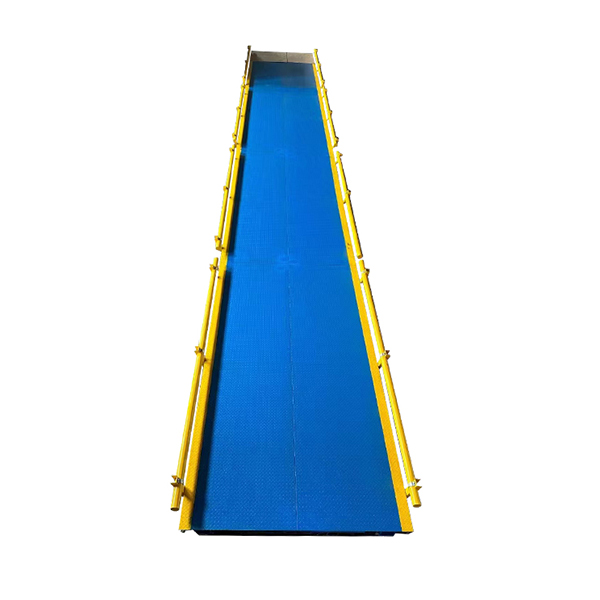
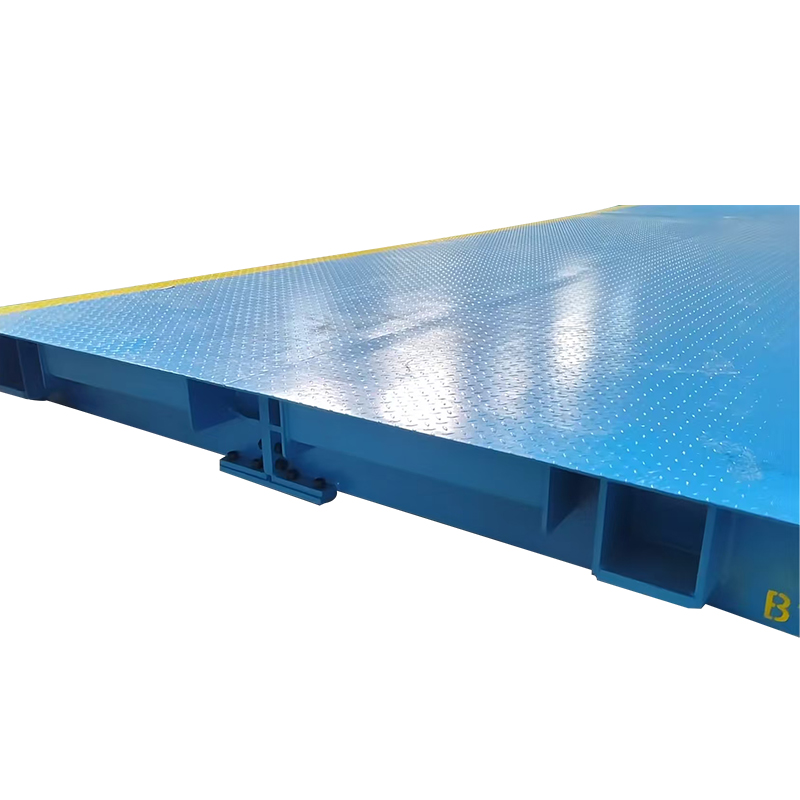
- Weighing platform (deck): Constructed from steel or concrete, ranging from 12 metres to over 30 metres in length to accommodate the longest road trains and multi-axle vehicles.
- Load cells: The sensing elements; typically 4–8 units per platform, rated for millions of load cycles.
- Junction box: Connects and combines signals from all load cells before passing to the indicator.
- Weight indicator / controller: The display and processing unit that converts the electrical signal into a readable weight value and interfaces with software systems.
- Weighbridge software: Manages transaction records, driver check-in, ticket printing, and integration with ERP or billing systems.
- RFID or barcode readers: Automatically identify vehicles to pull stored tare weights and driver details without manual data entry.
- CCTV and license plate recognition (LPR): Provide security, fraud prevention, and automated vehicle identification.
- Barrier gates and traffic lights: Control vehicle movement and prevent multiple vehicles from being on the platform simultaneously.
- Printer and ticket issuer: Produces a weighbridge docket or ticket that serves as a legal record of the transaction.
The level of automation in a weighbridge installation varies considerably. A basic rural grain silo might operate with a standalone indicator and a manual docket book, while a large port terminal might run a fully automated, unmanned weighbridge with no operator present at all — every transaction handled by RFID, LPR, and software systems operating around the clock.
Weighbridge vs. Truck Scale: Is There Any Real Difference?
This is a question that genuinely confuses buyers and operators when they first encounter both terms. The short answer is: no, there is no technical or functional difference between a weighbridge and a truck scale. They are the same device, described by two different names derived from different regional and linguistic traditions.
Where confusion sometimes arises is in the context of axle scales, which are portable pads placed under individual axles to determine per-axle loading. Some people refer to these as "weighbridges" in a loose sense, but technically, an axle scale measures one axle at a time and does not give a simultaneous total vehicle weight reading in the same way a full-length platform weighbridge does. True weighbridges — whether called truck scales or weighbridges — accommodate the entire vehicle at once.
Another area of potential confusion involves weigh-in-motion systems. These are sometimes loosely called "weighbridges" in general conversation, but they represent a distinct technology class. A static weighbridge requires the vehicle to stop and be stationary during measurement. A WIM system measures vehicles in motion and is designed for a different set of applications, with correspondingly different accuracy tolerances.
Factors That Affect Weighbridge Accuracy
Even a high-quality, certified weighbridge can deliver unreliable readings if certain operational and environmental factors are not managed. Operators who understand these factors can protect both their commercial interests and their legal compliance.
Temperature Effects
Extreme temperature changes cause thermal expansion and contraction in the weighbridge platform and its load cells. High-quality load cells include built-in temperature compensation circuits, but wide daily temperature swings — common in desert climates where temperatures can shift by 30°C or more between night and day — can still introduce small errors if calibration is not performed under representative conditions.
Platform Contamination
Mud, gravel, and debris accumulating on the weighbridge platform add to the tare weight of the system. If not cleaned regularly, this contamination effectively means the platform is weighing slightly less than the actual vehicle load, causing systematic under-reading. At a busy aggregate quarry, for example, material buildup can add several hundred kilograms to the effective tare, which — spread across hundreds of loads per day — represents a meaningful commercial error.
Vehicle Positioning
For a static weighbridge to give an accurate full-vehicle reading, the entire vehicle must be on the platform with no wheels or axles resting on the approach ramps. Poor vehicle positioning — where the front or rear axle extends beyond the platform — will result in a lower-than-actual gross weight reading. Most certified operators are trained to verify vehicle positioning before accepting a weight, and traffic light systems and markings help guide drivers to stop in the correct location.
Wind and Vibration
Strong wind creates lateral and vertical forces on large vehicles, which can affect the weight reading if the weighing is not completed while the vehicle is fully settled and stationary. Similarly, nearby machinery vibrations — such as from crushers, compactors, or heavy plant — can introduce noise into the load cell signal. Modern weighbridge indicators include filtering algorithms to average out brief vibration spikes, but persistent vibration sources close to the scale require physical isolation or repositioning of the installation.
Buying or Specifying a Weighbridge: What to Look For
Whether you call it a weighbridge, a truck scale, or a vehicle scale, the process of selecting the right system for your application follows the same practical checklist. Rushing this decision or selecting on price alone is one of the most common and costly mistakes operators make.
- Determine the required capacity: Identify the heaviest vehicle that will ever use the scale, including any future growth in fleet size or vehicle type. Add a safety margin of at least 10–15% above this peak load.
- Choose platform length carefully: The platform must accommodate the longest vehicle in your fleet with all wheels on the deck. For B-double combinations common in Australian road freight, this may require a platform of 25 metres or more.
- Decide between pit and surface mount: Consider site drainage, available space, vehicle approach grades, and long-term installation permanence.
- Verify legal-for-trade certification requirements: If the weighbridge will be used for commercial transactions, confirm that the model is approved for trade use under your national metrology regulations before purchasing.
- Assess software integration needs: Modern operations benefit enormously from weighbridge software that integrates with existing ERP, billing, or fleet management systems. Evaluate this early in the specification process.
- Evaluate ongoing service and maintenance support: A weighbridge is a long-term asset with a typical operational life of 20–30 years. Choose a supplier with local service capability and a clear maintenance contract structure.
- Consider automation level: For high-throughput or unmanned operations, budget for RFID, LPR, and automated barrier systems from the outset rather than trying to retrofit these later.

Copyright © Ningbo Jiuding Weighing Equipment Co., Ltd.
