


 English
 中文简体
中文简体
Industry News
What are the different types of weighbridges?
Content
- 1 Pit-Mounted Weighbridges
- 2 Surface-Mounted (Pitless) Weighbridges
- 3 Portable and Modular Weighbridges
- 4 Axle Weighbridges and Multi-Platform Systems
- 5 Onboard Weighing Systems
- 6 Steel Deck vs. Concrete Deck Weighbridges
- 7 Load Cell Technology in Modern Weighbridges
- 8 Weighbridge Selection: Key Factors to Evaluate
- 9 Weighbridge Software and Integration
- 10 Maintenance and Calibration Requirements
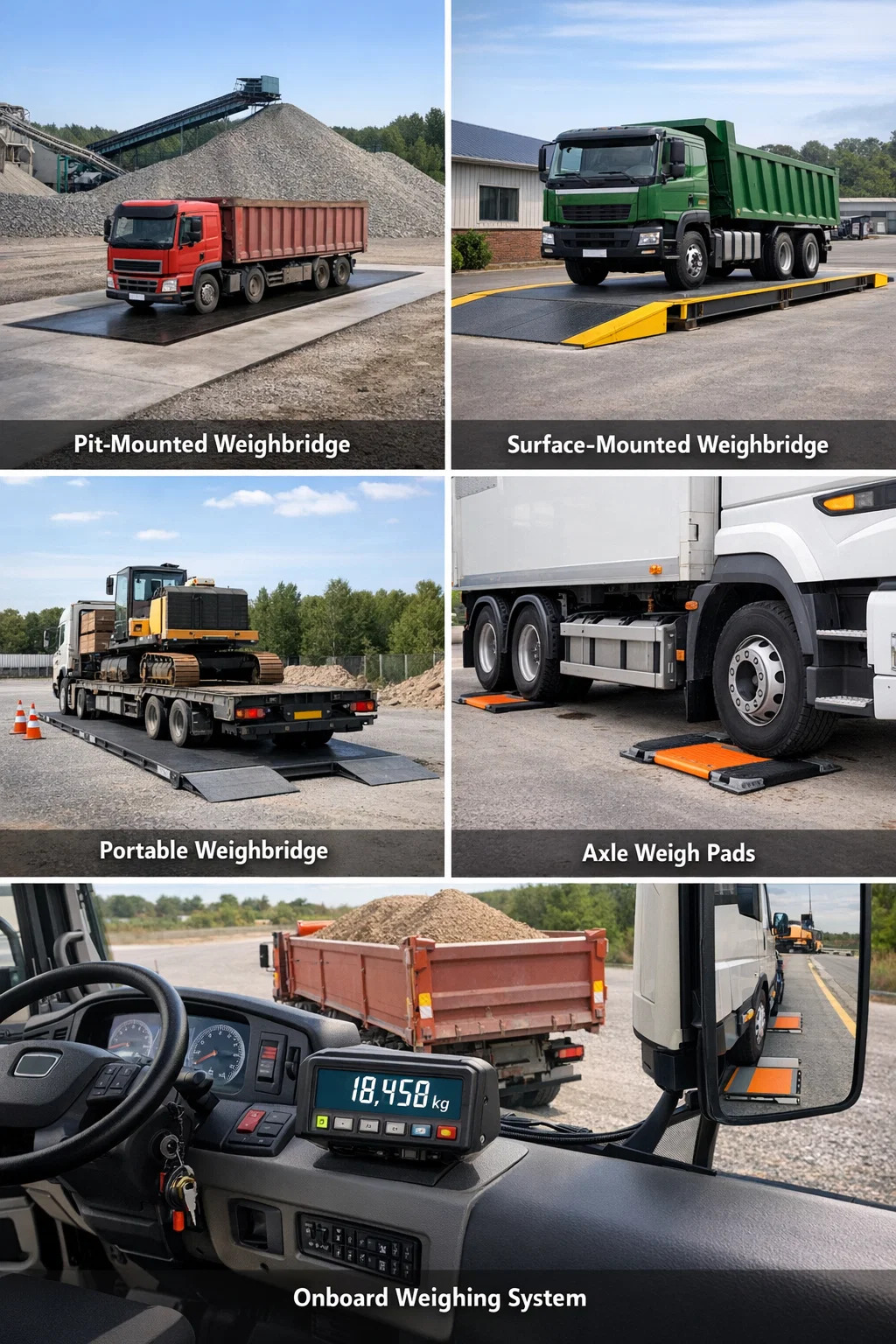
Weighbridges — also called truck scales or axle weighing systems — come in several distinct types, each engineered for specific environments, load capacities, and operational needs. The main types of weighbridges are pit-mounted, surface-mounted (pitless), portable, axle weighbridges, and onboard weighing systems. Choosing the wrong type can result in costly inaccuracies, structural problems, or regulatory non-compliance, so understanding the differences is essential before any purchase or installation decision.
Modern weighbridges can handle vehicle loads ranging from a few tonnes to over 200 tonnes, and they're deployed in industries including mining, agriculture, logistics, waste management, construction, and manufacturing. The global truck scales market was valued at approximately USD 1.2 billion in 2023 and is projected to grow steadily, reflecting the critical role accurate weight measurement plays in trade, compliance, and operations.
Pit-Mounted Weighbridges
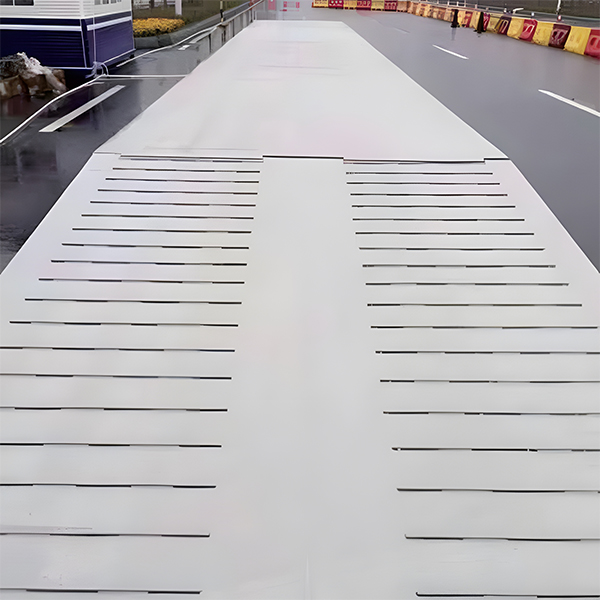
Pit-mounted weighbridges are installed into a concrete pit so that the weighing platform sits flush with the surrounding ground level. Vehicles drive onto the scale without encountering any ramp or raised edge, making the approach and exit seamless. This design is especially common at permanent, high-traffic facilities such as quarries, ports, grain silos, and waste transfer stations.
Construction and Load Cells
The weighbridge deck sits on a series of compression or shear beam load cells positioned at the base of the pit. Most pit installations use between four and eight load cells, depending on the deck length. Standard pit weighbridges in commercial trucking applications are typically 18 metres long and 3 metres wide, accommodating articulated lorries and heavy goods vehicles up to 60 tonnes or more.
Advantages and Limitations
- Smooth vehicle approach — no ramps required, reducing risk of vehicle damage or driver hesitation
- Aesthetic integration — the platform sits level with the yard surface, keeping site layout clean
- Suitable for high-frequency weighing operations, often logging hundreds of transactions per day
- Higher installation cost due to civil engineering works — excavating, forming, and waterproofing the pit can add 20% to 40% to the total project cost compared to surface-mounted alternatives
- Drainage is a persistent maintenance challenge; water accumulation in the pit can corrode load cells and electronics if not properly managed
- Relocation is extremely difficult once installed — they are essentially permanent structures
Pit weighbridges are the traditional choice in the UK and much of Europe, particularly at established aggregate processing and waste facilities. Many local authorities and regulatory bodies use them for legal-for-trade applications under Weights and Measures legislation.
Surface-Mounted (Pitless) Weighbridges
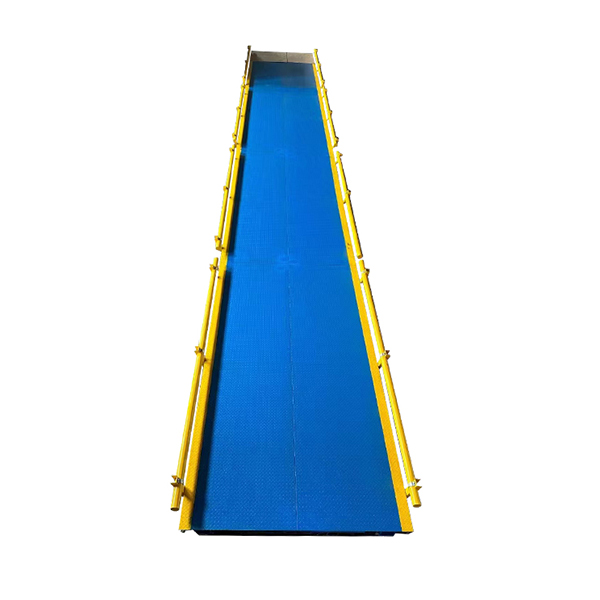
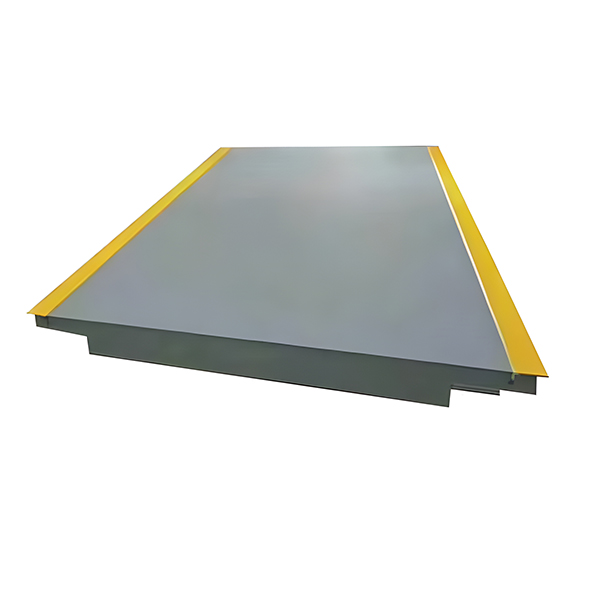
Surface-mounted weighbridges, often called pitless weighbridges, sit directly on a prepared concrete foundation at ground level. Vehicles access the platform via angled approach ramps at each end. This design has gained significant popularity over the last two decades because it avoids the expensive and time-consuming civil works associated with pit construction.
Installation and Foundation Requirements
A pitless weighbridge requires a flat, reinforced concrete pad rather than a pit. The foundation depth is typically shallower — around 200 to 300 mm of reinforced concrete — compared to the 1.5 to 2 metres of depth needed for a pit installation. This translates directly into lower groundworks costs and faster commissioning. Installation time for a pitless weighbridge is often two to three days, versus one to two weeks for a pit-type installation.
When to Choose a Pitless Weighbridge
Surface-mounted weighbridges are the right choice when:
- The site has a high water table, making deep excavation impractical or expensive
- The operation may need to relocate in future — pitless decks can be lifted and moved with appropriate equipment
- Budget constraints make extensive civil works undesirable
- The site is on contaminated ground where pit excavation would trigger complex environmental regulations
The trade-off is that vehicle approach ramps create a slight change in grade which can cause problems with very low-slung vehicles or trailers. Ramp height is usually 400 to 600 mm, and the approach angle must be gradual enough to avoid grounding. Despite this, pitless weighbridges now account for the majority of new weighbridge installations in many markets.
Portable and Modular Weighbridges
Portable weighbridges are designed for sites that require weight measurement without a permanent installation. They are typically modular — assembled from interlocking sections that can be connected to form a full-length weighing platform, then disassembled and transported to another location. Some portable models are trailer-mounted for rapid deployment.
Typical Applications
- Temporary construction sites — monitoring material deliveries or waste removal without investing in a permanent structure
- Enforcement and compliance checks — road authorities use portable axle weighers and portable full-length weighbridges during roadside inspection campaigns
- Agricultural seasonal use — deployed at harvest time to weigh grain lorries and removed during the rest of the year
- Remote or temporary mining operations where building permanent infrastructure is not economically viable
- Hire and rental — companies can rent portable weighbridges for short-term projects at a fraction of the cost of a permanent installation
Accuracy and Capacity
Portable weighbridges must still meet legal accuracy requirements if used for trade. In the UK, legal-for-trade portable weighbridges are verified under the Non-Automatic Weighing Instruments (NAWI) Directive. Accuracy class is typically OIML Class III, with maximum permissible errors of 0.5% to 1% of the applied load. Capacities range from 30 to 80 tonnes for most commercial portable models, though heavy-duty versions exist for up to 150 tonnes.
One limitation of portable weighbridges is that they require a reasonably flat and firm surface for accurate readings. Soft ground or significant gradients can affect load cell performance and result in errors. Some operators use steel ground plates beneath the load cells to distribute weight and improve stability.
Axle Weighbridges and Multi-Platform Systems
An axle weighbridge (also called an axle scale or axle pad weigher) is a short weighing platform that measures the weight of one or two axles at a time, rather than the gross vehicle weight in a single pass. The individual axle readings are then summed to give the total vehicle weight. These are sometimes called "weigh-in-motion" devices when the vehicle is moving, or static axle scales when the vehicle stops on each pad in sequence.
Static Axle Weighers
Static axle weighers require the driver to stop with each axle or axle group positioned on the platform. Once the reading is taken, the vehicle moves forward to position the next axle group. The complete weighing process involves multiple stops. While this method works well for compliance checking, it takes three to five minutes per vehicle, making it unsuitable for high-throughput operations.
Weigh-in-Motion (WIM) Systems
Weigh-in-motion systems use sensors embedded in the road surface to capture axle loads as vehicles pass at normal travel speed — sometimes up to 80 km/h. WIM sensors include bending plates, quartz piezo sensors, and polymer piezo cables. The technology allows continuous traffic monitoring without stopping vehicles, making it invaluable for road authorities managing bridge load limits and pavement wear.
WIM systems are not typically used as legal-for-trade weighing devices on their own, but pre-selection WIM installations flag overweight vehicles for diversion to a static weighbridge for confirmed measurement. This workflow can reduce enforcement inspection time by up to 70% by screening out compliant vehicles automatically.
Multi-Platform Weighbridge Configurations
Some operations require weighing very long vehicles — road trains or intermodal combinations exceeding 25 metres — that cannot be accommodated on a single standard deck. Multi-platform weighbridges link two or more independent weighing platforms end to end. Each platform is connected to the central indicator, and the total gross weight is the sum of all platform readings taken simultaneously. This configuration is common at Australian and South African mining and agricultural sites where road train combinations are standard.
Onboard Weighing Systems
Onboard weighing systems are not traditional weighbridges in the sense that they do not require a vehicle to drive onto a fixed platform. Instead, load cells or pressure sensors are integrated into the vehicle itself — typically mounted on the axle, suspension, or body — and measure the load being carried in real time. They are sometimes called vehicle-mounted scales or onboard weighers.
How They Work
Common onboard weighing technologies include:
- Air suspension pressure monitoring — measures air bag pressure, which correlates with load; common on heavy goods vehicles with air suspension
- Load pin sensors — integrated into suspension mounting points or fifth wheel couplings to measure shear force from the load
- Strain gauge-based systems — sensors bonded to the vehicle frame or axle measure strain caused by loading
- Hydraulic load sensing — used on forklifts and loaders, measures hydraulic fluid pressure to determine lifted load
Applications in Waste Management and Construction
Onboard weighing is widespread in refuse collection vehicles, where councils use them to record the weight of waste collected from each household or commercial customer. Some UK local authorities have used onboard weighing data to implement pay-by-weight charging schemes for commercial waste. In construction, excavators and dump trucks equipped with onboard weighers allow operators to track payload per cycle without returning to a fixed weighbridge, improving loading efficiency by 10% to 20% in typical earthmoving operations.
Accuracy limitations are the main drawback. Most onboard systems achieve accuracies of ±1% to ±3%, compared to ±0.1% or better for a well-calibrated static weighbridge. This makes them unsuitable for legal-for-trade purposes in most jurisdictions, though they are excellent for operational management and overload prevention.
Steel Deck vs. Concrete Deck Weighbridges
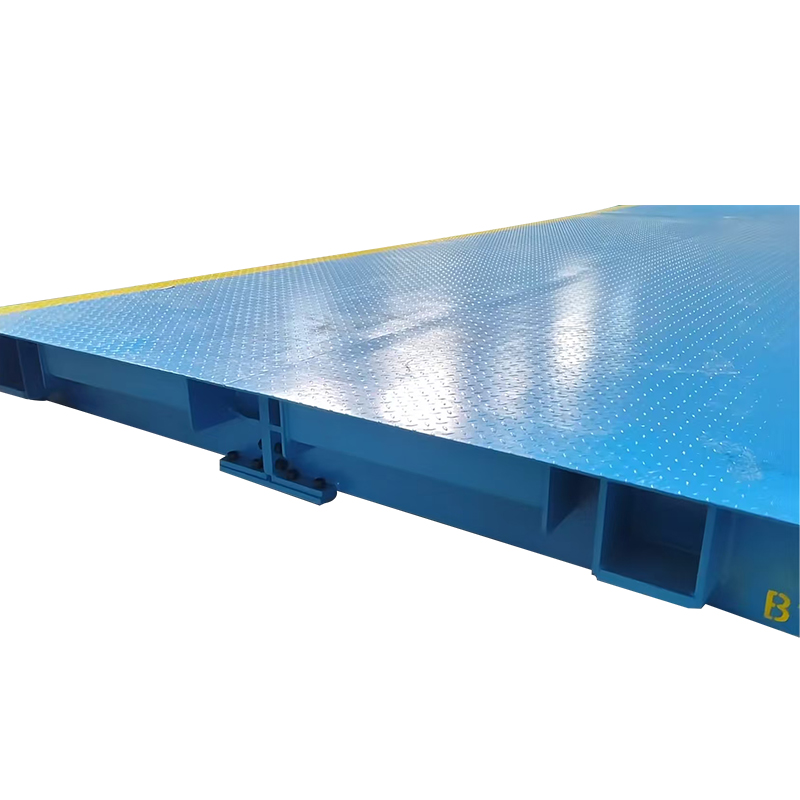
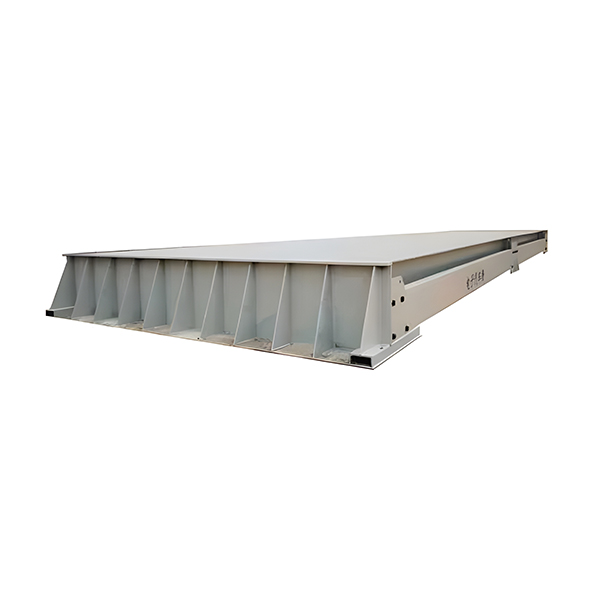
Regardless of whether a weighbridge is pit-mounted or pitless, the deck itself can be either fabricated steel or reinforced concrete. This distinction matters enormously for long-term cost, durability, and maintenance requirements.
| Factor | Steel Deck | Concrete Deck |
|---|---|---|
| Initial Cost | Lower | Higher (20–30% more) |
| Service Life | 15–25 years | 25–40+ years |
| Corrosion Risk | High (especially in coastal/chemical environments) | Low |
| Weight of Deck | Lighter — easier to transport and install | Very heavy — requires heavy lifting equipment |
| Surface Grip | Chequer plate or grating — good traction | Excellent — textured or brushed surface |
| Portability | Feasible (especially modular sections) | Generally not practical |
| Maintenance | Periodic repainting and anti-rust treatment | Crack inspection and occasional re-surfacing |
| Best Environment | Dry, moderate conditions; portable applications | Harsh chemicals, high-traffic, permanent sites |
Concrete deck weighbridges are increasingly preferred for permanent installations in demanding environments such as ready-mix concrete plants, chemical works, and waste facilities, where acids, alkalis, and heavy abrasion would rapidly degrade a steel deck. Steel decks remain the standard for portable and modular applications where weight and ease of transport are priorities.
Load Cell Technology in Modern Weighbridges
The type of load cell used in a weighbridge directly affects accuracy, maintenance requirements, and longevity. All modern weighbridges use electronic load cells, but the specific cell design varies by application.
Compression Load Cells
Compression load cells are the most common type used in pit weighbridges. The deck rests directly on the cells, which are compressed as the load increases. They are robust, compact, and well-suited to high-capacity applications. Typical capacities range from 30 to 150 tonnes per cell. Hermetically sealed stainless steel versions are available for corrosive or wet environments.
Shear Beam Load Cells
Shear beam cells are widely used in pitless and surface-mounted weighbridges. The cell is fixed at one end and loaded at the other, generating a shear force measured by strain gauges bonded to the beam. They offer excellent accuracy and are relatively insensitive to off-centre loading — an important feature when vehicle axles are not always perfectly centred on the platform.
Digital Load Cells and Smart Weighing
Digital load cells convert the analogue strain gauge signal to a digital output at the cell itself, rather than at the indicator. This significantly reduces signal degradation over long cable runs and makes each cell individually addressable. Installers can diagnose which specific cell is performing poorly without removing the deck. Integration with weighbridge management software — including cloud-based platforms that log every transaction with timestamp, vehicle registration, and image — is straightforward with digital cell networks. Some systems now use wireless digital load cells, eliminating cable runs entirely and simplifying retrofits to existing pits.
Weighbridge Selection: Key Factors to Evaluate
With so many types of weighbridges available, selecting the right configuration requires a clear-eyed assessment of the site, the workload, the regulatory environment, and the budget. The following factors should be addressed before specifying any weighbridge installation.
Traffic Volume and Throughput
Sites weighing more than 100 vehicles per day benefit significantly from automated number plate recognition (ANPR), unmanned weighbridge operation, and traffic light control systems. High-volume operations such as aggregate quarries and waste transfer stations routinely process 200 to 400 transactions per day and require robust, fast-response systems with minimal manual intervention.
Legal-for-Trade Requirements
If the weighbridge is to be used as the basis of invoicing — for example, charging customers per tonne of material sold — it must be verified as a legal-for-trade instrument. In the UK, this means approval under the Weights and Measures Act 1985 and verification by a Trading Standards officer or approved verifier. The weighbridge must achieve the required accuracy class and be re-verified at regular intervals (typically every two years for heavy industrial applications). Not all weighbridge types qualify — permanent static weighbridges are much easier to certify than portable or onboard systems.
Site Conditions and Ground Conditions
Sites with a high water table, shallow bedrock, or contaminated ground that cannot be excavated will rule out pit weighbridges and favour pitless or portable alternatives. Ground-bearing capacity must be assessed by a structural engineer before specifying foundation dimensions — inadequate foundations are a leading cause of load cell damage and inaccurate readings over time.
Vehicle Types and Lengths
The longest vehicle expected to use the weighbridge determines the minimum platform length. A standard UK articulated lorry is up to 18.75 metres long, which means the platform and approach zone together must accommodate this without the vehicle overhanging the weighing deck. For operations receiving swap body units, B-trains, or European mega-trailers, platform lengths of 20 to 24 metres may be necessary. A weighbridge that is too short will give inaccurate readings because part of the vehicle's weight rests on the approach ramp or surrounding ground rather than on the load cells.
Environmental and Hazardous Area Requirements
Weighbridges in food processing plants, chemical facilities, or ATEX-classified zones (where explosive atmospheres may be present) require specially specified load cells and indicators. ATEX-rated load cells use intrinsically safe or explosion-proof designs that prevent the risk of ignition. Similarly, weighbridges in very cold climates (below -20°C) need load cells and indicators rated for low-temperature operation, and heated indicator cabinets may be necessary to ensure reliable year-round performance.
Weighbridge Software and Integration
The hardware platform is only part of a modern weighbridge installation. Weighbridge management software has transformed what was once a purely mechanical process into a data-driven operation. Contemporary systems offer a range of capabilities that add significant operational value beyond simply recording a weight.
- Automated ticketing and invoicing — the system generates a weight ticket and export data to accounting or ERP systems without manual entry, reducing errors and administration time
- ANPR camera integration — vehicles are identified automatically by their registration plate, pulling up customer records, permitted materials, and tare weights without driver interaction
- Remote access and cloud reporting — managers can view live transaction data and historical reports from any device, useful for multi-site operations
- Overload alarms — automatic warnings when a vehicle exceeds the permitted gross weight for the site or a specific material category
- Integration with Environmental Agency reporting — at licensed waste facilities, weighbridge software can automatically generate the waste transfer records required by regulators
- Traffic light control — automated signals guide vehicles onto and off the platform, preventing simultaneous entry from both ends
Unmanned weighbridge configurations — where the entire process from vehicle arrival to ticket printing is automated without any operator present — are now common at quarries, recycling centres, and aggregate depots operating extended hours. These systems typically combine ANPR, intercoms, traffic barriers, and remote CCTV monitoring to enable 24/7 weighing operations without permanently staffed control rooms.
Maintenance and Calibration Requirements
A weighbridge that is not properly maintained will drift out of calibration, producing inaccurate readings that could result in regulatory penalties, commercial disputes, or financial losses. Regular servicing is not optional — it is a practical necessity and, for legal-for-trade instruments, a legal requirement.
Routine Maintenance Tasks
- Inspection and cleaning of load cells, junction boxes, and cable routes — debris and water ingress are the most common causes of electronic failure
- Checking and clearing deck drainage — particularly critical for pit weighbridges where water accumulation can damage below-deck components
- Inspection of deck structure for corrosion (steel decks) or cracking (concrete decks)
- Verification of approach ramps and check rails for structural integrity
- Zero point check — confirming the indicator reads zero with the platform empty; any drift may indicate damaged load cells or debris under the deck
Calibration and Verification
Calibration involves applying known test weights to the weighbridge and adjusting the system until readings are within acceptable tolerances. For a legal-for-trade weighbridge, this process is followed by formal verification by an authorised body. Test weights of at least 50% of the weighbridge's maximum capacity are required for a thorough calibration check. Most weighbridge service companies carry calibrated test weights on dedicated vehicles, typically in 1-tonne or 5-tonne increments. Annual service agreements that include calibration checks are standard practice for commercial weighbridges.
Any time a weighbridge undergoes repair, relocation, or structural modification, it must be re-calibrated and re-verified before returning to legal-for-trade use. Even significant environmental events such as a vehicle collision with the approach ramp or severe flooding of a pit should trigger an inspection and recalibration before continued use.
Copyright © Ningbo Jiuding Weighing Equipment Co., Ltd.
