

 English
 中文简体
中文简体
Industry News
Home / News / Industry News / Cart Scale Selection Guide: Capacity, Accuracy, and Industrial Applications
Content
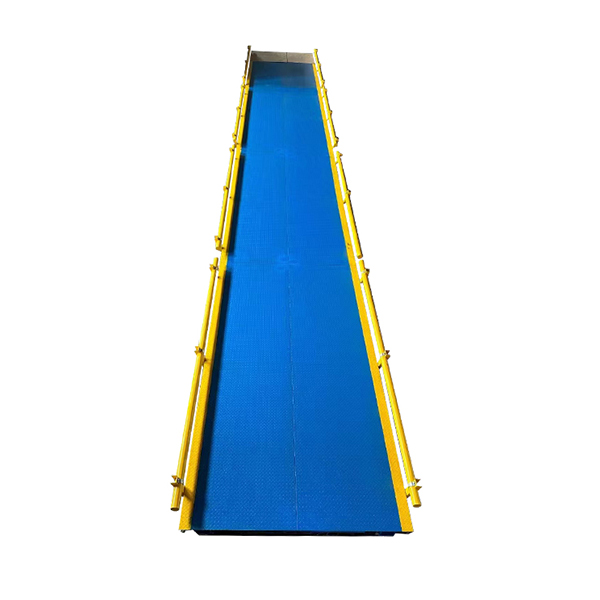
A cart scale is a weighing platform built for wheeled loads, such as carts, trolleys, cages, and small containers. Its core advantage is simple: you weigh the cart and the goods together, the unloading step disappears, and the operator records one stable weight instead of several.
Before you compare prices, fix four numbers: rated capacity, platform size, readability, and power supply. If these four are not matched to your carts, no brand choice or software function can repair the daily result.
The specification work is therefore different from a normal floor scale. You also have to think about the distance between wheels, the point stress from small hard castors, the impact when a loaded cart rolls onto the deck, and how the operator will see the reading while pushing a long load. This guide covers each of these points in a practical order, starting with the numbers that matter most.
Cart scales appear wherever goods travel on wheels between two workstations. Common locations are goods-in inspection, parts kitting in warehouses, central kitchens, food service counters, hospital linen rooms, recycling centers, and retail stockrooms. In all of these, the scale has to fit the cart, not the other way around.
The table below gives the practical rating ranges for common cart scale duties. Use them as starting points, because the final values depend on the load cell construction, the platform size, and the indicator settings you select.
| Application | Rated capacity | Typical readability | Platform size |
|---|---|---|---|
| Parts kitting, retail stockroom | 150 to 300 kg | 50 g | 800 x 800 mm or 1000 x 1000 mm |
| Central kitchen, canteen | 300 to 600 kg | 100 g | 1000 x 1000 mm or 1200 x 1000 mm |
| Production line, logistics | 1000 to 1500 kg | 200 to 500 g | 1200 x 1000 mm or 1500 x 1200 mm |
| Recycling, scrap handling | 2000 to 3000 kg | 1 kg | 1500 x 1200 mm and wider |
Rated capacity is the weight you plan to capture, not the maximum the scale can survive. Most digital platform manufacturers design for 125 percent safe overload and 150 percent ultimate load. If your heaviest loaded cart reaches 900 kg, choose a 1000 kg or 1500 kg scale instead of pushing a 1000 kg design to its limit. Also remember shock loading: a cart pushed quickly onto the platform hits the deck and transfers impact force to the load cell mounts. Over time, this shows up as corner errors and a drifting zero point.
Measure the overall length and width of the cart, then measure the distance between the wheels. A 1200 x 1000 mm platform fits medium carts, while a long four-wheel cart often needs 1500 mm of useful length. The wheels also concentrate the load on a small contact area, and hard plastic castors on a thin deck can dent the surface. Lay a paper outline of your cart on the platform before buying if possible, and check that all wheels park fully on the deck. A wheel left on the floor acts as an off-center load, and the reading will not be valid.
Readability is the smallest display step, for example 100 g on a 1000 kg scale. For counting and stock control, a readability of 1/3000 to 1/6000 of capacity is a practical range. The indicator controls filtering speed, units, printing, and data output, which makes it as important as the load cells. In medium-duty work, a digital weighing indicator with alphanumeric display is a useful base because it stores several presets and can drive a printer or a remote screen. If you need piece counting, checkweighing, or custom data output, read what to look for when choosing a weighing indicator before you commit to a model.
The cart itself weighs something, often 30 to 60 kg depending on the steel frame. A good operation uses the Tare key to zero the cart weight, then reads only the net goods. Make sure the indicator has a clear Tare lamp so operators can see when tare is active. Also agree on a simple rule: always weigh the cart in the same direction, because a tilted load shifts the center of gravity and changes the corner load.
Because a cart scale usually moves between stations, most units run on rechargeable batteries. Expect a battery life of 60 to 100 hours with a digital display and no printer. If the scale stays in one place, use a regulated power supply and consider a UPS for continuous data protection. A simple rule: the scale should be able to run a full working shift on battery and recharge overnight without interrupting picking or production schedules.
The load cell is the measuring element of the scale. One common misunderstanding is that a cart scale is selected by its frame and then fitted with any cell. In practice, the cell type decides linearity, corner accuracy, and long-term stability. For compact decks up to 1000 kg, a single-point cell avoids the need for a complex mounting frame. For wider platforms, shear beam cells under the frame spread the load evenly. For heavy work, a column-type digital load cell gives a simpler bridge layout, longer signal transmission, and faster corner adjustment because each cell outputs a digitized signal.
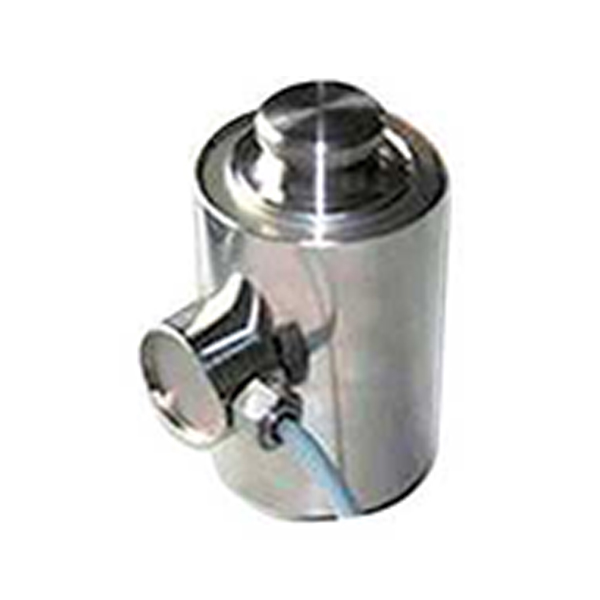 Wholesale Column Type Digital Load Cell Manufacturer, Factory - Ningbo Jiuding WNingbo Jiuding Weighing Equipment Co., Ltd is China wholesale Column Type Digital Load Cell manufacturer and OEM/ODM Column Type Digital ...View Product →
| Cell type | Capacity range | Why it is used in cart scales |
|---|---|---|
| Single-point | 100 to 1000 kg | One cell under a compact platform, low cost, simple mounting |
| Shear beam | 500 to 5000 kg | Better resistance to side loads, good for wide platforms |
| Digital column | 1000 to 10000 kg | Long-distance data transmission, strong corners, IoT ready |
If the scale area is washed down routinely, check the cell sealing. Stainless steel cells with an IP67 rating survive periodic washdown; mild steel painted cells do not.
There is no single cart scale. The right configuration depends on how the cart approaches the scale and what happens after weighing.
A cart scale gives a bad reading long before it looks broken. The table below lists the mistakes found most often on plant floors.
| Problem | What happens | Correction |
|---|---|---|
| Wheels not fully on the platform | Part of the load rests on the floor, so the reading is low | Add side guide rails or a painted parking outline |
| Fast entry of a heavy cart | Impact overloads the load cells and shifts corner calibration | Use a slow approach area or a ramp |
| Vibration from adjacent machines | Unstable last digit and slow response | Fit anti-vibration pads under the feet |
| Air draft on lightweight loads | Drift of the display value | Use the indicator filter and keep doors closed during weighing |
A cart scale stays reliable with three habits: check zero before the shift, clean the platform edge weekly, and calibrate at set intervals.
If your team does not have an in-house calibration setup, calibration and verification services cover the complete test procedure, the report, and the corrective adjustment. For the mechanical side, a preventive maintenance schedule catches loose bolts and worn cables before they stop the line.
The purchase price is a small fraction of the lifetime cost. Here is where the money goes and how to control it.
| Cost factor | Typical share of repair budget | How to control it |
|---|---|---|
| Load cell replacement | 30 to 40 percent of repairs | Prevent overloading, add ramps, protect cables |
| Indicator repair | 20 to 30 percent of repairs | Use stable power, avoid direct water spray |
| Calibration service | Recurring annual cost | Follow the operator checklist to extend the interval |
| Downtime | Hardest to quantify | Keep a spare load cell and connector set on site |
If operators write down 100 weighments per shift, the error rate climbs fast. Transcription mistakes, forgotten decimal points, and delayed data entry all corrupt inventory control. A networked cart scale removes the handwriting step entirely.
To do this, the indicator sends the stable weight to a PC, ERP, or MES through RS485, Ethernet, or Wi-Fi. For a straightforward setup, an IoT weighing instrument with remote data transmission turns an existing platform into a data collection point. The typical data flow looks like this:
For one or two scales, a printer and a simple spreadsheet may be enough. Above that, networking pays for itself by cutting out manual entry and re-checking.
A platform scale is a general-purpose floor scale. A cart scale is a platform scale sized and reinforced for wheeled carts, with a lower profile, a thicker deck for castor point loads, and optionally ramps or guide rails.
Typical cart scales cover 150 kg to 3000 kg. Choose a rating above the heaviest loaded cart you expect, with at least 25 percent headroom for safety and impact loads.
A practical example: a 1000 kg platform with 1/3000 readability gives a display step of 200 to 500 g depending on the indicator configuration. With a 1/6000 class, the step drops to 100 g. Actual accuracy depends on leveling, calibration, and the position of the cart on the deck.
Only if the scale is built for it. A stainless steel platform with IP67 sealed load cells and a waterproof junction box can handle periodic washdown. A mild steel scale cannot, because water enters the painted surface and attacks the cells.
Twice per year for daily use, monthly if the scale is hit by carts regularly, and after every repair or load cell replacement. Keep a simple calibration log next to the scale.
If the platform height is above 60 mm and the cart wheels are small, ramps reduce the impact that causes measurement errors and extends load cell life. For very light carts on large wheels, ramps are less critical.
Start with the four numbers: capacity, platform size, readability, and power. Then pick the configuration that fits the workflow, and finish with the maintenance plan.
The practical takeaway: a cart scale only earns money if the reading is trusted and available at the right time. That means choosing the correct load cell class, an indicator with the functions the operators really use, and a service partner who can calibrate and repair the scale locally.
Whether you build your own frame or buy a complete platform, using a supplier who designs both the load cell and the weighing indicator makes integration simpler. One manufacturer, one interface, one service point.
Copyright © Ningbo Jiuding Weighing Equipment Co., Ltd.