

 English
 中文简体
中文简体
Industry News
Home / News / Industry News / Truck Weight Slip: Definition, Accuracy Risks, and How to Prevent Scale Errors
Content
A truck weight slip is the printed or digital ticket that a truck scale system produces after weighing a vehicle. In plain language, a weight slip and a weigh ticket are the same document: it records how much a truck weighed at a specific moment, so the result can be stated, stored, and compared later. For companies that buy or sell materials by weight — aggregates, scrap metal, grain, cement, waste, and recycled goods — the slip is the invoice attachment, the inventory record, and the audit trail all in one.
The most important thing to understand about a truck weight slip is this: its credibility comes from the weighing system, not from the paper. A drifting load cell, a misleveled platform, a wrongly configured indicator, or a trailer that is not fully on the deck will all produce a slip that looks perfectly normal while carrying an error of tens or even hundreds of kilograms. The scale does not print a warning when something is wrong. It prints a confident number.
That reality has a practical consequence for fleet operators, plant managers, and procurement teams: you cannot improve the quality of a weight slip downstream. You have to fix it at the scale. This guide explains what a reliable slip must contain, where errors enter the system, and which equipment and maintenance choices keep those errors out of your records.
A complete truck weight slip contains more than a single total. The three core values are gross weight, tare weight, and net weight. Commercial operations also depend on identification and traceability fields to link a slip to a specific truck, load, and time window. The table below shows the fields that appear on a properly structured slip.
| Field | Meaning |
|---|---|
| Gross weight | Total weight of the loaded vehicle, including cargo, fuel, driver, and equipment |
| Tare weight | Weight of the empty vehicle recorded before loading or before unloading |
| Net weight | Gross weight minus tare weight; the actual quantity of material being measured |
| Vehicle identification | License plate, fleet number, or VIN used to track repeat vehicles |
| Date and time | Timestamp that links the slip to a specific delivery or loading event |
| Ticket serial number | Unique number for audit, reconciliation, and dispute resolution |
| Scale identification | Identifies which weighbridge generated the ticket on multi-scale sites |
| Operator or weighmaster | Person responsible for the weighing operation where required by procedure |
The relationship between the three weight values is straightforward: net weight equals gross weight minus tare weight. Suppose a fully loaded dump truck grosses at 32,500 kg and the same truck, empty, tares at 14,200 kg. The net weight is 18,300 kg. Now suppose the tare value stored in the system is wrong by only 100 kg. The slip will state a net weight that is also wrong by 100 kg — and nobody reviewing the document will notice, because the math still checks out internally. That is why tare accuracy deserves as much attention as the scale itself in the buying, selling, and inventory process.
A small error on a single slip rarely draws attention. Repeated across hundreds of trucks per day, the same small error becomes a measurable loss. Three effects matter most for a commercial weighing operation.
Billing and settlement. When material is sold or purchased by net weight, every kilogram counted on the slip is a kilogram priced in the transaction. If the scale under-reads, the seller gives away material; if it over-reads, the buyer pays for material they never received. The direction of the error does not matter — either way, one party loses money on every single load.
Overload prevention. Weight slips are also the control point for load limits. An operator that decides whether to send a truck out based on the slip needs that number to be correct. Under-reading slips allow overloaded vehicles to leave the site, which accelerates tire and suspension wear, increases fuel consumption, and puts unnecessary stress on road surfaces and loading equipment.
Inventory reconciliation. In any plant that receives and ships bulk materials, the daily sum of net weights must match the stock movement. When slips carry hidden errors, the stock ledger slowly drifts away from reality. Finding the source later requires reweighing trucks, pulling tickets, and reviewing months of records.
A 0.2 percent scale error on a 40,000 kg truck means 80 kg of unmeasured material per crossing. On a site processing 200 trucks per day, that is 16,000 kg per day, or about 400 tonnes over a 25-day working month. No bookkeeping system can recover material that the scale never counted.
Most weight slip errors are not dramatic and not visible at the moment of weighing. They build up slowly, or they come from a routine action that nobody questions. The following causes appear most often in industrial weighing practice.
The root of several of these problems is in how the sensor converts mechanical force into an electrical signal. Understanding the working principle of weighing sensors helps explain why drift happens and why digital sensors behave differently from analog ones. When that conversion drifts, every slip printed afterward inherits the error silently.
Scale type determines how repeatable the slip values are. Static, full-length platform scales give the most stable results because the entire vehicle is weighed in one pass with the truck at rest. Faster or cheaper methods exist, but they trade accuracy for convenience — and the slip is where that trade becomes visible.
A full-length platform scale, sized to the overall length of the vehicles in the fleet, is the standard equipment for commercial weight slips. The platform rests on load cells, and the indicator sums the signals from all sensors. A digital electronic truck scale converts the signal directly at each sensor, which keeps the reading stable over long cable runs to the scale house and simplifies troubleshooting because every sensor reports its own status.
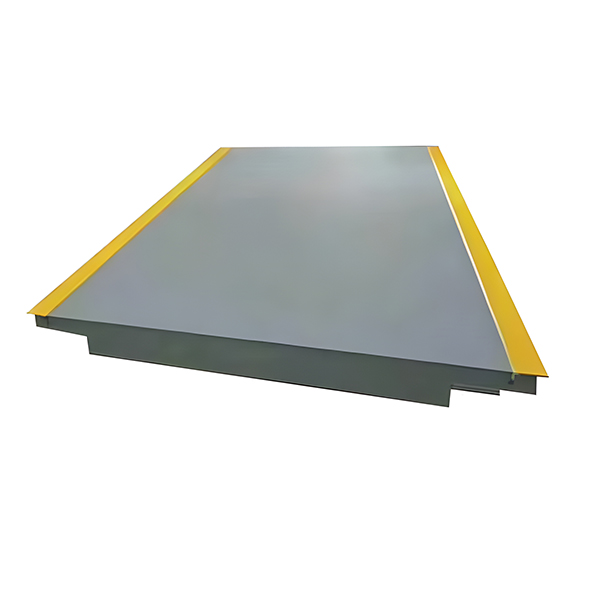 Wholesale Digital Electronic Truck Scale Manufacturer, Factory - Ningbo Jiuding Ningbo Jiuding Weighing Equipment Co., Ltd is China wholesale Digital Electronic Truck Scale manufacturer and OEM/ODM Digital Electronic ...View Product →
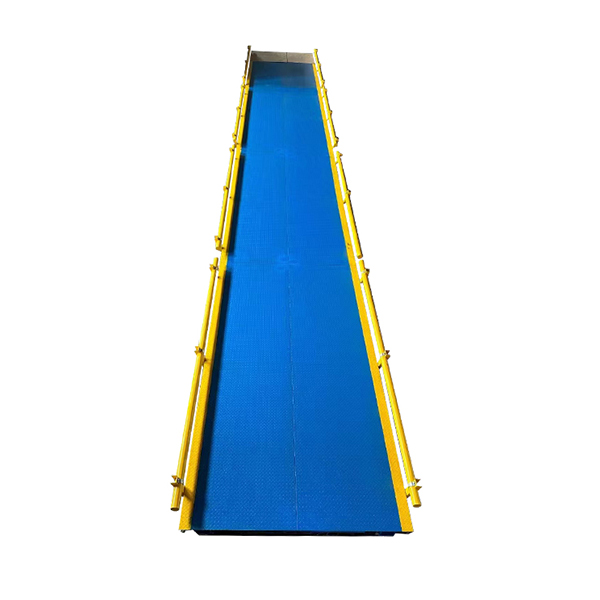
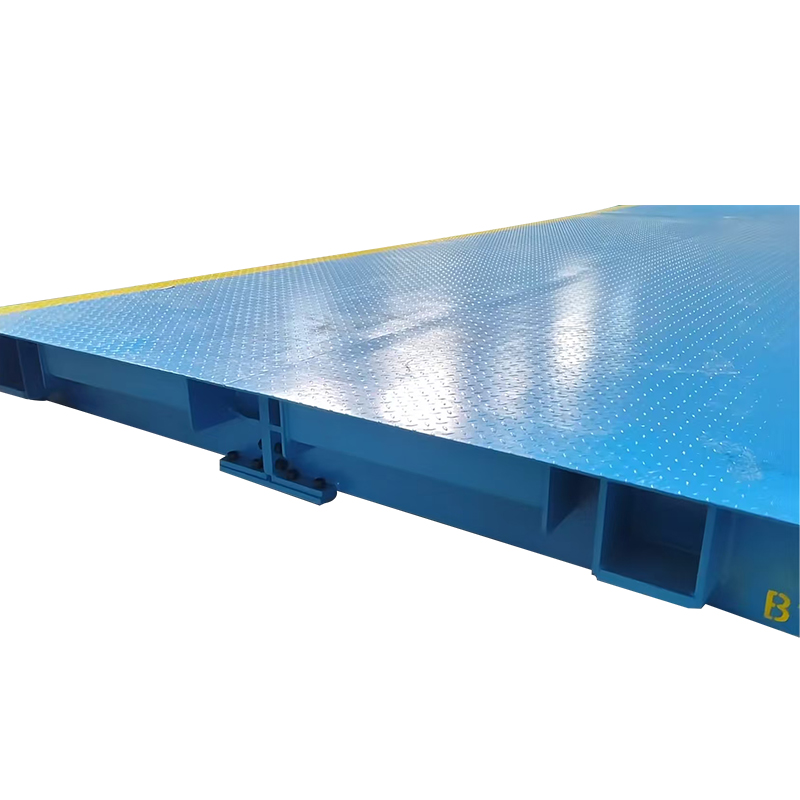
A frame truck scale uses a rigid steel frame to transfer loads to the foundation, which reduces the pit depth required. It suits sites where excavation is expensive or drainage is poor. The frame construction also distributes heavy point loads, which matters when graders or forklifts cross the platform in addition to delivery trucks.
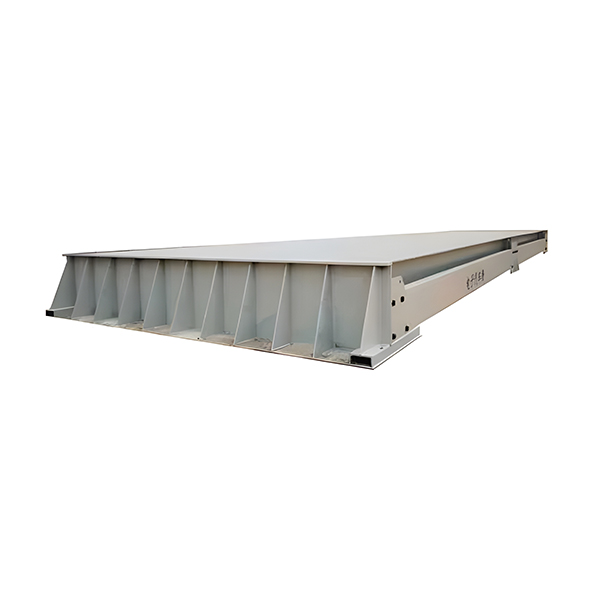 Wholesale Frame Truck Scale Manufacturer, Factory - Ningbo Jiuding Weighing EquiNingbo Jiuding Weighing Equipment Co., Ltd is China wholesale Frame Truck Scale manufacturer and OEM/ODM Frame Truck Scale factory,Produc...View Product →
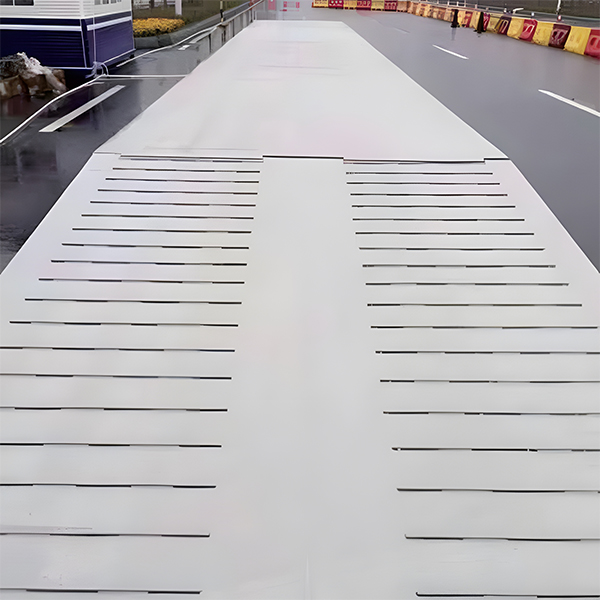
Pit-mounted scales sit level with the road for drive-through convenience. Surface-mounted scales need a concrete ramp but avoid underground construction. Slope-type scales offer a middle ground where a ramp is acceptable and a pit is not. The choice affects drainage, cleaning, routine inspection, and long-term maintenance. A practical comparison of pit-mounted versus surface-mounted truck scales is useful before committing to a foundation design.
Axle load scales weigh one axle group at a time and sum the results to estimate total vehicle weight. They are portable, cheaper, and useful for quick checks. However, because the truck moves between axle positions, the summed total is more sensitive to positioning and brake application. For weight slips that will be used for billing or formal recordkeeping, a full-length static platform remains the safer choice.
The indicator is where a weight becomes a number, and the number becomes a printed or digital slip. The operator recalls or enters the tare value, waits for a stable reading, and triggers the print. If the indicator settings do not match the scale capacity and division value, the slip will be wrong even when the scale hardware is perfect.
A modern weighing indicator should support the following functions to protect slip quality:
Indicator models differ mainly in display, memory, and connectivity. The Jiuding 3190DS8 digital weighing indicator supports printing, stores weight records, and connects to weighing software over serial or Ethernet links — enough capability for a single weighbridge or a small fleet depot. Before selecting a unit, review the key features to look for when choosing a weighing indicator, because configuration flexibility determines whether your operators can actually produce correct, complete slips. IoT-capable indicators take this further by pushing slip data automatically to cloud or ERP systems, eliminating transcription errors at the office step.
An uncalibrated scale does not announce its error; it simply prints a confident number. The only way to confirm that a truck weight slip is correct is to verify the scale against known standard weights and monitor its behavior over time. Calibration is not an expense to minimize — it is the direct cost of knowing that your slips mean what they say.
These checks take a few minutes per day. They are cheap compared with a month of invisible weighing errors.
Selecting a truck scale for a new site, or replacing an old one, is a decision with decade-long consequences. The scale determines slip quality every single day, in every kind of weather. The table below summarizes the main selection criteria that directly affect the weight slip.
| Consideration | What to Check |
|---|---|
| Capacity | 60 to 80 tonnes for most medium trucks; up to 100 tonnes for mining and heavy construction vehicles |
| Platform size | 3 x 9 m for single chassis trucks; up to 3 x 18 m for articulated trucks and trailers |
| Load cell type | Digital cells for longer cable runs, stronger interference resistance, and easier diagnostics |
| Installation type | Pit type for level access; surface or frame type for lower civil cost and simpler drainage |
| Indicator features | Printing, record storage, decimal/unit configuration, connectivity, and IoT capability |
| Environment | Dust, humidity, corrosive materials, and explosion risk determine sensor and enclosure selection |
| Service support | Availability of spare parts, on-site maintenance, and remote technical assistance |
Environment often decides the final configuration. For dusty or humid sites, a fully sealed or stainless steel load cell and a sealed indicator matter more than raw capacity. For sites exposed to lightning, digital load cells with stronger surge protection reduce downtime and protect the accuracy of future slips. A scale that is oversized for the fleet costs more than necessary; a scale that is undersized compromises the slip from day one. Matching the equipment to the actual vehicle fleet, installation conditions, and recordkeeping workflow is the most direct way to keep truck weight slips accurate for the long term.
A truck weight slip, also called a weigh ticket or scale ticket, is the printed or digital document issued by a truck scale after a vehicle is weighed. It records gross, tare, and net weights along with vehicle identification, time, and ticket number. Companies use it as the official record for material billing, inventory control, and loading verification.
Net weight equals gross weight minus tare weight. For example, if a loaded dump truck grosses at 32,500 kg and the same truck tares at 14,200 kg, the net weight of the material is 18,300 kg. Always confirm which tare value was used, because a wrong stored tare is the fastest way to produce a wrong slip.
Small differences are normal because every scale has a tolerance. Larger differences come from calibration gaps, scale type, weighing mode (static versus in-motion), or the position of the truck on the platform. If the gap is more than a few hundred kilograms, both scales should be tested with verified standard weights to find which one is out of adjustment.
At least once per year for a standard site with moderate traffic; every 3 to 6 months for busy operations handling hundreds of trucks per day; and immediately after any structural repair, relocation, or suspected lightning strike. Verification with verified standard test weights is the only reliable proof that the slip values are correct.
Yes. Modern digital indicators store records internally and can transfer them by Ethernet, USB, or IoT modules to weighing software, where digital slips are generated as PDFs or database records. Many sites now use both a printed slip for the driver and a digital copy for the office, which protects against lost tickets.
Two causes appear most often in practice: an incorrect tare value and incomplete positioning of the vehicle on the platform. A truck parked with part of the chassis beyond the deck, or with brakes applied hard while the indicator is reading, can shift the result by hundreds of kilograms. A clear approach procedure, a digital indicator with a stable reading check, and a tare verification step prevent most of these errors before a slip is ever printed.
Copyright © Ningbo Jiuding Weighing Equipment Co., Ltd.