


 English
 中文简体
中文简体
Industry News
How Accurate Is a Public Weighbridge — Standards & Limits
Content
- 1 How Accurate Is a Public Weighbridge — The Direct Answer
- 2 Legal Accuracy Standards That Public Weighbridges Must Meet
- 3 Factors That Affect Real-World Weighbridge Accuracy
- 4 Types of Public Weighbridges and Their Typical Accuracy Ranges
- 5 How Weighbridge Operators Maintain and Verify Accuracy
- 6 Comparing Public Weighbridge Accuracy to Other Weighing Methods
- 7 Common Reasons a Public Weighbridge Reading May Be Disputed
- 8 What You Can Do to Get the Most Accurate Result from a Public Weighbridge
- 9 How Accuracy Requirements Differ Across Industries Using Public Weighbridges
- 10 Frequently Asked Questions About Public Weighbridge Accuracy
- 10.1 Is a public weighbridge more accurate than a private on-site weighbridge?
- 10.2 Can I trust a public weighbridge ticket as legal proof of weight?
- 10.3 How often do public weighbridges fail calibration?
- 10.4 Does rain affect weighbridge accuracy?
- 10.5 What should I do if I think a public weighbridge gave me a wrong reading?
How Accurate Is a Public Weighbridge — The Direct Answer
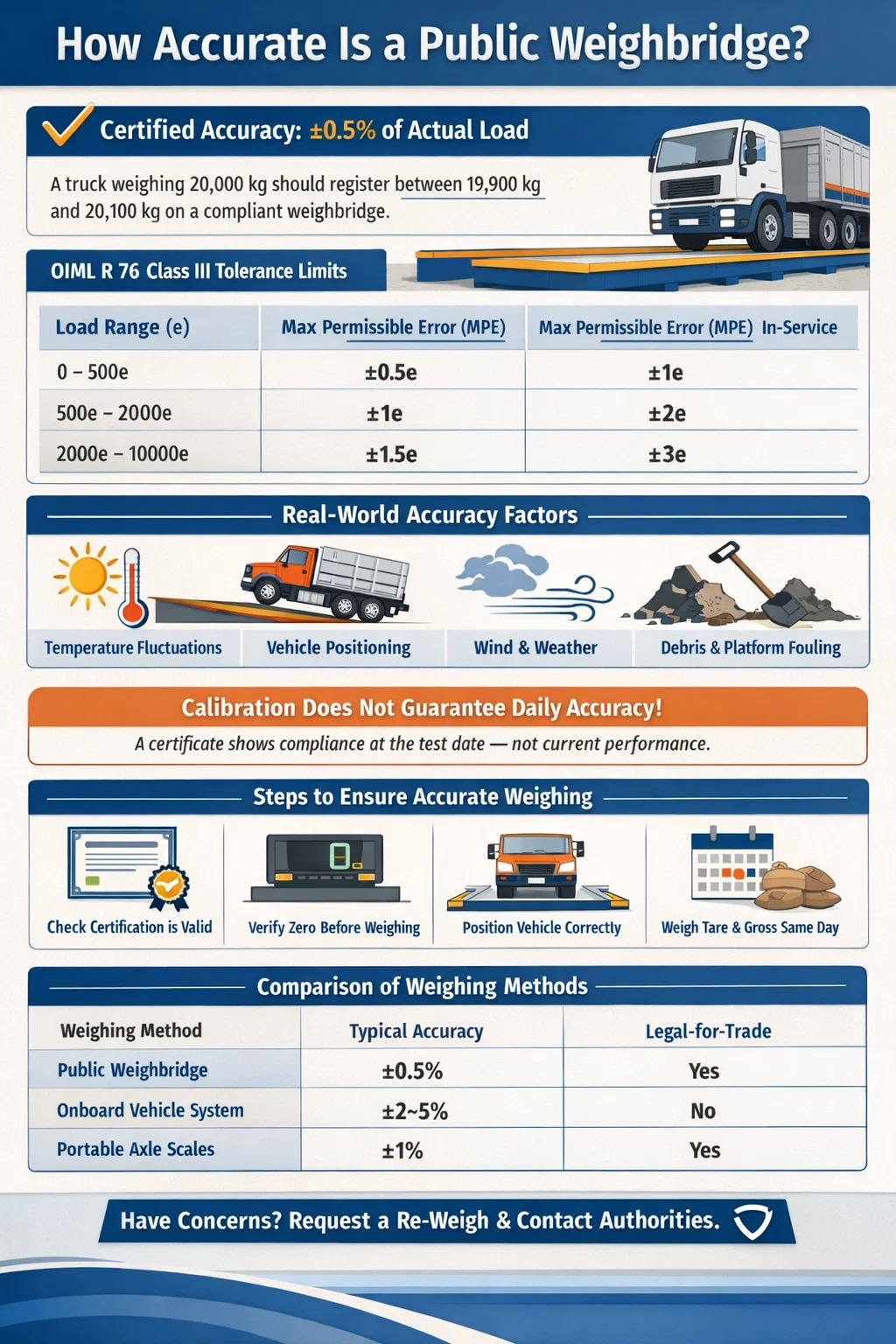
A certified public weighbridge is required by law to be accurate to within ±0.5% of the actual load in most countries operating under OIML (International Organization of Legal Metrology) standards. In practical terms, this means a truck weighing 20,000 kg should register between 19,900 kg and 20,100 kg on a compliant weighbridge. That level of precision is sufficient for legal trade, road enforcement, and compliance verification — and it is not accidental. It is the result of strict calibration protocols, mandatory verification by government-approved bodies, and regular maintenance schedules.
What most users overlook is that the rated accuracy of a weighbridge and its actual real-world performance are two different things. A weighbridge that passed its last official calibration test may still deliver inconsistent readings on a given day due to environmental conditions, improper use, or mechanical wear. Understanding both the certified tolerance and the factors that affect live performance is what separates informed weighbridge users from those who accept a printout at face value.
Legal Accuracy Standards That Public Weighbridges Must Meet
Public weighbridges used for legal-for-trade purposes are classified as non-automatic weighing instruments (NAWI) and are governed by legal metrology legislation in their respective jurisdictions. The accuracy requirements vary slightly by country, but they converge around the same general framework.
Under OIML Recommendation R 76, weighbridges are assigned an accuracy class. Class III instruments — the category that covers most commercial and public weighbridges — permit a maximum permissible error (MPE) that is expressed as a proportion of the load being weighed. The table below summarises the key tolerance thresholds under Class III rules:
| Load Range (in verification scale intervals, e) | Max Permissible Error (MPE) — Initial Verification | Max Permissible Error (MPE) — In-Service |
|---|---|---|
| 0 – 500e | ±0.5e | ±1e |
| 500e – 2000e | ±1e | ±2e |
| 2000e – 10000e | ±1.5e | ±3e |
In Australia, the National Measurement Act and the National Trade Measurement Regulations set similar requirements. A public weighbridge operating there must be verified and stamped by a Trade Measurement Inspector, and the scale division (d) must not exceed 20 kg for vehicles in typical commercial weighing applications. In the UK, the Weights and Measures Act 1985 alongside updated regulations brought in by the Measuring Instruments Regulations 2016 govern the same space.
The important distinction is between initial verification tolerance (the standard at the point of calibration) and in-service tolerance (what is permitted during normal use between calibrations). In-service limits are typically twice as wide. A weighbridge operating at the outer edge of its in-service tolerance is still technically compliant, even though its readings could differ from initial calibration by several scale divisions.
Calibration Certificates and What They Actually Tell You
A valid calibration certificate confirms that the weighbridge met legal tolerance requirements at the time of testing — not that it is performing to that standard right now. Most calibration certificates are valid for 12 months, though some jurisdictions require more frequent re-verification for high-throughput weighbridges. Certificates should be available for inspection at the weighbridge operator's site. If you are using a public weighbridge for a significant commercial transaction and the certificate is expired, you are accepting an unknown level of accuracy risk.
Factors That Affect Real-World Weighbridge Accuracy
Even a properly certified weighbridge can produce inaccurate readings when conditions depart from the controlled environment in which calibration was performed. Several operational and environmental variables have a measurable impact on weighbridge performance.
Temperature and Its Effect on Load Cell Output
Load cells — the strain gauge sensors that convert weight into an electrical signal — are sensitive to temperature fluctuations. Most high-quality load cells are rated for use between -10°C and +40°C, but their output can drift by up to 0.02% per degree Celsius outside their compensated temperature range. On a summer day where the concrete deck has absorbed heat and the ambient temperature rises sharply, a weighbridge that read accurately at 15°C may be slightly out at 38°C — even without any mechanical fault. This is why some high-precision weighbridge installations include temperature compensation in their electronics.
Vehicle Positioning on the Weighbridge Platform
Weighbridge platforms are calibrated with load distributed across all load cells in a defined manner. When a vehicle is poorly positioned — overhang at one end, axles concentrated at one side — the load distribution shifts. This does not always cause a visible error in the total weight reading, because load cells sum their outputs, but it can cause minor inconsistencies especially if one cell is out of calibration relative to others. Most weighbridge operators post clear markings for vehicle positioning; ignoring them introduces avoidable measurement uncertainty.
Wind Loading on Weighbridge Structures
Exposed outdoor weighbridges can experience wind-induced lateral forces that interfere with vertical load measurement. At wind speeds above 40 km/h, some older designs without proper wind baffles or side restraints have been observed to show readings varying by up to 50 kg on a 10,000 kg reference load — a 0.5% error attributable entirely to environmental conditions. Modern weighbridge designs incorporate load cell mounting systems that are less sensitive to horizontal forces, but this remains a legitimate concern for older public weighbridge installations.
Debris, Settlement, and Platform Fouling
Soil, gravel, or material buildup under the weighbridge platform can mechanically restrict its free movement, causing the structure to bear part of the load on the surrounding ground rather than exclusively on the load cells. This is one of the most common causes of systematic under-reading at public weighbridges. Similarly, if the foundation has settled unevenly over time, the platform may not be perfectly level, introducing consistent bias into measurements. Reputable operators conduct daily zero-point checks and scheduled inspections specifically to catch this type of issue before it affects customer transactions.
Moisture and Electrical Interference
Water ingress into junction boxes or load cell connectors is a well-documented source of signal noise and erratic readings. Even hermetically sealed load cells rated to IP68 can experience moisture-related signal degradation if cable terminations are not properly sealed. Nearby electrical equipment — high-voltage power lines, variable frequency drives, or large electric motors — can also introduce electromagnetic interference (EMI) that affects the analog signal from load cells before it reaches the digital indicator, resulting in unstable or offset readings.
Types of Public Weighbridges and Their Typical Accuracy Ranges
Not all public weighbridges are built the same way. The construction type, age, and technology platform of a weighbridge all influence how accurate it can realistically be expected to perform in everyday use.
Concrete Deck Weighbridges
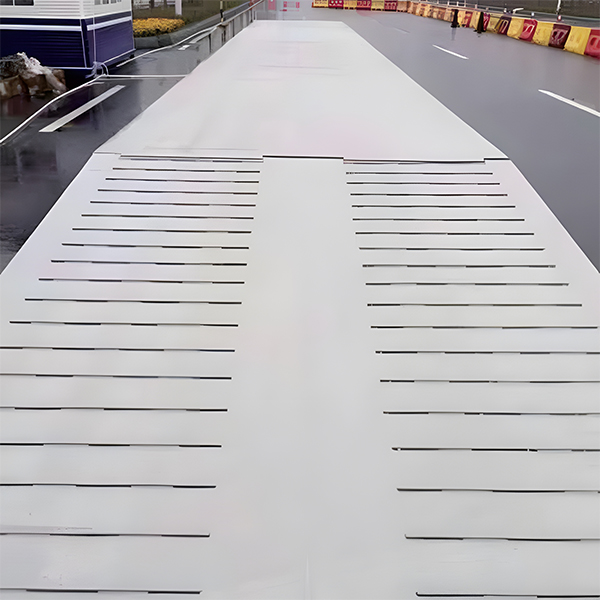
Concrete deck weighbridges are the most common type found at public weighbridge sites, grain receival depots, and waste transfer stations. They offer excellent durability and resistance to surface wear. From an accuracy standpoint, they perform well when properly maintained, but their mass — often 10,000 to 20,000 kg for the deck itself — means that the tare weight is a large proportion of the full-scale capacity. Any drift in zero calibration therefore has a proportionally larger effect on net weight calculations. These weighbridges typically achieve a scale resolution (d) of 20 kg on a 60-tonne capacity, giving a theoretical resolution of approximately 0.033%.
Steel Deck Weighbridges
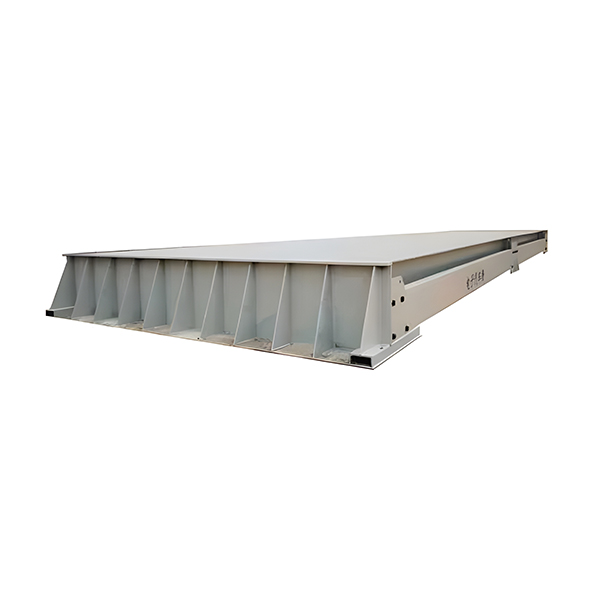
Steel deck weighbridges are lighter and more thermally conductive than concrete alternatives. Their lower self-weight is an advantage in low-capacity applications, but the thermal conductivity means load cells experience greater temperature swings across the day. High-quality steel deck installations with temperature-compensated electronics can match the accuracy of concrete deck models, but cheaper installations may show more temperature-related drift. They are widely used at ports, mining sites, and industrial facilities.
Pitless vs Pit-Mounted Weighbridges
Pitless weighbridges sit on a raised foundation above the surrounding ground level, with ramps on either side. Pit-mounted weighbridges are recessed into the ground so the deck is flush with the surrounding surface. From an accuracy perspective, pitless designs are generally preferred because the load cells are accessible for inspection and maintenance, and debris accumulation under the platform is easier to manage. Pit-mounted designs can trap water, debris, and material spillage, all of which introduce the fouling and settlement issues described earlier. Many older public weighbridge sites use pit-mounted designs because they were built decades ago; users of those sites should ask about maintenance frequency.
Digital vs Analog Indicators
Modern public weighbridges use digital indicators with high-resolution analog-to-digital conversion. Entry-level indicators convert at 16-bit resolution; professional legal-for-trade indicators use 24-bit converters, giving internal resolution many times finer than the displayed scale division. This means the displayed reading is a reliable rounded representation of the actual measurement, not a coarse approximation. Older analog or electromechanical indicators are far less consistent and should be viewed with more caution. If you are using a public weighbridge that still displays readings on a moving pointer dial rather than a digital readout, the inherent readability error alone may be several scale divisions.
How Weighbridge Operators Maintain and Verify Accuracy
A well-run public weighbridge follows a structured maintenance and verification schedule. Understanding what this looks like helps you evaluate whether a particular weighbridge is likely to be operating accurately at the time you use it.
Daily Zero Checks
Every public weighbridge should be zeroed at the start of each operating day with the platform clear of any load. Most modern indicators do this automatically, but operators should also visually confirm zero before the first transaction. If a weighbridge cannot be zeroed — because something is resting on it, or because there is a mechanical obstruction — it should not be used until the issue is resolved. A non-zero tare offset of just 40 kg on a 40-tonne truck load represents a 0.1% error, which sits within tolerance but is entirely avoidable.
Test Weight Calibration
Annual calibration by an accredited body involves driving certified test weights — typically in the form of a calibrated truck or trailer with documented gross mass — across the weighbridge at multiple load points. The technician checks the weighbridge's response at minimum load, mid-range, and maximum capacity, as well as at multiple positions across the platform length. Any deviation outside permissible error triggers an adjustment of the indicator's calibration constants, followed by re-verification. Test weights used for public weighbridge calibration must themselves be traceable to national standards, which means they are weighed against reference weights that are calibrated against BIPM (Bureau International des Poids et Mesures) standards in France.
Periodic Inspection Between Calibrations
Between annual calibrations, operators of busy public weighbridges should conduct quarterly or half-yearly check weighings using a known reference vehicle. This is not a formal calibration but serves as a performance monitoring tool. If the check weighing shows a consistent offset — say, the reference vehicle consistently reads 80 kg heavier than its known mass — the operator can contact the calibration authority for an out-of-cycle inspection rather than waiting until the annual visit. Operators who skip this intermediate monitoring have no way of knowing whether a problem developed one month after the last calibration or one month before the next one.
What Happens When a Public Weighbridge Fails Inspection
When a trade measurement inspector finds that a weighbridge exceeds its in-service maximum permissible error, the instrument is placed out of service for legal trade. In Australia, this means the authority stamp is cancelled and the weighbridge cannot issue legally valid weight certificates until it is repaired, re-calibrated, and re-verified. In the UK, a similar process applies under the Weights and Measures Act. Owners of non-compliant weighbridges face fines, and any weights certified during a period of non-compliance may be disputed in commercial or regulatory proceedings.
Comparing Public Weighbridge Accuracy to Other Weighing Methods
Understanding how a public weighbridge performs relative to alternative weighing methods helps set realistic expectations and guides decision-making about which method to use for different purposes.
| Weighing Method | Typical Accuracy | Legal-for-Trade | Suitable for Road Enforcement |
|---|---|---|---|
| Public Weighbridge (certified) | ±0.5% or better | Yes | Yes |
| Onboard Vehicle Weighing System | ±2–5% | No (indicative only) | No |
| Portable Axle Scales (certified) | ±1% | Jurisdiction-dependent | Yes, in many jurisdictions |
| Weigh-in-Motion (WIM) Systems | ±5–10% (pre-screening) | No (screening only) | For pre-selection only |
| Uncertified Private Scale | Unknown / variable | No | No |
Onboard weighing systems — load sensors integrated into a truck's suspension or axle — are popular for operational load management, but their accuracy is typically in the ±2–5% range under ideal conditions and can be worse after component wear or if the system is not properly calibrated against a reference. They are not legally valid for buyer-seller transactions or regulatory compliance verification. If a dispute arises, any contract that specifies weights measured by an onboard system will likely not hold up if challenged with a certified weighbridge ticket.
Weigh-in-motion systems installed in road surfaces measure axle weights as vehicles pass at highway speed. They are valuable for enforcement pre-screening — flagging overloaded trucks for directed weighing — but their dynamic measurement conditions mean accuracy is significantly lower than a static weighbridge. Most jurisdictions require that any vehicle stopped on the basis of a WIM reading be brought to a certified static weighbridge before a formal overloading charge can be issued.
Common Reasons a Public Weighbridge Reading May Be Disputed
Weight disputes do happen, and knowing the most frequent causes helps you either prevent them or build a legitimate challenge if you believe a reading is wrong.
- Expired calibration: If the weighbridge's verification stamp has lapsed, any ticket issued during that period is legally suspect. Always ask to see the current calibration certificate before using a public weighbridge for high-value transactions.
- Debris under the platform: Material caught between the platform and the foundation prevents free movement and causes consistent under-reading. This is often noticed as the weighbridge reading increasing after cleaning — which means earlier readings were artificially low.
- Zero error not corrected: If the operator did not zero the scale properly before the day's operations or failed to clear a previous vehicle's residual load, your gross weight will include an offset. You can ask the operator to demonstrate zero before your vehicle is weighed.
- Incorrect tare weight used: Net weight is gross minus tare. If the tare was recorded on a different day under different loading conditions — especially if the vehicle had a wet tray or carried residual material — the net weight calculation will be skewed.
- Partial platform contact: Vehicles that are too long for the weighbridge platform will have some axles off the scale. This produces a gross weight lower than actual — a systematic undercount that is easily identified by checking whether the vehicle overhung the platform edges.
- Indicator fault or software error: While rare in modern systems, indicator firmware bugs or communication errors between load cells and the indicator can cause anomalous readings. These are usually identified quickly because they produce readings inconsistent with the historical pattern for similar loads.
In most jurisdictions, if you have grounds to believe a public weighbridge reading is incorrect, you can lodge a formal complaint with the relevant weights and measures authority. The authority will arrange an inspection at the site and, if a fault is found, will assess the period during which inaccurate weights may have been issued. In some cases, affected parties may be entitled to compensation or re-weighing at no cost.
What You Can Do to Get the Most Accurate Result from a Public Weighbridge
Users of public weighbridges are not passive recipients of whatever number appears on the ticket. There are several straightforward steps you can take to maximise the reliability of the weight you receive.
- Confirm the weighbridge is currently certified. Ask to see the calibration certificate or stamping date. If it is more than 12 months old, raise the point with the operator before proceeding.
- Verify zero before your vehicle drives on. Watch the indicator while the platform is clear. It should read zero. If it does not, ask the operator to re-zero before your vehicle is positioned.
- Position the vehicle correctly. Follow posted positioning guides. All axles should be fully on the platform, with the vehicle as centred as possible along both the length and width of the deck.
- Keep the vehicle stationary during the reading. Any movement — including engine vibration, braking, or passengers moving inside the cab — introduces dynamic forces that cause the reading to fluctuate. Wait until the indicator displays a stable, settled reading before the ticket is printed.
- Weigh tare and gross under the same conditions. If possible, weigh both in the same direction, at the same time of day, and with the same driver and contents in the cab. Inconsistencies in these variables all affect net weight accuracy.
- Request a printout with time and date stamp. A contemporaneous record establishes exactly when the weight was taken, which is important if the reading is later disputed or if calibration validity becomes an issue.
- Cross-check with a second weighbridge if the stakes are high. For very high-value commodity transactions where even a 0.3% discrepancy represents significant money, weighing at two different certified weighbridges and taking an average is a defensible practice. If the two readings differ by more than 1%, there is a legitimate question about one or both instruments that warrants investigation.
How Accuracy Requirements Differ Across Industries Using Public Weighbridges
The same public weighbridge is used across very different industry contexts, and the practical significance of weighbridge accuracy varies considerably between them.
Grain and Agricultural Commodities
In grain receival, even a 0.2% error on a 25-tonne delivery at current wheat prices can represent a meaningful monetary difference. Grain handlers in Australia, for example, are required under bulk handling legislation to use verified weighbridges, and growers retain rights to request re-weighing if they dispute the recorded delivery. The financial stakes here mean that operators are incentivised to maintain high accuracy, and accreditation disputes in this sector are not uncommon.
Waste and Recycling
Waste transfer stations use public weighbridges to determine charges for tipping fees — typically assessed per tonne of material delivered. A systematic over-reading of even 1–2% means customers are consistently overcharged. Regulatory audits of waste facility weighbridges have found higher-than-average rates of non-compliance in some jurisdictions, partly because waste environments are harsh (heavy contamination, vibration, moisture) and partly because the commercial incentive for operators is less direct than in commodity trading. Users delivering at waste facilities are well-advised to check certification dates.
Road Transport Enforcement
When a weighbridge is used by transport authorities to determine whether a vehicle is overloaded, the accuracy requirements take on a legal dimension. In Australia, the Heavy Vehicle National Law sets enforcement tolerances — a vehicle is not penalised for minor overloads within a defined tolerance band — which effectively means that the weighbridge's measurement uncertainty is factored into the regulatory framework. In the UK, a similar approach applies. Enforcement weighbridges are subject to more frequent inspection than commercial public weighbridges in many jurisdictions because the consequences of an incorrect reading extend to prosecution, not just a financial adjustment.
Mining and Quarrying
Mining operations often use on-site weighbridges to verify haul truck payloads for royalty calculations and stockpile management. The weight of ore or aggregate weighed over a shift directly affects royalty payments to landowners or government agencies. In this context, even small systematic errors compounded over thousands of tonnes per month produce large dollar differences. Mining operators typically invest in higher-specification weighbridges with tighter tolerances and more frequent calibration than the legal minimum — the cost of calibration is trivial compared to the cost of a royalty dispute.
Frequently Asked Questions About Public Weighbridge Accuracy
Is a public weighbridge more accurate than a private on-site weighbridge?
Not necessarily by design, but often in practice. Public weighbridges are subject to mandatory third-party verification and are inspected by government trade measurement authorities. Private on-site weighbridges may use the same quality hardware and achieve the same accuracy, but if they are not certified to legal-for-trade standards, there is no independent verification that they are performing correctly. A certified private weighbridge and a certified public weighbridge of the same class should perform to the same tolerance.
Can I trust a public weighbridge ticket as legal proof of weight?
Yes, provided the weighbridge is currently certified and the ticket includes the required statutory information — typically the weighbridge operator's name and licence number, the date and time of weighing, the gross and tare weights, and the net weight. In most jurisdictions, a weight certificate issued by a licensed public weighbridge operator is admissible as evidence of weight in commercial disputes and legal proceedings. An expired or uncertified weighbridge ticket does not carry the same legal weight.
How often do public weighbridges fail calibration?
Failure rates vary by country, industry, and the age of equipment. Australian trade measurement annual reports have historically shown non-compliance rates of roughly 5–10% for weighbridges inspected in any given year, with failure meaning the instrument exceeded its permitted tolerances. The majority of failures are minor and corrected during the inspection visit rather than requiring the weighbridge to be taken out of service for extended periods. High-risk categories — waste facilities and older weighbridges in harsh environments — show higher rates of non-compliance.
Does rain affect weighbridge accuracy?
Rain itself does not materially affect a properly sealed modern weighbridge. However, standing water on the platform creates a dead load that inflates gross weight readings — the weight of water on the deck is included in the gross measurement. In heavy rain, water on a standard truck tray area can add 10–30 kg depending on tray design. For precision net weight calculations, it is worth noting weather conditions at the time of weighing, particularly for materials weighed against a dry tare weight recorded earlier.
What should I do if I think a public weighbridge gave me a wrong reading?
First, raise the issue with the weighbridge operator at the time and ask them to re-weigh with a demonstrated zero check. Document everything — take photographs of the indicator display, the ticket, and the vehicle position. If you are not satisfied with the operator's response, contact the relevant national or state trade measurement authority. In Australia, that is the National Measurement Institute (NMI). In the UK, it is your local Trading Standards office. These authorities have the power to conduct a formal inspection and, if a fault is found, to investigate whether other parties were affected by the same issue.

Copyright © Ningbo Jiuding Weighing Equipment Co., Ltd.
