


 English
 中文简体
中文简体
Industry News
How to Know If Your Scale Is Accurate | Scale Testing Guide
Content
- 1 The Short Answer: How to Know If Your Scale Is Accurate
- 2 Why Scale Accuracy Matters More Than Most People Realize
- 3 Common Signs Your Scale May Be Inaccurate
- 4 Step-by-Step Methods to Test Scale Accuracy
- 5 Accuracy Tolerances: What the Standards Actually Say
- 6 Truck Scale Accuracy: Special Considerations
- 7 How Often Should You Test and Calibrate Your Scale?
- 8 Factors That Can Throw Off Scale Accuracy Over Time
- 9 Do-It-Yourself Accuracy Checks vs. Certified Calibration
- 10 Reading and Interpreting Your Calibration Certificate
- 11 Practical Tips to Keep Your Scale Accurate Longer
- 12 When to Stop Using a Scale Until It's Repaired
The Short Answer: How to Know If Your Scale Is Accurate
You can verify scale accuracy by testing it with certified test weights, comparing readings against a known reference, checking for repeatability across multiple weigh-ins, and reviewing calibration certificates. A properly calibrated scale should read within ±0.1% of the true weight for most commercial and industrial applications. For truck scales specifically, the acceptable tolerance under NTEP (National Type Evaluation Program) standards is typically within ±0.5% of the applied load or within the division value — whichever is greater.
Inaccurate scales are not just an operational inconvenience. In commercial trade, they represent legal liability. In industries where truck scale readings determine billing, freight charges, or load compliance, being off by even a fraction of a percent can translate to thousands of dollars in losses or regulatory fines over time. Whether you're managing a quarry, a grain elevator, a waste facility, or a logistics hub, understanding how to test scale accuracy is non-negotiable.
Why Scale Accuracy Matters More Than Most People Realize
A scale that reads 200 lbs instead of 195 lbs might seem trivial at first glance. But consider a truck scale processing 80 loads per day, each averaging 40,000 lbs. If the scale reads just 1% high consistently, that's a 400 lb discrepancy per load — or 32,000 lbs of miscounted material every single day. Over a month, that's nearly 1 million pounds of material that's either being given away or overbilled.
Beyond the financial impact, there are regulatory considerations. In the United States, Weights and Measures officials from state agriculture departments conduct compliance inspections on commercial scales, including truck scales used in commerce. A scale found to be out of tolerance can be immediately condemned and removed from service until recalibrated. Fines vary by state but can range from several hundred to several thousand dollars per violation.
Accuracy also affects safety. Overloaded trucks are a road hazard. If a truck scale underreads weight, a hauler may unknowingly exceed legal load limits, risking both a DOT citation and a dangerous driving situation. This is why truck scale accuracy is both a business issue and a public safety concern.
Common Signs Your Scale May Be Inaccurate
Before diving into formal testing, there are red flags that should prompt you to check your scale right away. Many of these are easy to spot during routine use.
Inconsistent Readings for the Same Load
If you weigh the same truck — same cargo, same configuration — multiple times in a short period and get different numbers each time, that's a clear signal of a repeatability problem. A reliable scale should return the same reading within its division value every time for identical loads. A variation of more than one or two scale divisions suggests load cell issues, wiring problems, or structural damage to the scale platform.
The Scale Doesn't Return to Zero
After removing a load, the scale should return to exactly zero. If it creeps, shows a small positive or negative value, or drifts over time, the issue could be debris under the scale deck, a damaged load cell, or environmental factors like temperature swings affecting the electronics. Zero drift of more than half a division is considered out of tolerance under NIST Handbook 44 standards.
Readings Vary Based on Load Position
On a properly functioning truck scale, it shouldn't matter whether the vehicle is positioned at the front, middle, or rear of the platform — the weight reading should be the same. If you get noticeably different readings depending on where the vehicle stops, one or more load cells may be failing, or the platform may be mechanically compromised.
Unusual Display Behavior
Flickering displays, slow stabilization time, weight readings that keep changing before settling, or error codes on the weight indicator are all warning signs. These may point to electrical interference, moisture in junction boxes, or failing load cell cables.
Step-by-Step Methods to Test Scale Accuracy
There are several approaches for testing accuracy, ranging from quick informal checks to full certified inspections. The right method depends on the scale type, your operational requirements, and whether you need legal-for-trade certification.
Method 1: Certified Test Weights
This is the gold standard. Certified test weights are traceable to national standards through NIST (National Institute of Standards and Technology) or equivalent bodies in other countries. For bench or floor scales, standard cast iron or stainless steel weights are used. For truck scales, test weight vehicles — trucks loaded with certified weights — are brought in to simulate real load conditions.
The process involves:
- Zeroing the scale with no load applied.
- Applying a known certified weight (or test vehicle) to the platform.
- Recording the displayed reading.
- Comparing the displayed reading against the certified weight value.
- Repeating the test at multiple load points — typically 25%, 50%, 75%, and 100% of the scale's capacity.
- Testing corner load and shift load if applicable.
For a truck scale with a 100,000 lb capacity, this typically means testing at 25,000 lb, 50,000 lb, 75,000 lb, and 100,000 lb intervals. The allowable error at each point is defined by the scale's tolerance class and the applicable Handbook 44 requirements.
Method 2: Substitution Testing
When certified test weights aren't available or are impractical to transport, substitution testing is a widely accepted alternative. You weigh a stable, consistent object — such as a vehicle, pallet of material, or container — on the scale in question, then immediately weigh it on a known-accurate reference scale. The two readings should closely match.
This method works well for truck scale checks when a facility has access to a state-certified reference truck scale nearby. The comparison vehicle should be loaded consistently and weighed promptly to avoid fuel consumption or other changes affecting the comparison.
Method 3: Repeatability Test
This test doesn't confirm absolute accuracy against a known standard, but it does tell you whether the scale is consistent. Drive the same vehicle onto the scale five times in a row, recording each reading. All five readings should fall within one scale division of each other. A division on a typical truck scale is 20 lbs — so all five readings should be within ±20 lbs of each other.
Poor repeatability almost always points to a mechanical or electrical issue that needs professional attention before the scale can be trusted.
Method 4: Zero Balance Test
Start with the scale completely empty. Check that it reads zero — or within the permitted zero error range. Apply a heavy load (drive a truck on, for example), then remove the load entirely and check that it returns to exactly zero. Do this several times. If the scale doesn't reliably return to zero, you have a mechanical binding issue, trapped debris, or a load cell that's not recovering fully from deflection.
Accuracy Tolerances: What the Standards Actually Say
Understanding what "accurate" legally means depends on the scale type and its intended use. Here's a breakdown of common standards that apply in the United States:
| Scale Type | Standard | Acceptable Tolerance | Notes |
|---|---|---|---|
| Truck Scale (Commercial) | NIST HB 44 | ±1 division (typically ±20 lbs) | Applies to in-service testing |
| Bench/Retail Scale | NIST HB 44 | ±1–2 divisions | Depends on accuracy class |
| Laboratory Balance | OIML R 76 | ±0.01% or better | Class I/II precision instruments |
| Floor Scale (Industrial) | NIST HB 44 | ±0.1% of applied load | For non-automatic weighing |
| Axle Scale | NIST HB 44 | ±1% of applied load | Used in DOT enforcement |
For truck scales used in commercial transactions, the most critical reference is NIST Handbook 44, specifically the "Scales" code. This document defines tolerances for acceptance (when a new scale is first placed in service) and for in-service use (ongoing compliance). In-service tolerances are typically twice as lenient as acceptance tolerances, recognizing that wear, environmental exposure, and usage affect real-world performance.
Truck Scale Accuracy: Special Considerations
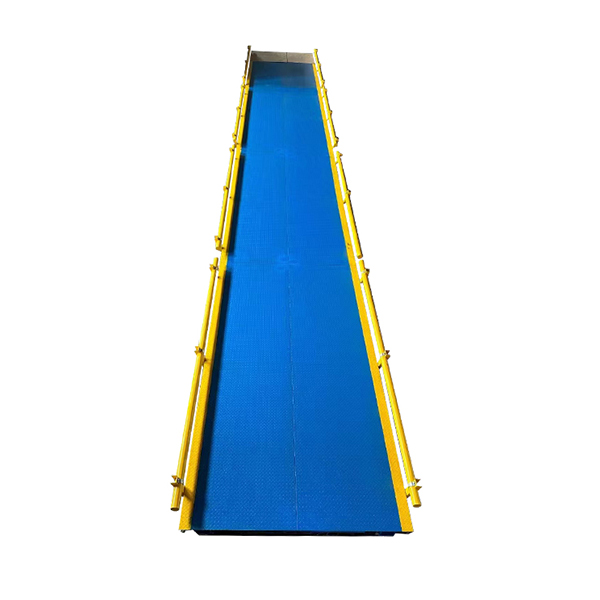
Truck scales — also called weighbridges — operate under conditions that no other commercial scale faces. They handle extreme loads, outdoor weather, vehicle vibration, and constant mechanical stress. Because of this, maintaining truck scale accuracy requires more than just periodic calibration checks.
Foundation and Civil Structure
A truck scale is only as accurate as the structure beneath it. If the foundation shifts, settles unevenly, or develops cracks, the load cells will no longer be sharing the weight evenly. This leads to corner-to-corner reading discrepancies that no amount of electronic calibration can fully correct. Annual inspection of the pit walls, drainage, and approach ramps is essential for maintaining structural integrity — and by extension, weighing accuracy.
Load Cell Health
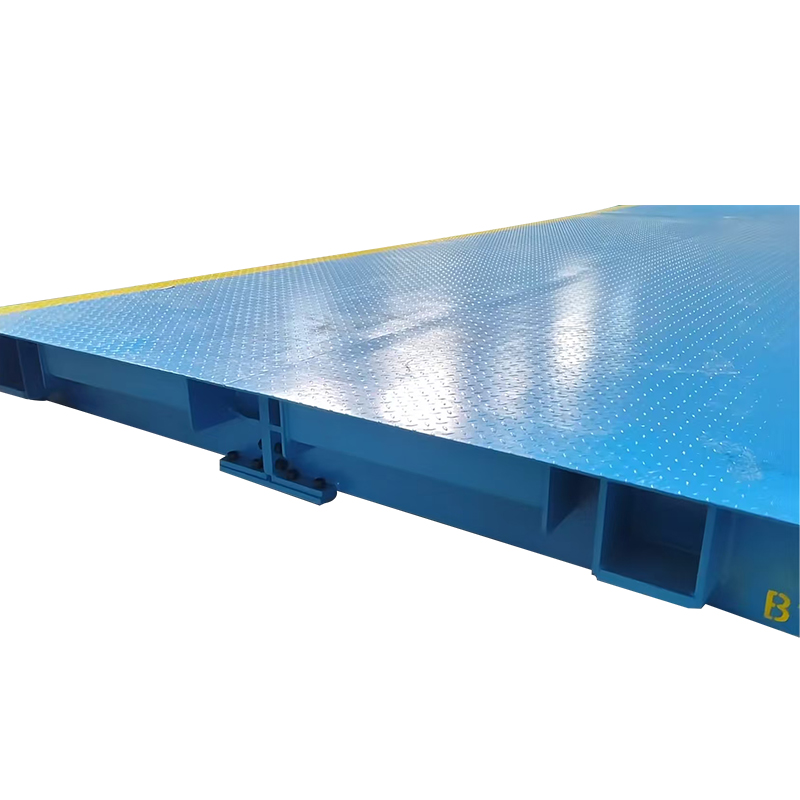
Most modern truck scales use between 4 and 8 load cells, depending on the number of deck sections and design. Each load cell contributes to the total weight reading. If even one cell is damaged, corroded, or moisture-compromised, it throws off the aggregate reading. A diagnostic tool called a load cell monitor or junction box display can be used to read the millivolt output of individual cells. A healthy load cell typically outputs between 0 and 3 millivolts per volt (mV/V) across its rated capacity. Readings outside this range signal a problem.
Temperature Effects
Steel expands and contracts with temperature. On a large truck scale deck spanning 70 feet or more, a 40°F temperature swing can cause measurable physical changes in the platform. This is why truck scale calibration performed in the summer may need verification in winter. High-quality load cells include temperature compensation circuits, but they don't eliminate the effect entirely — they reduce it to within specification limits.
Debris and Obstruction
One of the most common causes of truck scale inaccuracy isn't electronic or structural — it's dirt, gravel, mud, or material buildup under the scale deck or around the load cells. When debris packs under the platform, it creates a false mechanical support that reduces the load reaching the load cells. The scale then underreads weight. Regular cleaning of the scale pit and weighbridge edges is as important as any electronic calibration.
Approach and Departure Ramps
If vehicles are still braking or accelerating as they reach the scale platform, dynamic forces from the vehicle's momentum will affect the reading. Proper truck scale installation requires level approach and departure ramps of sufficient length — typically at least the length of the longest expected vehicle — so that trucks are completely stopped and on the scale before a reading is taken.
How Often Should You Test and Calibrate Your Scale?
There's no universal answer, but there are sensible guidelines based on scale type, usage intensity, and regulatory requirements.
- Commercial truck scales used in trade: State Weights and Measures inspectors typically inspect annually. However, most industry experts recommend a facility-level calibration check every 6 months — or after any significant event like a vehicle strike, flood, or nearby construction that could disturb the foundation.
- High-volume operations (100+ weigh cycles per day): Monthly accuracy checks using a reference vehicle or partial test weights are advisable. The higher the throughput, the faster minor issues compound into significant errors.
- Bench and floor scales in food production or pharmaceuticals: Daily zero checks at minimum, with full calibration verification at least quarterly. Some GMP (Good Manufacturing Practice) environments require calibration before every use.
- Retail scales: State inspectors typically cover these annually, but any scale used to price goods should be zero-checked at the start of each business day.
- After any repair, relocation, or significant maintenance: Always recalibrate. Moving a scale even a short distance can change its level and affect load cell alignment, which directly impacts accuracy.
Many truck scale service companies now offer preventive maintenance contracts that include semi-annual or annual calibration with certified test weights, load cell diagnostics, and structural inspections. For facilities where the truck scale is central to revenue, this is typically money well spent.
Factors That Can Throw Off Scale Accuracy Over Time
Even a perfectly calibrated scale will drift out of accuracy if certain conditions are present. Understanding these factors helps you catch problems before they affect operations.
Electrical Interference and Grounding Issues
Load cells produce extremely small electrical signals — in the range of a few millivolts. Any interference from nearby motors, variable frequency drives, or poor grounding can distort these signals and produce erratic or shifted readings. Proper shielded cabling, clean power supplies, and good earth grounding are critical for signal integrity. In industrial environments near heavy equipment, electromagnetic interference (EMI) is one of the most underdiagnosed causes of truck scale accuracy problems.
Moisture and Corrosion
Water infiltration into junction boxes, connector terminals, or load cell cables causes resistance changes in the circuit. Even small resistance increases can shift the calibration. Stainless steel or hermetically sealed load cells are better suited for outdoor or wash-down environments, but no seal lasts forever. Annual inspection of all cable connections, conduit, and junction box seals is good practice.
Mechanical Wear and Damage
On truck scales specifically, the check rods, bumper bolts, and restraint hardware that keep the platform properly aligned can loosen, bend, or wear over time. When these components are out of adjustment, side loads and horizontal forces interfere with vertical load measurement. A check rod that's too tight prevents the platform from freely settling on the load cells, making the scale read low. One that's too loose allows the platform to shift laterally, causing inconsistent readings.
Software and Indicator Configuration
Modern digital weight indicators store calibration data in non-volatile memory. A power surge, firmware update, or accidental configuration change can corrupt or reset these values. If your scale suddenly reads differently after a power outage or a software update, always check the indicator's calibration parameters before assuming a mechanical problem.
Do-It-Yourself Accuracy Checks vs. Certified Calibration
There's an important distinction between a quick accuracy check you can do yourself and a formal calibration performed by a certified technician using traceable weights.
What You Can Do In-House
- Zero-balance checks at the start of each shift
- Repeatability tests using a consistent reference vehicle
- Visual inspection of the scale platform, pit, and cable connections
- Monitoring weight indicator diagnostics and error codes
- Logging weight readings for consistency trends over time
What Requires a Certified Technician
- Calibration with certified (NIST-traceable) test weights
- Issuing calibration certificates for regulatory compliance
- Adjusting internal calibration parameters in the weight indicator
- Load cell millivolt output testing and corner correction adjustments
- Legal-for-trade certification required by state Weights and Measures
For commercial truck scales, in-house checks are not a substitute for certified calibration — they're a complement to it. Think of in-house checks as early warning systems that tell you when to call a professional before a small problem becomes a big one.
Reading and Interpreting Your Calibration Certificate
After a professional calibration, you should receive a calibration certificate. Knowing how to read this document tells you exactly where your scale stands — and whether it passed or barely squeezed within tolerance.
A standard truck scale calibration certificate typically includes:
- Scale identification: Serial number, model, capacity, and division value
- Test weight information: The certified weights used and their traceability reference numbers
- As-found readings: What the scale read before any adjustment was made — this is the actual performance data
- As-left readings: What the scale reads after adjustment, which should be within tolerance
- Environmental conditions: Temperature and humidity at the time of calibration
- Technician credentials and date: The calibrating technician's identification and the date of service
Pay close attention to the "as-found" column. If the as-found readings show the scale was already outside tolerance before the technician made adjustments, it means there was a window of time when your scale was giving inaccurate weights. If you're billing based on those weights, you may need to address discrepancies with customers or suppliers. Keeping a historical log of calibration certificates lets you track drift trends and predict when the next service will be needed before the scale goes out of tolerance.
Practical Tips to Keep Your Scale Accurate Longer
Accuracy isn't just about calibration — it's also about how you operate and maintain your scale day to day.
- Keep the scale level. Even small changes in grade can create a systematic shift in readings. Check levelness annually and after any site disturbance.
- Clean under the deck regularly. For truck scales, a high-pressure wash-out of the pit every 1–3 months (depending on material type) prevents debris buildup that can mechanically support the platform.
- Protect cables and junction boxes. Ensure cable conduits are sealed, junction boxes are rated for the environment, and cable runs are protected from vehicle traffic and rodents.
- Avoid overloading the scale. Operating a scale above its rated capacity — even briefly — can permanently deform load cells. Know your scale's maximum safe load and enforce it.
- Use the scale gently. Vehicles that drive onto truck scales at speed or brake hard on the platform create dynamic shock loads that stress load cells. Enforce a low-speed approach — typically 5 mph or less.
- Log anomalies. Any time an operator notices an unusual reading, zero drift, or display issue, it should be logged with a date and description. This data becomes invaluable for diagnosing intermittent problems.
- Schedule calibration proactively. Don't wait for an inspection failure or customer complaint. Budget for regular professional calibration and treat it as a fixed operating expense rather than a reactive cost.
When to Stop Using a Scale Until It's Repaired
There are situations where continuing to use a scale — even if it's still producing numbers — is neither legally defensible nor operationally responsible.
Take a truck scale out of service immediately if:
- It has been struck by a vehicle or subjected to an unusual shock load
- Readings are inconsistent by more than two scale divisions across repeated tests
- The display shows persistent error codes or fails to stabilize
- You can see visible damage to the platform, load cells, or structural components
- The scale was condemned by a Weights and Measures inspector
- The calibration certificate has expired and you have no verification of current accuracy
Using a known-inaccurate scale in commercial trade is a legal violation in all U.S. states under Weights and Measures statutes. The consequences range from fines and scale condemnation to potential fraud liability if there is evidence of knowing misuse. When in doubt, take the scale offline and get a professional assessment before resuming commercial operations.

Copyright © Ningbo Jiuding Weighing Equipment Co., Ltd.
