


 English
 中文简体
中文简体
Industry News
How Much Does a Cat Scale Cost? Truck Scale Pricing Guide
Content
- 1 How Much Does a Cat Scale Cost for Trucks?
- 2 What Is a CAT Scale and How Does It Work?
- 3 Truck Scale Types and What Each One Costs
- 4 Truck Scale Cost Comparison Table
- 5 What Factors Drive the Price of a Truck Scale Up or Down?
- 6 Truck Scale Installation Costs Broken Down
- 7 Ongoing Costs: Maintenance, Calibration, and Certification
- 8 Buying vs. Using a CAT Scale: Which Makes More Financial Sense?
- 9 Where to Buy a Truck Scale and What to Look For
- 10 Used and Refurbished Truck Scales: A Cost-Saving Option Worth Considering
- 11 Industries That Rely Most Heavily on Truck Scales
- 12 Tips to Get the Best Price on a Truck Scale
How Much Does a Cat Scale Cost for Trucks?
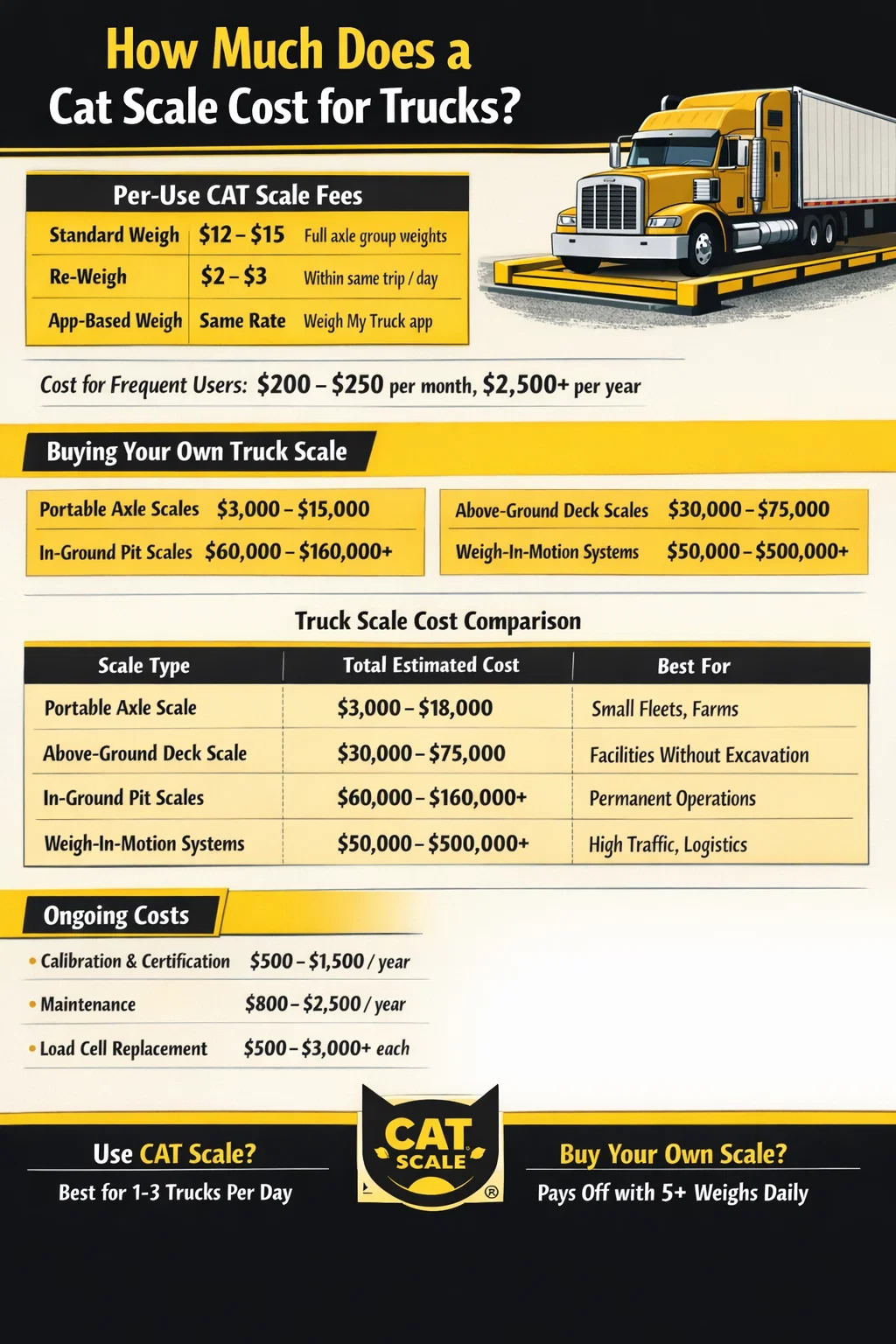
If you're asking how much does cat scale cost, the answer depends on whether you're paying per use at a weigh station or investing in a truck scale system of your own. A single weigh at a CAT Scale certified truck stop typically costs between $12 and $15 per transaction, with a re-weigh (if needed within a certain time window) costing around $2 to $3. For fleet operators or owner-operators who weigh frequently, those individual fees add up quickly over the course of a year.
On the other hand, if you're looking to purchase a dedicated truck scale — whether a permanent in-ground installation or a portable axle scale setup — costs range dramatically. A basic portable axle scale system for trucks can cost $3,000 to $15,000, while a full-sized permanent truck scale runs anywhere from $30,000 to over $200,000 depending on capacity, platform length, technology features, and installation complexity.
Understanding the difference between using a third-party certified weigh station and owning your own truck scale is essential before making any financial decision. Below, we break down all the pricing layers so you can make a fully informed choice.
What Is a CAT Scale and How Does It Work?
CAT Scale is a brand name — short for Certified Automated Truck Scale — and it refers to a network of certified truck weigh stations located primarily at truck stops across the United States. With over 2,000 locations nationwide, CAT Scale is the most widely used commercial weighing service in the trucking industry.
When a truck driver pulls onto a CAT Scale, the system simultaneously weighs the steer axle, drive axles, and trailer axles. The total gross vehicle weight (GVW) and individual axle weights are printed on a ticket within seconds. This information is critical for compliance with federal and state weight limits — in the U.S., the federal limit for gross vehicle weight on interstate highways is 80,000 pounds, though individual axle limits also apply (20,000 lbs on a single axle, 34,000 lbs on a tandem axle group).
CAT Scale also offers the Weigh My Truck app, which allows drivers to receive their weight results digitally, share results with dispatch, and even pay for weigh transactions through the app. This digital integration has made the system even more popular with modern fleets managing compliance data electronically.
CAT Scale Pricing Per Use
| Transaction Type | Typical Cost | Notes |
|---|---|---|
| Standard Weigh | $12 – $15 | Full axle group weights included |
| Re-Weigh | $2 – $3 | Within the same trip/day at same location |
| App-Based Transaction | Same rate | Weigh My Truck app, digital receipt |
For a driver who weighs four times per week, that's roughly $200 to $250 per month in weighing fees alone. Over 12 months, that exceeds $2,500 — a figure that starts making the case for in-house truck scale ownership much more compelling for high-frequency users.
Truck Scale Types and What Each One Costs
The term "truck scale" covers a broad family of weighing equipment. Prices vary significantly depending on the type of scale, load capacity, platform dimensions, and whether you need certified legal-for-trade accuracy. Here's a detailed breakdown of each category.
Portable Axle Scales
Portable axle scales are low-profile pads placed under individual axles to record axle-specific weights. They are popular with agricultural operations, small trucking companies, and anyone who needs occasional weighing without a permanent installation.
- Entry-level 2-pad portable axle scale systems: $3,000 – $6,000
- Mid-range wireless 4-pad systems with indicator: $7,000 – $12,000
- Heavy-duty commercial portable axle scale kits: $10,000 – $18,000
These scales typically support axle loads up to 30,000 to 50,000 lbs per pad. While they're convenient and mobile, they require a flat, level surface to operate accurately and are not always certified for legal-for-trade use without calibration paperwork.
Pit-Type (In-Ground) Truck Scales
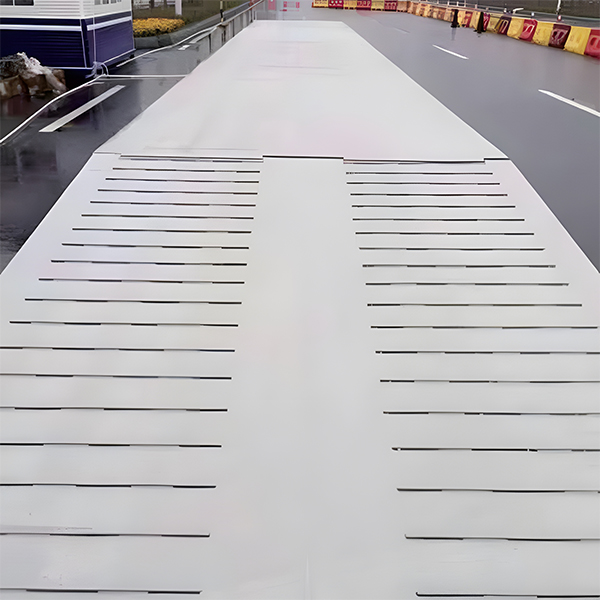
These are the gold standard for permanent commercial truck weighing. A concrete pit is constructed, and the scale platform is installed flush with ground level, making it easy for trucks to drive on and off without steep ramps. This type is the most common at distribution centers, quarries, recycling facilities, and agricultural co-ops.
- Scale equipment alone (60-ft platform): $30,000 – $60,000
- Scale equipment (80-ft platform for semis): $50,000 – $100,000
- Civil/excavation work and pit construction: $20,000 – $60,000 additional
- Total installed cost (typical range): $60,000 – $160,000+
The platform length is one of the most significant cost drivers. A 70-foot to 80-foot platform is necessary to weigh an entire tractor-trailer combination in a single draft (one pass). Shorter platforms require a "split weigh" method, where the front and rear of the vehicle are weighed separately and totaled — which works but adds time and complexity.
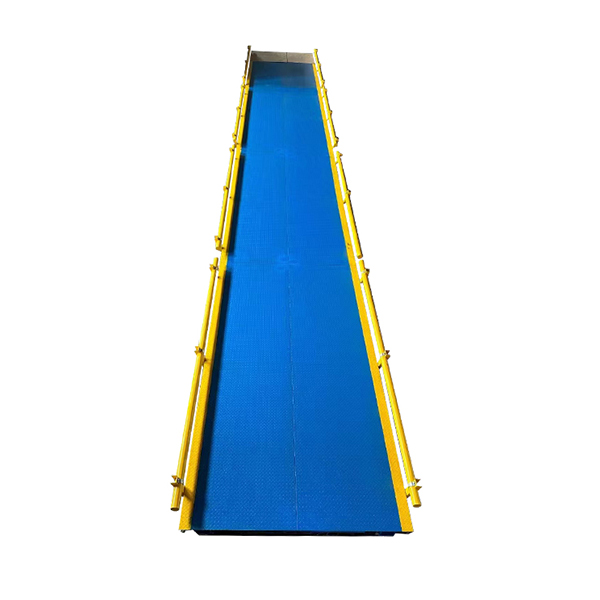
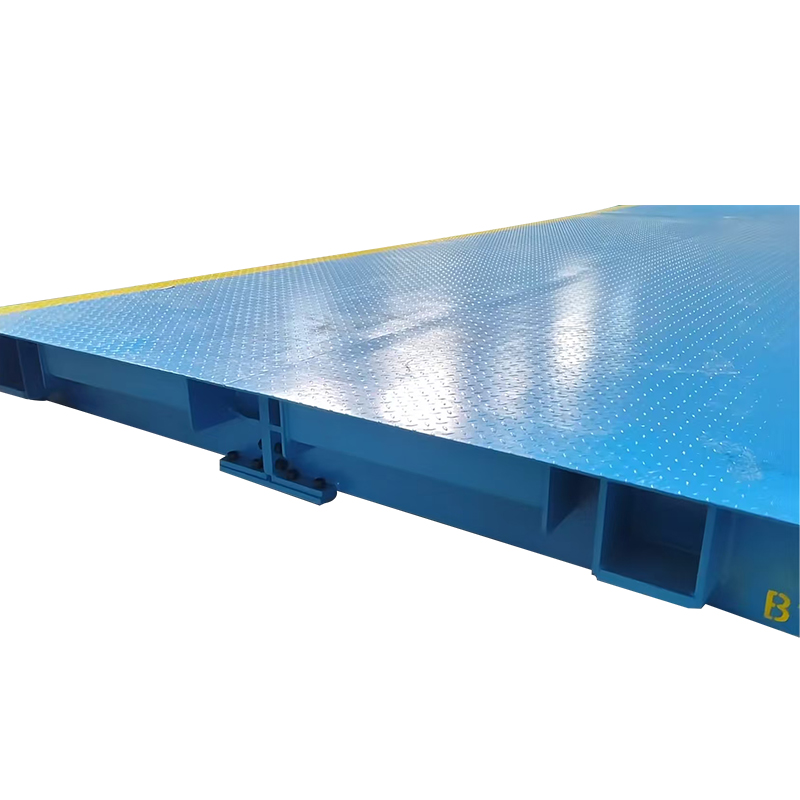
Above-Ground (Deck) Truck Scales
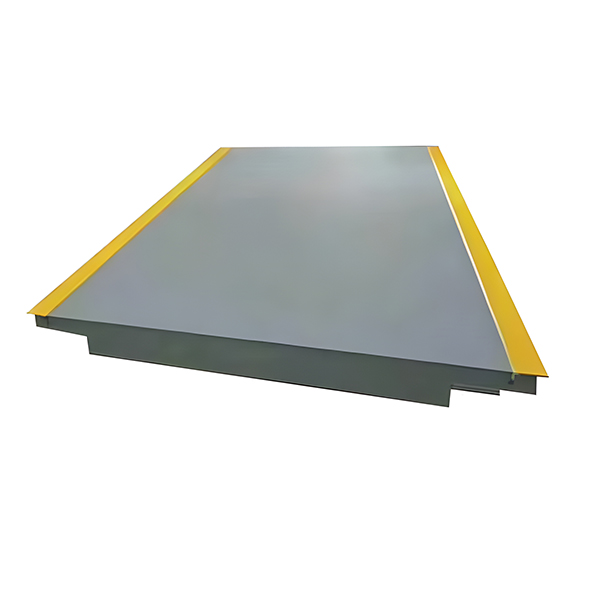
Above-ground scales sit on top of the existing surface and require approach ramps on both ends. They cost less to install since no excavation is needed, but they do require more horizontal space for ramps and can pose challenges in high-traffic areas or for vehicles with low ground clearance.
- Scale equipment (deck-mounted, 60-ft): $25,000 – $55,000
- Ramp fabrication and site prep: $5,000 – $20,000 additional
- Total installed cost: $30,000 – $75,000
Weigh-in-Motion (WIM) Truck Scales
Weigh-in-motion systems allow trucks to be weighed while moving at low or even highway speeds. They are primarily used by highway authorities, ports, and large logistics hubs where stopping a vehicle for static weighing creates a bottleneck.
- Low-speed WIM systems (under 10 mph): $50,000 – $120,000
- High-speed WIM (highway enforcement-grade): $150,000 – $500,000+
These systems are not typically used by private companies unless throughput is a critical bottleneck. The accuracy at speed also comes with more complexity in calibration and maintenance.
Truck Scale Cost Comparison Table
| Scale Type | Equipment Cost | Installation Cost | Total Estimated Cost | Best For |
|---|---|---|---|---|
| Portable Axle Scale | $3,000 – $18,000 | None / minimal | $3,000 – $18,000 | Farm, occasional use, small fleets |
| Above-Ground Deck Scale | $25,000 – $55,000 | $5,000 – $20,000 | $30,000 – $75,000 | Facilities without excavation budget |
| In-Ground Pit Scale | $30,000 – $100,000 | $20,000 – $60,000 | $60,000 – $160,000+ | High-volume, permanent operations |
| Weigh-in-Motion (Low Speed) | $50,000 – $120,000 | Included / varies | $50,000 – $120,000 | Ports, logistics hubs, high throughput |
| WIM (Highway/Enforcement) | $150,000 – $500,000+ | Included / varies | $150,000 – $500,000+ | DOT, highway enforcement agencies |
What Factors Drive the Price of a Truck Scale Up or Down?
Not all truck scale quotes are created equal. When you get a price from a vendor, several specific variables are baked into that number. Understanding them helps you negotiate, compare quotes fairly, and avoid overpaying for features you don't need — or underpaying for a system that won't hold up under your operational load.
Platform Length and Width
The most direct cost driver is platform size. A 70-foot platform costs significantly more than a 40-foot one. For semi-trucks with full trailers, an 80-foot single-draft platform is the standard for capturing the entire vehicle in one weighing. Each additional 10 feet of platform adds roughly $8,000 to $15,000 in material and fabrication costs. Width matters too — a 10-foot-wide platform handles most standard trucks, but a 12-foot or 14-foot option is needed for wide-load agricultural or construction vehicles.
Load Cell Technology
Load cells are the sensors embedded in the scale that measure weight. There are three main types used in truck scales:
- Analog load cells — reliable, lower cost, found in most standard commercial scales
- Digital load cells — higher accuracy, better diagnostics, but 20–40% more expensive than analog
- Hydraulic load cells — used in extreme temperature or hazardous environments; specialized and costly
A standard commercial truck scale uses 6 to 10 load cells. Each digital load cell can cost $800 to $2,500, while analog versions run $200 to $800. Choosing digital across all 8 cells adds up to $5,000 to $14,000 in additional cost compared to all-analog.
Platform Material: Steel vs. Concrete
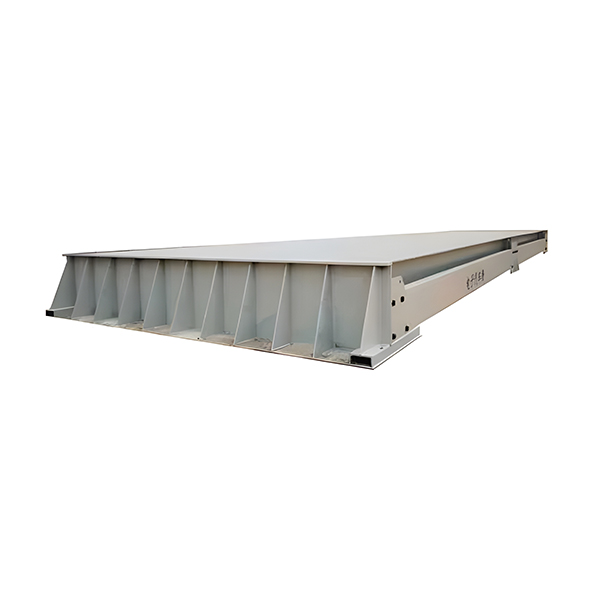
Truck scale decks are made from either steel or concrete-filled steel. Steel decks are lighter, easier to transport, and faster to install, but they can flex over time under extreme loading and may require more frequent maintenance. Concrete-filled or concrete-deck platforms are heavier, longer-lasting, and better suited to high-abuse environments like quarries or scrapyards — but they also cost more to transport and install. Concrete deck truck scales typically cost 10–20% more than comparable steel decks.
Weight Indicator and Software
The weight indicator (also called a weight terminal or controller) is the electronic display and processing unit that converts load cell signals into a readable weight. Basic indicators cost $1,500 to $5,000. Advanced models with touchscreens, printer integration, USB/Ethernet connectivity, and fleet management software integration can run $8,000 to $20,000 or more. If you want your truck scale to feed data automatically into your ERP or inventory system, you'll likely be on the higher end of this range.
Site Conditions and Civil Work
Site preparation is often the most unpredictable cost. Factors that increase civil work cost include:
- Rocky or unstable soil requiring deeper foundations
- High water table requiring waterproof pit construction
- Remote location with limited access for heavy equipment
- Need for drainage systems within the pit
- Electrical conduit runs for remote indicators or automation systems
It's not unusual for civil costs to equal or exceed the cost of the scale equipment itself on a challenging site. Always get a soil evaluation before finalizing your budget.
Truck Scale Installation Costs Broken Down
Many buyers focus on the sticker price of the scale hardware and are caught off guard by installation expenses. Here is a realistic breakdown of what a complete in-ground truck scale installation typically looks like from a cost perspective:
| Cost Component | Estimated Range | Notes |
|---|---|---|
| Scale Platform (equipment) | $30,000 – $100,000 | Based on size, material, capacity |
| Excavation and Pit Construction | $15,000 – $50,000 | Highly variable by soil and site |
| Concrete Approach Aprons | $5,000 – $20,000 | Both entry and exit ends |
| Weight Indicator / Terminal | $1,500 – $20,000 | Depends on features and connectivity |
| Electrical / Wiring | $2,000 – $10,000 | Conduit, power supply, junction boxes |
| Scale House / Shelter (optional) | $5,000 – $30,000 | For manned operations with operator booth |
| Permits and Inspections | $500 – $5,000 | Varies widely by jurisdiction |
When all components are added up, a mid-range commercial truck scale installation including all civil and electrical work typically falls between $80,000 and $130,000. High-end systems with automation, remote ticketing, and integrated software easily exceed $200,000.
Ongoing Costs: Maintenance, Calibration, and Certification
The purchase price is only part of the total cost of ownership. Truck scales require regular maintenance and calibration to stay accurate and legally compliant. Ignoring these costs in your budget planning is a common mistake.
Annual Calibration and Certification
Most states require truck scales used for commercial purposes to be certified (tested and sealed) by Weights and Measures officials at least once per year. Certified test weights are brought to your site, and the scale is verified for accuracy across multiple points. Annual calibration and certification typically costs $500 to $1,500 depending on your location and scale size. Some high-demand jurisdictions with limited certified technicians charge more.
Routine Preventive Maintenance
Recommended maintenance tasks include cleaning debris from under the scale deck (which can affect readings), inspecting load cells for moisture or physical damage, lubricating check rods and pivot points, and testing junction box connections. A professional preventive maintenance contract from a scale service company runs $800 to $2,500 per year, though many operators handle basic cleaning and inspection in-house.
Load Cell Replacement
Load cells have a lifespan typically measured in millions of load cycles, but they can fail due to moisture ingress, lightning strikes, physical overloading, or simple age. Replacing a single load cell costs $500 to $3,000 for the part, plus labor. A full set of 8 digital load cells can cost $10,000 or more to replace if widespread failure occurs.
Platform Structural Repairs
Steel deck scales are subject to corrosion, especially in regions with road salt exposure. Concrete deck scales can develop cracking over time from thermal cycling or impact loading. Structural repairs or resurfacing can cost $3,000 to $25,000 depending on severity. Budgeting for a major structural refurbishment every 10 to 15 years is prudent for permanent installations.
Buying vs. Using a CAT Scale: Which Makes More Financial Sense?
This is the core question for most trucking operators and businesses. The math is relatively straightforward once you know your weighing frequency.
Let's say your operation weighs trucks 5 days a week, two weighs per day. That's roughly 520 weigh transactions per year. At $13 per weigh, that's $6,760 per year in CAT Scale or similar fees. Over 10 years, that's $67,600 — not counting any rate increases over that period.
A mid-range in-ground truck scale installed on your property might cost $100,000 upfront, with $2,000 per year in maintenance and calibration. Over 10 years, total cost is approximately $120,000. But unlike paying per use, you own a permanent asset that continues operating after it's paid off, with a service life of 20 to 30 years for a well-maintained steel scale and even longer for concrete.
For operations weighing fewer than 3 to 5 trucks per day, using a third-party weigh station is typically more economical. For operations with 10 or more truck weighings per day, ownership usually pays off within 5 to 8 years and becomes significantly cheaper in the long run.
There is also an operational efficiency argument. Sending a driver to a weigh station off-site takes time — often 30 minutes to over an hour including transit and waiting in line. At a loaded driver rate of $28 to $35 per hour, those indirect costs are real. An on-site scale eliminates detours, reduces driver downtime, and can improve dispatch scheduling efficiency substantially.
Where to Buy a Truck Scale and What to Look For
The truck scale market has several well-established manufacturers and distributors. When evaluating vendors, price is not the only criterion — reliability, local service support, parts availability, and warranty terms matter just as much in the long run.
Major Truck Scale Manufacturers
- Mettler Toledo — A global leader in precision weighing; their truck scale lines are used in logistics, mining, and agriculture worldwide
- Rice Lake Weighing Systems — Wisconsin-based manufacturer known for durable, well-supported commercial truck scales
- Fairbanks Scales — One of the oldest scale companies in the U.S., offering in-ground and deck-style truck scales
- Cardinal Scale Manufacturing — Competitive pricing with strong mid-market presence, particularly in the agricultural sector
- Intercomp — Specializes in portable axle scales and military/aviation scales; solid option for mobile weighing needs
Key Questions to Ask Any Vendor
- What is the rated capacity, and what safety overload rating does the platform carry?
- Is the scale NTEP (National Type Evaluation Program) certified for legal-for-trade use?
- What is the warranty on the platform structure vs. load cells vs. electronics?
- Do you have a local service technician within 100 miles, and what is the average response time?
- Is civil/installation work included in your quote, and do you sub-contract it?
- What software or data output options are available for integration with my current systems?
Insisting on NTEP certification is critical if your scale will be used for any commercial transaction where the weight determines price — such as billing by the ton for gravel, grain, recycled materials, or freight. Without this certification, your scale cannot legally be used for trade in most U.S. states.
Used and Refurbished Truck Scales: A Cost-Saving Option Worth Considering
For buyers working with a tight budget, the used truck scale market is a legitimate option. A used in-ground steel deck truck scale in good condition can be purchased for $10,000 to $40,000, compared to $50,000 to $100,000 for new equipment of comparable size. However, buying used introduces risks that require careful management.
Before purchasing a used truck scale, always:
- Hire an independent scale technician to inspect the platform for corrosion, cracking, warping, and load cell condition
- Verify that replacement load cells are still commercially available for that model
- Factor in disassembly, transport, and reinstallation costs — these can be $15,000 to $30,000 even for a used unit
- Check whether the weight indicator and terminal are compatible with modern calibration standards
- Request the previous service and calibration history to evaluate how well it was maintained
Refurbished truck scales sold by reputable dealers are a middle ground — they've been inspected, serviced, and often come with a limited warranty. Refurbished units typically cost 30–50% less than new and are generally safer than buying a used scale directly from an unknown source.
Industries That Rely Most Heavily on Truck Scales
Understanding who needs truck scales helps clarify the scale of investment typically seen across different sectors and gives context for pricing decisions.
Agriculture and Grain Elevators
Grain elevators and co-ops are among the largest buyers of commercial truck scales. They weigh incoming grain loads to calculate purchase prices and outgoing loads for shipment billing. A typical grain elevator may weigh 50 to 200 truck loads per day during harvest season. At that volume, an on-site truck scale pays for itself in a single season of saved weighing fees and faster turnaround.
Quarries, Mining, and Aggregate
Rock quarries, sand and gravel operations, and mining sites use truck scales to bill customers by the ton. A 40-ton truck load of crushed limestone at $18 per ton represents $720 per load — the ability to weigh accurately on-site directly impacts revenue accuracy. These operations typically run 100% concrete deck or heavy-duty steel scales rated for 150,000 to 200,000 lbs gross capacity to handle fully loaded haul trucks.
Waste and Recycling
Waste transfer stations, landfills, and recycling centers weigh inbound and outbound trucks to charge tipping fees or calculate material value. A solid waste facility might weigh 200 to 500 trucks per day, making a truck scale not just useful but essential to the billing operation.
Freight and Logistics
Large distribution centers and freight terminals use truck scales primarily for compliance — ensuring outbound loads don't exceed DOT weight limits. For LTL (less-than-truckload) terminals, an on-site scale also helps when consolidating loads to maximize legal payload without risking a fine. Federal overweight fines can reach $10,000 to $16,000 per violation depending on the degree of excess and the state, making compliance-scale investment a straightforward risk management decision.
Tips to Get the Best Price on a Truck Scale
Getting quotes from multiple vendors is the baseline, but there are more tactical approaches that experienced buyers use to reduce truck scale costs without compromising quality.
- Get at least three competitive quotes and compare them line by line — equipment, civil work, electrical, and software should all be itemized separately.
- Ask about end-of-year or end-of-quarter pricing — sales cycles often drive manufacturers to offer discounts when closing out fiscal periods.
- Consider a split vendor approach — buy the scale equipment from one supplier and hire a local civil contractor for site prep, since bundled packages sometimes have inflated margins on the civil work.
- Evaluate Section 179 tax deductions — in the U.S., truck scale equipment may qualify for full first-year depreciation under Section 179, significantly reducing your effective net cost.
- Ask about financing or lease-to-own options — several major scale manufacturers offer 24 to 60-month financing plans, which can preserve capital for other uses while still getting you operational.
- Specify your required features clearly upfront — scope creep (adding features during quoting or installation) is one of the biggest drivers of budget overruns in scale projects.
Finally, don't optimize purely on the lowest purchase price. A truck scale that sits idle waiting for a service technician from 500 miles away or that loses NTEP certification due to poor calibration support costs far more in the long run than the savings from the initial low quote.
Copyright © Ningbo Jiuding Weighing Equipment Co., Ltd.
