


 English
 中文简体
中文简体
Industry News
What Is 100/6?
Content
- 1 What Is 100/6? The Direct Answer
- 2 Why Six? Understanding the 6-Axle Vehicle Configuration
- 3 How a Weighbridge Measures Axle Loads
- 4 The Math Behind 100/6: Repeating Decimals Explained
- 5 Weighbridge Applications Where 100/6 Matters Most
- 6 Calibrating Weighbridges: Where Precise Division Is Non-Negotiable
- 7 Real-World Overloading Scenarios and the 16.67% Reference
- 8 Weighbridge Ticket Data: Reading the Numbers
- 9 Other Contexts Where 100/6 Appears
- 10 Practical Tips for Using 100/6 in Weighbridge Operations
- 11 Frequently Asked Questions About 100/6
- 11.1 What is 100 divided by 6 as a fraction?
- 11.2 Why does 100/6 produce a repeating decimal?
- 11.3 How is 100/6 used in weighbridge calculations?
- 11.4 Is 16.67 the same as 100/6?
- 11.5 What does a weighbridge actually measure?
- 11.6 Can a vehicle pass a weighbridge check on total GVW but still fail on axle weight?
Quick Answer
100 ÷ 6 = 16.6667
A repeating decimal — and a number that appears more often than you might expect in weighbridge operations, axle-load distribution, and freight calculations.
What Is 100/6? The Direct Answer
When you divide 100 by 6, the result is 16.6̄ (16.6 repeating), or approximately 16.6667 when rounded to four decimal places. It is a non-terminating, repeating decimal. In fraction form it simplifies to 50/3. In percentage terms, 1/6 equals roughly 16.67%.
This seems like a purely abstract arithmetic fact, yet it surfaces constantly in real-world contexts — particularly wherever equal division of a whole across six parts is required. One of the most prominent practical settings is the world of weighbridges, heavy vehicle weighing, and freight load management.
i
In most freight and transport contexts, 100/6 ≈ 16.667% represents the share of total gross vehicle weight that should be carried by each of six axles on a fully loaded truck combination, assuming perfectly even load distribution.

Why Six? Understanding the 6-Axle Vehicle Configuration
Heavy haulage vehicles — particularly articulated lorries and semi-trailer combinations used across Europe, Australia, and North America — very commonly run on six axles. This configuration balances payload capacity with road-surface protection. Road authorities set maximum gross vehicle weights (GVW) and distribute permissible loads across the axle count to limit pavement stress.
In the UK, for instance, the maximum gross weight for a standard six-axle articulated vehicle is 44 tonnes when operating on roads designated for that limit (typically vehicles meeting Euro VI emissions standards and carrying intermodal containers). Under that 44-tonne cap, a perfectly balanced six-axle rig would carry roughly 7.33 tonnes per axle — exactly 44 ÷ 6.
How the 100/6 Ratio Enters Load Calculations
When operators work in percentages rather than absolute tonnes, the 100/6 figure is the benchmark. If a six-axle vehicle is loaded to any gross weight, each axle should ideally carry 16.67% of that total weight. A weighbridge reading that shows one axle at 25% of the GVW and another at 10% immediately signals improper load distribution — a safety and legal concern.
| GVW (tonnes) | Ideal Load Per Axle (tonnes) | As % of GVW | Calculation |
|---|---|---|---|
| 30 | 5.00 | 16.67% | 30 ÷ 6 |
| 38 | 6.33 | 16.67% | 38 ÷ 6 |
| 44 | 7.33 | 16.67% | 44 ÷ 6 |
| 50 | 8.33 | 16.67% | 50 ÷ 6 |
How a Weighbridge Measures Axle Loads
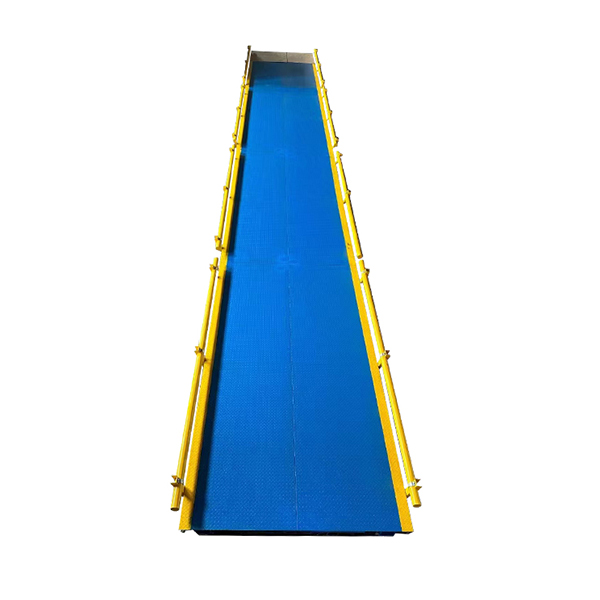
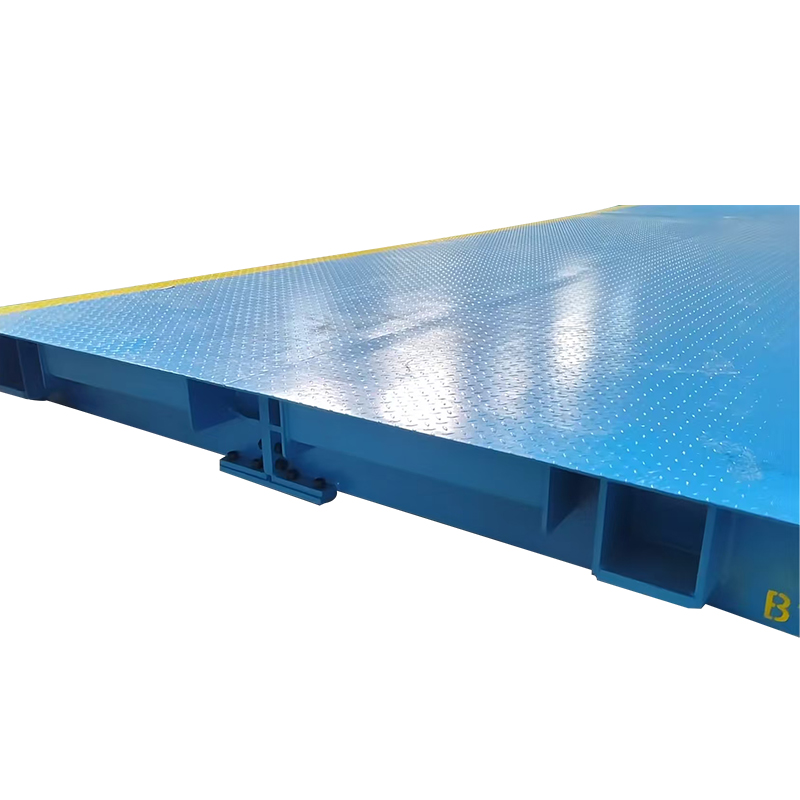
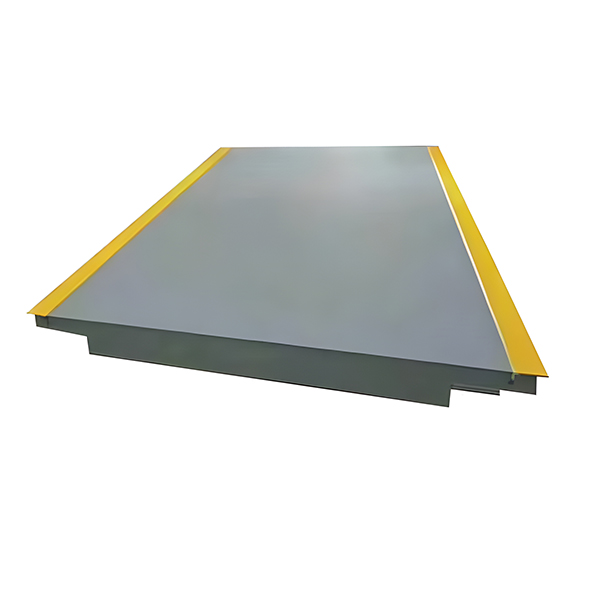
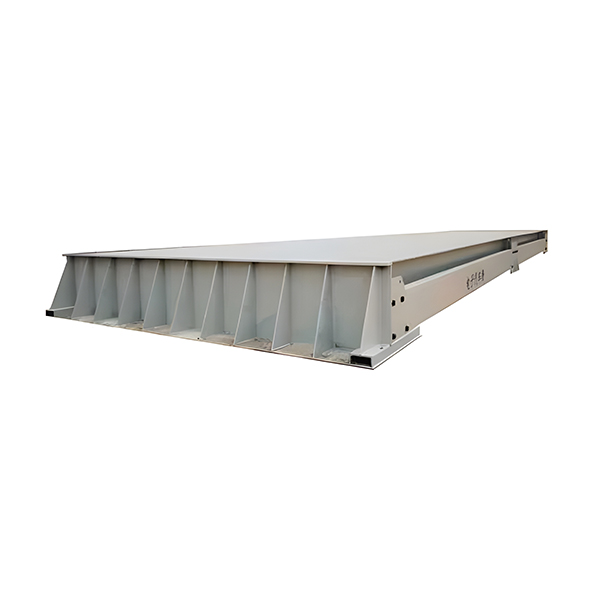
A weighbridge (also called a truck scale or weigh station) is a large platform scale built into the ground and used to measure the total weight of vehicles and their loads. Modern weighbridges use load cells — typically strain-gauge or hydraulic — positioned beneath the platform deck. When a vehicle drives onto the weighbridge, the compression on the load cells is converted to an electrical signal and translated to a weight reading displayed in the control room.
There are several distinct weighbridge configurations used in practice:
- Full-length single-deck weighbridges that capture the entire vehicle in one pass.
- Axle weighers or pit-type axle scales that record the weight on each individual axle as the vehicle rolls forward slowly.
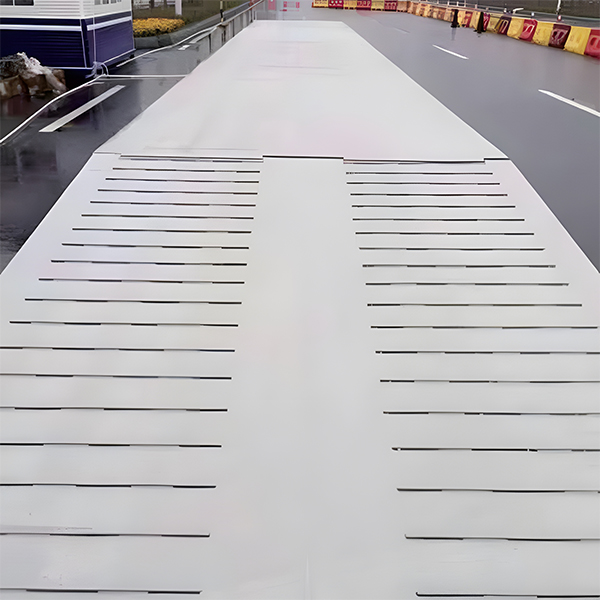
- Weigh-in-motion (WIM) systems embedded in road surfaces that capture axle loads at normal driving speeds without requiring the vehicle to stop.
- Portable axle pads used for temporary enforcement checks at roadside.
When axle-by-axle data is recorded on a weighbridge printout, operators instantly apply the 100/6 reference: each axle's reading should be close to one-sixth of the total. Significant deviation from 16.67% per axle triggers a load adjustment before the vehicle is cleared to proceed.
Weighbridge Accuracy Standards
Weighbridges used for trade and enforcement must meet accuracy standards. In the European Union, the applicable standard is OIML R 76 (non-automatic weighing instruments). In the UK post-Brexit, the Weights and Measures Act 1985 and associated regulations govern approved weighbridges. The US relies on NIST Handbook 44. Under these frameworks, a verified weighbridge must be accurate to within ±0.1% to ±0.5% of the applied load depending on accuracy class.
This precision matters enormously when operators are checking whether an individual axle's load is within permitted limits. A 1-tonne error on a 7-tonne axle reading is more than a 14% discrepancy — far outside acceptable tolerance, and potentially enough to shift a legal load into an overloaded classification.
The Math Behind 100/6: Repeating Decimals Explained
For readers who want the pure arithmetic background: 100 divided by 6 produces a repeating decimal because 6 is not a factor of any power of 10. Long division gives:
100 ÷ 6 = 16 remainder 4
40 ÷ 6 = 6 remainder 4
40 ÷ 6 = 6 remainder 4
(repeats indefinitely)
Result: 16.6666... = 16.6̄
When rounded to two decimal places, the answer is 16.67. When rounded to one decimal place, it is 16.7. The fraction form 50/3 is exact and avoids rounding error entirely — useful when precision is critical, such as in weighbridge calibration or engineering calculations.
Converting 100/6 to Other Useful Forms
- As a fraction: 50/3 (exact)
- As a decimal (4 d.p.): 16.6667
- As a percentage: 16.67%
- In scientific notation: 1.6667 × 10¹
- In kilograms (if 100 = kg): 16.667 kg per sixth share
- In tonnes (if 100 = tonnes): 16.667 tonnes per sixth share
Understanding which form to use matters. In weighbridge ticket software and fleet management systems, values are typically displayed to two decimal places (16.67) to match the precision of the scale. In engineering load tables, the fraction 50/3 may be preferred to avoid accumulated rounding error across multiple calculations.
Weighbridge Applications Where 100/6 Matters Most
The 16.67% per-axle benchmark is not just a theoretical number. It drives operational decisions at weighbridges in several high-stakes industries:
Bulk Materials and Quarrying
Quarries, aggregate suppliers, and bulk terminal operators rely on weighbridges for every outgoing load. A six-axle tipper or articulated bulk carrier is typically loaded by grab, conveyor, or shovel — processes that do not guarantee even distribution. The weighbridge captures axle-by-axle data, and the site manager adjusts the load placement before dispatch. Missing this check risks both road damage and — in many countries — significant per-axle overloading penalties. In Australia, for example, the National Heavy Vehicle Law imposes fines that scale with the degree of overloading: a 5–10% axle-load excess attracts a minor risk penalty, while exceeding a limit by more than 20% can result in vehicle detention (source: National Heavy Vehicle Regulator, NHVR, Australia).
Agricultural and Grain Haulage
Grain trailers during harvest season frequently run close to or at the legal gross weight limit. On a six-axle combination, each axle must not exceed roughly 16.67% of the maximum permitted GVW. Grain shifts during transit, so what is a legal axle load at departure may not be at the weighbridge check on arrival. Many grain-receiving sites operate static weighbridges that provide both GVW and axle group readings to ensure compliance before offloading.
Container Logistics and Port Operations
Since the International Maritime Organization's SOLAS amendment took effect in 2016, all packed containers must have a Verified Gross Mass (VGM) before being loaded onto a ship. Container weighbridges at port facilities process thousands of containers per day. For containers carried on six-axle skeletal trailers, the 100/6 axle-load check is a critical gate to prevent road damage on port access roads, which often carry legally reduced load limits due to their construction. The Port of Rotterdam, one of Europe's busiest, processes approximately 14.8 million TEU per year (source: Port of Rotterdam Annual Report 2023), and weighbridge throughput at major container terminals runs continuously around the clock.
Waste Management and Recycling
Refuse collection vehicles, skip trucks, and roll-on/roll-off (RoRo) waste hauliers all pass over weighbridges at transfer stations and landfill sites. Waste density is highly variable — a mixed load of construction debris distributes weight very differently from household refuse — making the six-axle load-split check particularly important. Waste sites in the UK are required under the Environmental Permitting Regulations to record vehicle weights for waste tracking purposes, making the weighbridge data doubly important: both for road safety and regulatory record-keeping.
Calibrating Weighbridges: Where Precise Division Is Non-Negotiable
Weighbridge calibration involves applying known test weights — typically certified calibration masses transported on a purpose-built calibration vehicle — and verifying that the scale reading matches. When six test masses of equal weight are placed on a platform weighbridge, the reading for each should be exactly one-sixth of the total. Any deviation beyond the allowable tolerance requires adjustment of the load cell coefficients in the instrument's software.
Modern weighbridge indicators (the electronic display and control units) store calibration coefficients to several decimal places internally. The displayed value may round to the nearest 10 kg or 20 kg depending on the scale division set during calibration, but the raw internal calculation uses the full precision of 100/6 (50/3) where six-part division is involved.
Calibration frequency varies by use. A weighbridge used for trade — where payments are made based on the weight recorded — must typically be verified by an authorised inspection body at intervals set by national metrology authorities. In the UK this is the Weights and Measures Inspectorate (operating under local authorities). In Germany, it falls under the Physikalisch-Technische Bundesanstalt (PTB) framework. In the US, state weights and measures officials conduct annual or biennial inspections of commercial weighbridges.
The Six-Section Weighbridge Platform
Some large weighbridge installations, particularly those designed for very long vehicle combinations, use a modular or sectional platform — sometimes with six sections, each supported by its own set of load cells. In this design, the weight measured by each section is literally one-sixth of the platform, and the total is summed electronically. If one section's load cells drift out of calibration, the 100/6 symmetry of the readout breaks down immediately, alerting the operator to a problem. This built-in check makes regular cross-section balance verification a standard part of weighbridge maintenance routines.
Real-World Overloading Scenarios and the 16.67% Reference
Understanding the ideal 100/6 load split helps explain why overloading penalties are structured around axle groups rather than just total GVW. A vehicle can be within its gross weight limit while still violating axle-group limits — a common situation when cargo is poorly positioned.
Consider a practical scenario: a six-axle articulated lorry with a GVW of 42 tonnes. The ideal axle load is 42 ÷ 6 = 7.0 tonnes per axle. But if the cargo — say, steel coils — has been positioned too far forward, the steer axle and first drive axle may carry 10 tonnes each while the trailer axles carry only 5 tonnes each. The total is still 42 tonnes, within the gross limit, yet the front axles are each overloaded by 3 tonnes (43% over their ideal share). A properly equipped weighbridge with axle weighing capability catches this immediately; a simple gross-weight-only platform does not.
Overloading Costs: A Snapshot
The economic consequences of axle overloading caught at a weighbridge can be severe:
- UK: Fixed Penalty Notices for overloading start at GBP 300 and can reach GBP 5,000 for the most serious cases. Vehicles may be prohibited from moving until the load is reduced (source: Driver and Vehicle Standards Agency, DVSA, UK).
- Australia: Under NHVR guidelines, penalties for exceeding mass limits by more than 20% on a single axle group can exceed AUD 10,000 and may result in vehicle impoundment.
- United States: Federal bridge formula fines start at USD 65 per pound (approximately USD 143 per kilogram) over the limit, with state penalties in addition (source: FHWA — Federal Highway Administration).
- Germany: Overloading fines under the Bundesfernstrassengesetz can reach EUR 5,000, with additional points applied to the operator's transport compliance record.
These figures underline why the simple calculation of 100 ÷ 6 — and keeping each axle's load within that 16.67% envelope — is not academic. It is a daily operational discipline for every fleet manager who runs six-axle vehicles through public weighbridge checkpoints.
Weighbridge Ticket Data: Reading the Numbers
A modern weighbridge ticket (the printed or digital record issued after a weighing) typically shows several lines of data. For a six-axle vehicle, you might see something like the layout below — and being able to cross-check each axle against the 100/6 benchmark (16.67% of GVW) is exactly what an experienced logistics clerk does on every ticket.
| Axle | Recorded Weight (kg) | % of GVW | Ideal % (100/6) | Deviation |
|---|---|---|---|---|
| Steer | 7,100 | 17.75% | 16.67% | +1.08% |
| Drive 1 | 7,200 | 18.00% | 16.67% | +1.33% |
| Drive 2 | 6,900 | 17.25% | 16.67% | +0.58% |
| Trailer 1 | 6,400 | 16.00% | 16.67% | -0.67% |
| Trailer 2 | 6,300 | 15.75% | 16.67% | -0.92% |
| Trailer 3 | 6,100 | 15.25% | 16.67% | -1.42% |
| TOTAL GVW | 40,000 | 100.00% | – | – |
In the example above, the vehicle is within total GVW, and the axle deviations are modest — well within what most jurisdictions consider acceptable for normally loaded vehicles. But this kind of comparison against the 100/6 benchmark is exactly what enforcement officers and logistics managers look for at every weighbridge stop.

Other Contexts Where 100/6 Appears
While weighbridges and heavy transport are a primary practical home for the 100/6 ratio, the number shows up across many other fields:
Construction and Structural Engineering
In floor and slab loading calculations, a total distributed load is sometimes divided by a number of support points or bays. A six-bay structure distributing a total load evenly gives — once again — 16.67% per bay. Structural engineers working to Eurocode standards (EN 1990 and EN 1991) apply load combination factors, but the underlying arithmetic of equal six-way division appears regularly in preliminary hand calculations.
Financial and Business Division
Equity split among six equal partners: each holds 16.67%. Monthly amortization of a 6-month fixed cost: 16.67% per month. These are standard accounting and business-planning calculations where precision matters. A rounding error of 0.01% per month across six months introduces a 0.06% total discrepancy — small in isolation but significant in large-scale financial models.
Nutrition and Portion Control
A recipe portioned into six servings gives each serving 16.67% of the total weight. For a product with strict per-serving nutrition claims (as required by food labelling regulations such as EU Regulation 1169/2011 or FDA 21 CFR 101), precise division matters. A product with 100 g total weight would provide 16.67 g per serving across six portions — a number that must be reflected accurately on the label.
Dice and Probability
A standard six-sided die gives each face a probability of 1/6 ≈ 16.67%. This is one of the most fundamental examples of the 100/6 ratio in everyday life, and it underpins probability theory from basic statistics to complex game theory and actuarial science.
Time Division
One sixth of an hour is 10 minutes (60 ÷ 6 = 10). One sixth of a standard working day of 8 hours is approximately 80 minutes. In project scheduling, dividing timelines into six equal phases — a common structure in manufacturing and construction project management — gives each phase 16.67% of total project duration.
Practical Tips for Using 100/6 in Weighbridge Operations
For fleet managers, transport planners, and weighbridge operators who regularly deal with six-axle vehicles, here are practical working points:
- Always compare each axle reading to 16.67% of the recorded GVW — not to a fixed absolute number — because the ideal axle load changes with each load.
- Build the 50/3 ratio into your weighbridge management software so the ideal per-axle figure is calculated and displayed automatically on the ticket alongside the recorded weight.
- Flag any axle reading more than 2 percentage points above or below 16.67% for a manual load check before dispatch, as this level of imbalance often signals poor load placement rather than weighbridge error.
- During weighbridge calibration, use the six-part symmetry test: place equal masses at six positions across the platform and verify each reads within ±0.1% of the total ÷ 6.
- When dealing with three-axle groups (common on tri-axle trailers), apply the same logic: each axle in a three-axle group should carry 100/3 ≈ 33.33% of that group's load — a direct extension of the same principle.
- Keep a printed reference card at the weighbridge operator station with GVW-to-per-axle ideal load conversions at 2-tonne increments from 28 tonnes to 44 tonnes, calculated as GVW ÷ 6. This speeds up manual cross-checks when the software display is unclear.
Frequently Asked Questions About 100/6
What is 100 divided by 6 as a fraction?
100 divided by 6 simplifies to the fraction 50/3. This is because both 100 and 6 share a common factor of 2 (100/2 = 50, 6/2 = 3), and 50 and 3 share no further common factors.
Why does 100/6 produce a repeating decimal?
A fraction produces a repeating decimal when its denominator (in lowest terms) has prime factors other than 2 and 5. The denominator of 50/3 is 3 — a prime factor other than 2 or 5 — so the decimal repeats. The repeating block is the digit 6, giving 16.666...
How is 100/6 used in weighbridge calculations?
On a six-axle vehicle, the ideal load per axle as a percentage of GVW is 100 ÷ 6 = 16.67%. Weighbridge operators use this ratio to check that no single axle is carrying disproportionately more weight than others, which would indicate poor load distribution and potential overloading.
Is 16.67 the same as 100/6?
Not exactly — 16.67 is a rounded approximation. The true value is 16.6̄ (16 followed by infinitely repeating 6s). For most practical purposes 16.67 is accurate enough, but in high-precision contexts such as engineering or calibration, using the exact fraction 50/3 prevents rounding errors from accumulating.
What does a weighbridge actually measure?
A weighbridge measures the downward force (weight) of a vehicle and its load using load cells beneath a platform scale. The signal from the load cells is converted to a mass reading, displayed to the operator. Modern weighbridges can display total GVW as well as individual axle or axle-group weights when axle weighing capability is fitted.
Can a vehicle pass a weighbridge check on total GVW but still fail on axle weight?
Yes — this is a very common scenario. A vehicle can be within its gross weight limit while one or more axles carry more than their permitted maximum. Most modern weighbridges with axle weighing platforms catch this, but a basic gross-weight-only platform will miss it. This is why axle-weighing capability is increasingly required at enforcement sites.
Copyright © Ningbo Jiuding Weighing Equipment Co., Ltd.
